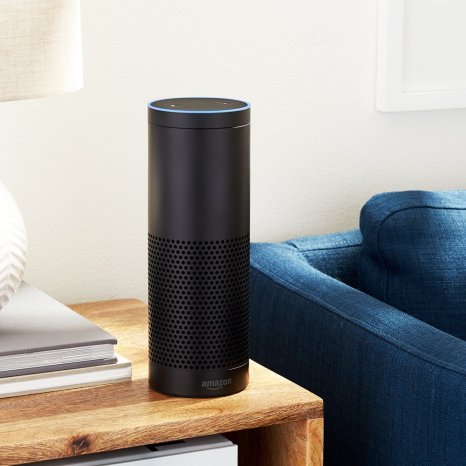
They Are Listening and It CAN Come Back to Haunt You

echo

Amazon Echo

By Tyler Quillin


How many smart devices with voice-activation capabilities surround you at any given moment? How many times have you thought about whether they are listening to everything you’re saying, just waiting for the word “Alexa” to wake them up from their idle eavesdropping? Well, some of your concerns may soon be answered by a court in Arkansas.

In late 2016, Bentonville Police Department of Arkansas obtained a search warrant for the recordings produce through Amazon’s “Echo” device pertaining to a bath tub murder. Echo is aptly described as an “always on” device. It continuously listens, waiting to hear the term “Alexa,” which “wakes” it up. Once awoken, Alexa will perform various tasks upon verbal request. She does everything from checking the weather or traffic, to answering trivia, to playing music through a Bluetooth connection.

Continue reading

There is Also an App For That


judge-aiken

The Honorable Judge Ann Aiken

By Jessy Nations

At the risk of sounding older than my years, it seems we are now demanding an app for everything these days. Even when we don’t need or want an app for something, one inevitably appears. That is, except, for legal apps, which are notably absent from the app store. Sure, I can download a copy of Black’s Law Dictionary, and Google is more than happy to direct me to lawyers in my area, but last I checked the smartphone revolution hadn’t done much for the criminal justice system … for now.

However, in an effort to modernize the reentry process for former inmates, a group of developers, lawyers, and judges are working on a reentry app . The idea is to turn the justice system from Big Brother into little brother. Continue reading

My Other Bag Isn’t Infringing

lvBy Alex Bullock

If you ever find yourself at the grocery store with only your designer handbag to put your apples in, know that the option to carry a canvas tote bag with designer style won’t be going away anytime soon.

That’s because My Other Bag (“MOB”) sells utilitarian canvas tote bags featuring images of designer-brand handbags on their sides—which play on the belief that “my bag is a [fill in luxury brand here].” In June 2014, Louis Vuitton (“LV”), one of the world’s most valuable and well-known luxury fashion brands, filed a lawsuit in the Southern District of New York Continue reading

Mitsubishi Regional Jet Runs into Regulatory Turbulence in the American Skies

ja21mj_2016-09-27_img_4836By Mariko Kageyama

Say you are a maker of a brand new aircraft. You show off its blueprint and miniature model and take orders before you have even constructed it. What legal risks are you willing to assume at this stage? Though this may seem a quintessential contract question, a real case involving Mitsubishi provides us an interesting twist.

On September 28 and November 18, 2016, the first two Mitsubishi Regional Jet MRJ90 test aircraft made successful ferry flights from Nagoya, Japan to Moses Lake, Washington. Built by Mitsubishi Aircraft Corporation, the MRJ90 is the first all-new commercial airplane manufactured in Japan in the last half a century. A fleet of MRJ90 test aircraft will be undergoing test flights in partnership with a local engineering firm, AeroTEC, which is based at the Grant County International Airport in Moses Lake. A team of over 200 aerospace engineers in Moses Lake, Seattle, and Nagoya is aiming to make the MRJ90’s formal certification process as smooth as possible to allow entry its into service in 2018.

Continue reading

YouTube’s Content ID Policy Change Now Saves Lost Monetization for Fair Use Videos

youtube-cashBy Dan Goodman

As the late Notorious B.I.G. said, “Mo Money, Mo Problems.” Whether you believe that statement or not, it is certainly, and thankfully, becoming less true the world of monetizing videos on YouTube through fair use.

The issue of fair use in regard to Content ID claims and Digital Millennial Copyright Act (“DMCA”) takedown notices continues to be a hot topic in the world of YouTube. Most recently demonstrated in Lenz v. Universal Music Corp., the Ninth Circuit held that copyright holders must consider fair use and have a subjective belief that the material in use was in violation of copyright law before sending a takedown notice.

Continue reading