
By: Claire Kenneally
What Is Trauma?
During trauma, rational processing systems like the hippocampus shut down, causing the emotional and survival-focused amygdala to go into overdrive.
As a result, traumatic experiences are stored differently than ordinary memories. Coded by the somatic nervous system rather than the brain, emotional and traumatic memories are held and recalled through bodily sensations rather than conscious thought. As a result, recollections of trauma tend to fragment into images, physical sensations, and emotions that don’t directly translate to words or cognizable narratives.
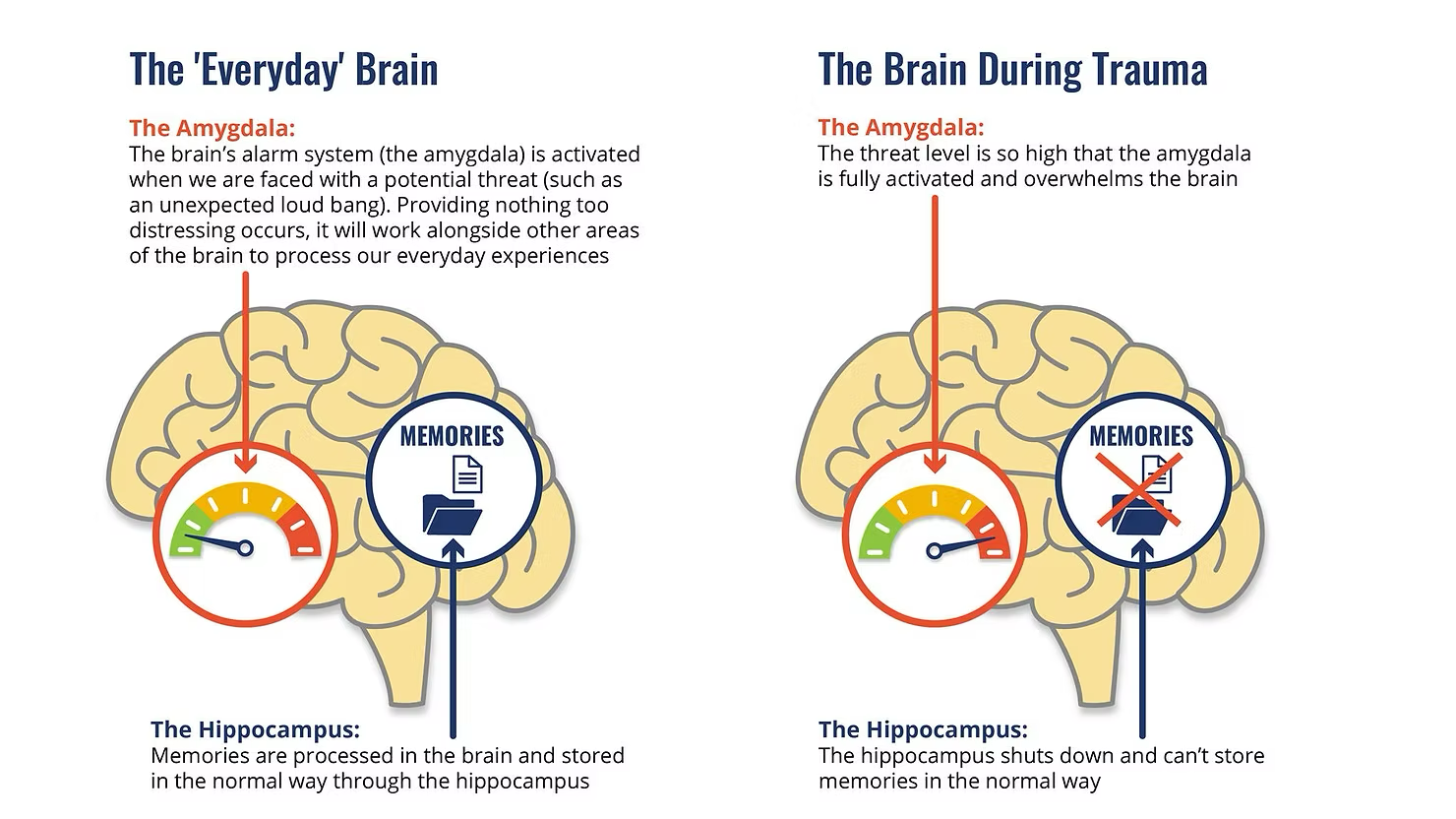
Blog Post: Understanding How Traumatic Memory is Stored in the Brain by Sally Edwards, 2/4/2024.
Art Therapy as an Effective Intervention
Art therapy is a therapeutic approach that helps individuals heal from trauma by expressing memories and emotions through creative processing. Drawing, painting, and sculpture allow survivors to communicate what they feel without relying solely on verbal expression, which can be especially helpful for those struggling to discern or articulate what happened to them and what they are feeling in response.
Art therapy provides patients with three primary benefits:
(1) it engages the physical body through the manipulation of art materials. The physicality of drawing, painting, sculpting, or otherwise manipulating physical materials can serve as a grounding technique, a self-soothing tool that reorients the nervous system to the here-and-now, helping a survivor feel rooted in the present instead of pulled back into the traumatic memory. One veteran suffering from PTSD described “when I feel so overwhelmed by feelings I cannot control, I just start painting. I pour everything I am feeling in what I am creating.”
(2) Art therapy allows the patient to engage in a personalized introspective exercise in which the process and finished product become the “symbolic container of traumatic memories.” Trauma can symbolically live on the page or in the art, separating it from the artist’s brain and body.
(3) it allows for cognitive reflection through discussion of the artwork, giving therapists and family a greater understanding of the artist, and serves as a noninvasive conversation-starter between patient and provider.
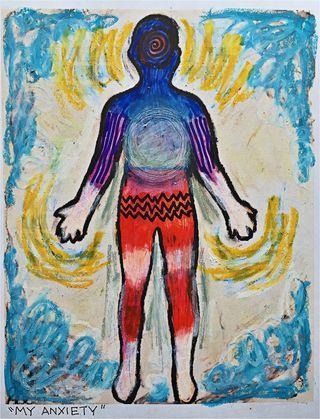
Source: Combat Veteran’s art therapy response to PTSD; from collection of C. Malchiodi, PhD, ©2016
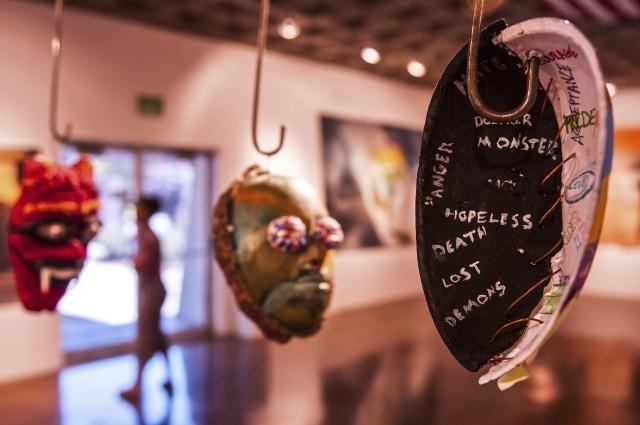
Source: Sculptural masks created by Iraq and Afghanistan war veterans hang in the Southwestern University art gallery. (Photo Credit: U.S. Army)
Art Therapy and the Legal Field
Art therapy appears to be an effective approach for supporting people who have experienced trauma. One meta-analysis published in 2018 found that art therapy significantly reduced trauma-related symptoms in survivors of sexual abuse, war, and domestic violence.
But importantly, art therapy can improve outcomes not just for the victims and survivors of violent crimes, but also the vast majority of people incarcerated. According to some estimates, more than 90% of incarcerated people have suffered from traumatic experiences, often starting in childhood. Because trauma is so deeply intertwined with the carceral system, art therapy has become increasingly relevant across multiple points of contact with that system.
Prevention
Art therapy and arts‑based programs have shown promising outcomes for youth in under‑resourced communities, cultivating supportive relationships and opportunities for teens to build skills such as self‑expression and confidence. Group art has also been proven to foster a sense of community, which research has shown can reduce isolation and generate a sense of belonging and acceptance while also building an adolescent’s social support network.
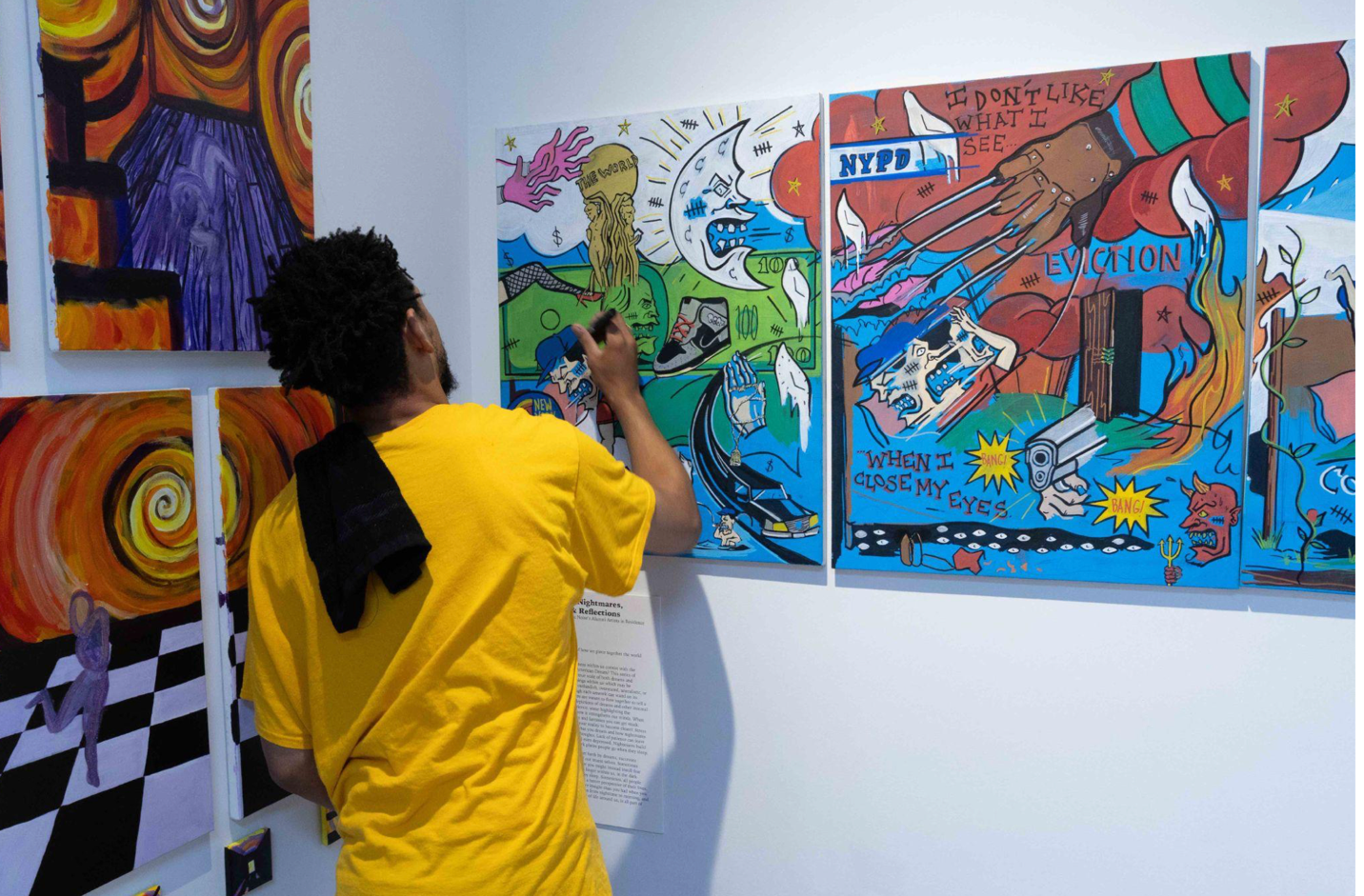
Photo from Artistic Noise’s 2025 “Symphony” Show.
Art Therapy for Those Currently Detained
In a 2020 research article, Danielle Maude Littman and Shannon M. Silva published a review of 25 research studies regarding the effectiveness of the arts to those who are incarcerated, finding “statistically significant improvements in self-confidence, self-esteem, task completion, social competence, emotional stability and control and well-being, and decreased hopelessness and anger.”
There are multiple examples of successful programs that bring arts-based projects and art therapy interventions into prisons and detention centers. Artistic Noise, a Harlem-based nonprofit offers programming for system-involved youth. The program includes licensed art therapists, artists, and educators, who use art as a tool for self-expression, guiding incarcerated youth through projects designed to explore their emotions, experiences, and identities, while also developing better methods to regulate their emotions. Another successful program is the Art Therapy in Prisons Program, funded through the Individuals with Disabilities Education Act and implemented in partnership between the Department of Corrections and various State Universities. .
Scott McKinstry, currently incarcerated at San Quentin, described the process of painting a 16-panel mural through California’s Arts in Corrections program. Scott shared that along with anger management classes, his project has helped him understand “why things bug me and why I ended up here. . . “
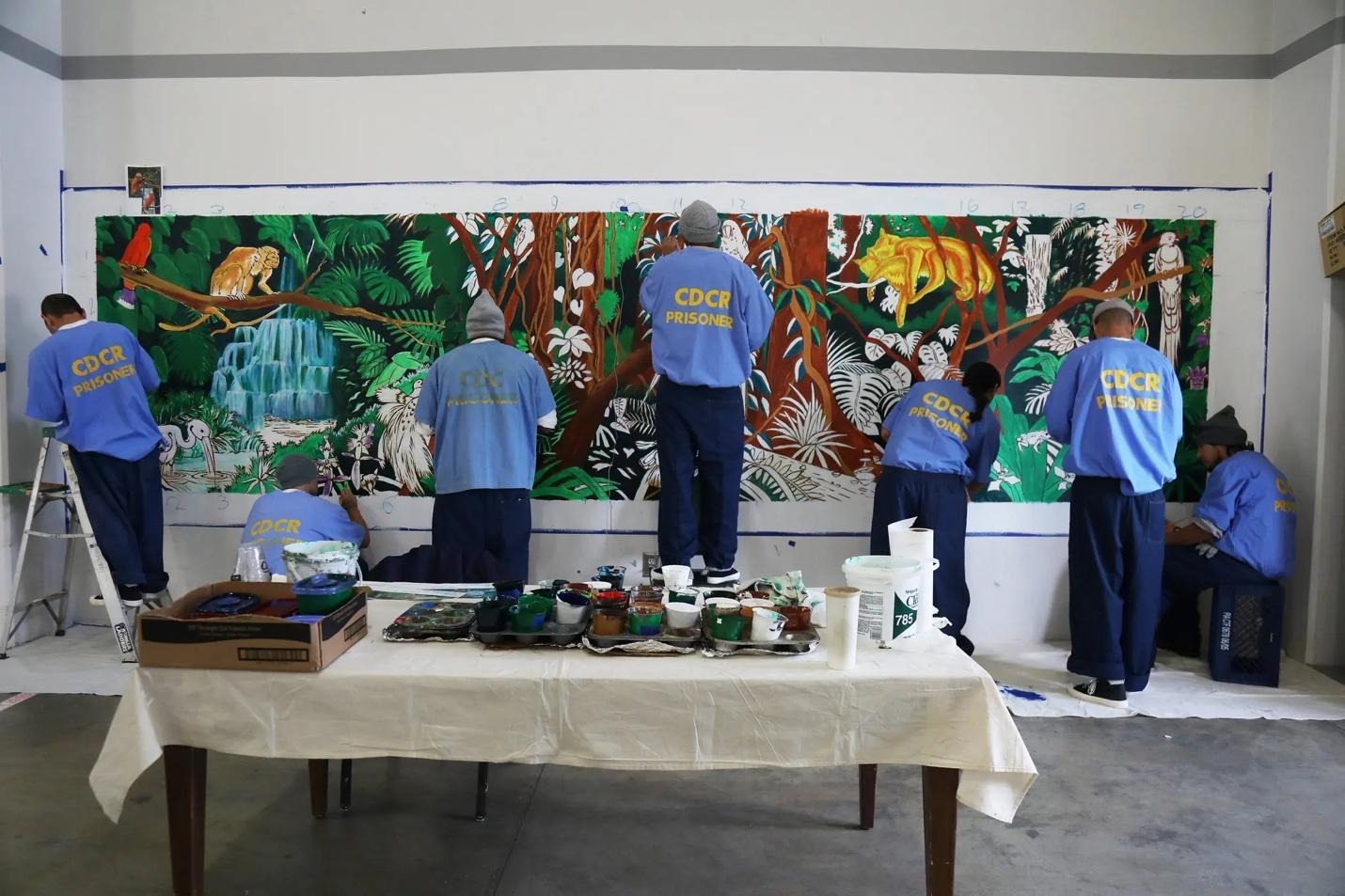
Incarcerated people in a mural class at Salinas Valley State Prison in Soledad, Calif. The class is part of an initiative to bring the arts to all 35 California state prisons for adults. Credit: Jim Wilson/The New York Times
Art Therapy to Reduce Recidivism
The 2023 prison-drama Sing Sing highlights the real-life Rehabilitation Through the Arts (RTA) program at Sing Sing Maximum Security Prison. Grounded in values of dignity, creativity, commitment, and collaboration, RTA offers incarcerated participants opportunities to build life skills through the performing arts that support them both during their sentence and as they reenter their communities. The program also reports a remarkable recidivism rate of under 3%, in contrast to the national average of roughly 60% as participants leave prison to reconnect with their families and strengthen their communities, breaking the cycle of incarceration.

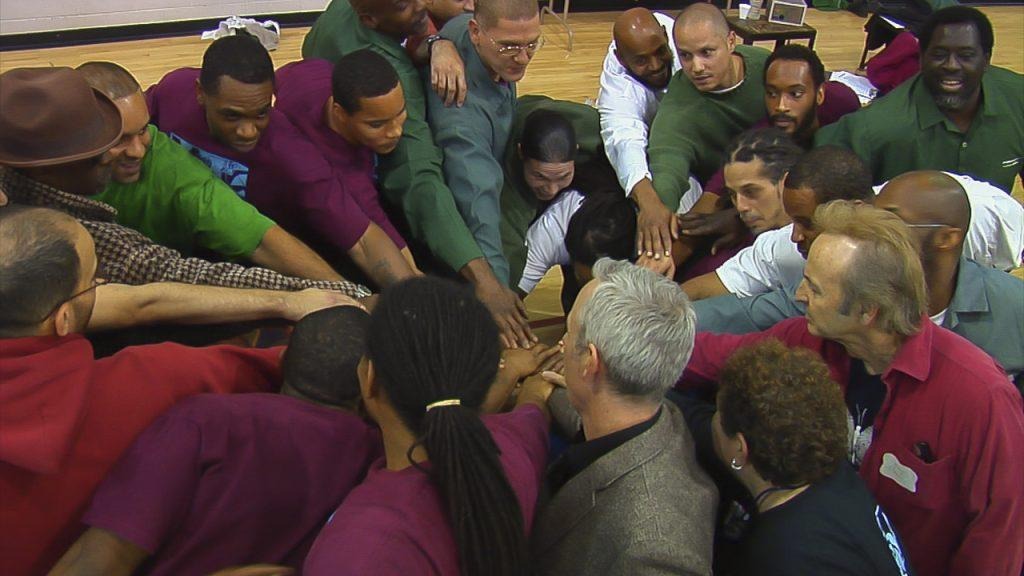
Photo from Rehabilitation Through the Arts’ website
RTA believes that the arts serve as an important pathway for personal growth, particularly for individuals who enter prison with limited formal education—as over 40% of incarcerated people in New York State lack a high school diploma. RTA helps participants build foundational skills such as communication, goal-setting, problem-solving, and collaboration, which support both educational advancement and future workplace success. Through its Skill Wheel framework, RTA illustrates how different art forms cultivate abilities and how they translate into stronger community, employment, and family outcomes.
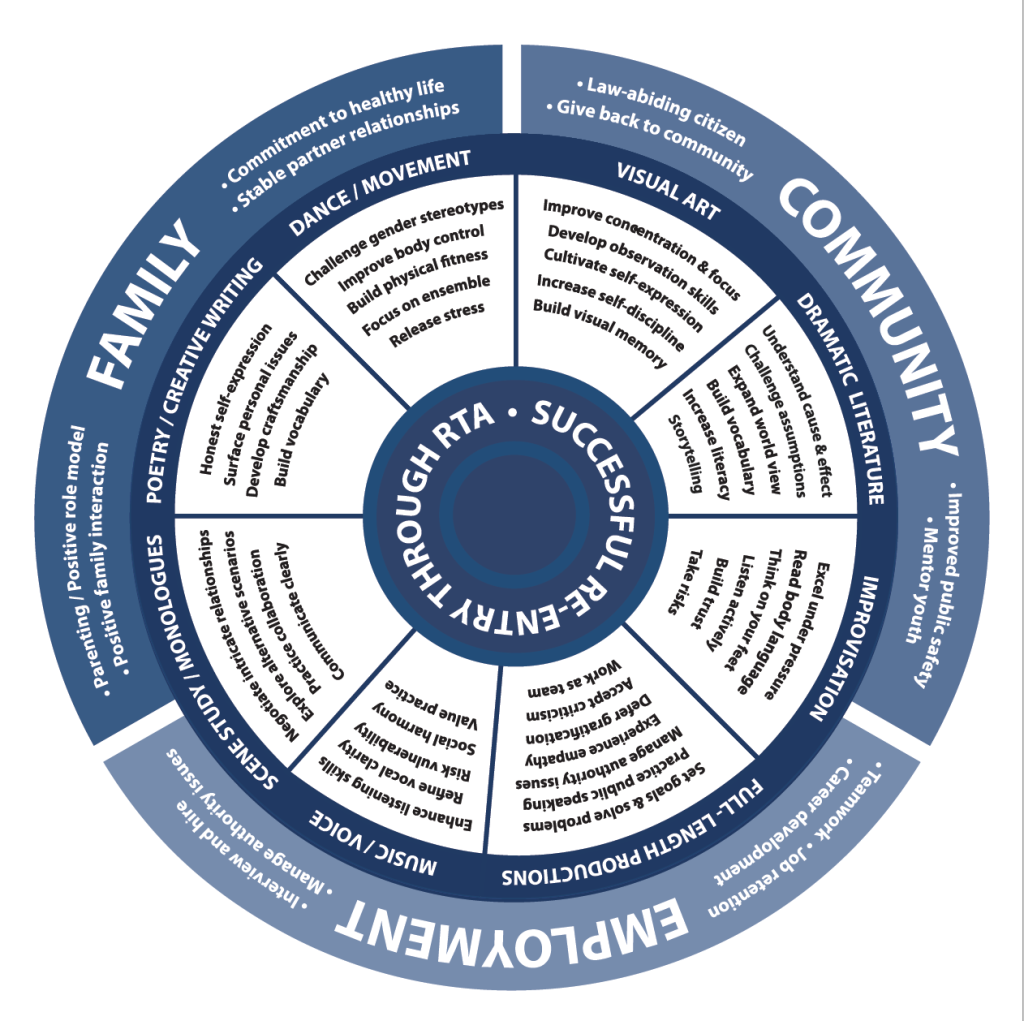
Rehabilitation Through the Arts’ “Skills Wheel” connecting different art forms to skills that reduce recidivism
Conclusion
Art therapy offers a powerful framework for repair, reflection, and reconnection. Its impact extends far beyond clinical settings, and more research is being dedicated to studying its impact on supporting individuals at every stage of involvement with the legal system. As this research continues to affirm its effectiveness, integrating art-based interventions into legal and carceral environments represents not only a therapeutic opportunity for anyone who has experienced trauma, but a broader commitment to dignity, humanity, and the transformation of community.
#ArtTherapy #TraumaInformedCare #WJLTA

