Faking it by Omission? The FTC Targets Undisclosed Compensation for Online Reviews

Illustration for fake website testimonials By Julie Liu

When we sift through reviews for products and services, one of our top considerations is whether the words genuinely come from the customer’s experience and not a company’s imagination. There is no way, however, to determine a reviewer’s honesty beyond relying upon whatever disclaimers he or she provides. We have previously discussed the state of the law on fake business reviews. But what about “real” reviews incentivized by the reward of a good deal? If there was any question on the matter, the Federal Trade Commission (FTC) has now provided a real-life example of how to abide by the rules.

In a recent chapter in the battle against unfair competition online, the FTC zeroed in on automobile shipment broker AmeriFreight for its persuasive approach to seeking customer feedback. The FTC alleged in its complaint that AmeriFreight offered $50 discounts to customers in exchange for writing reviews on an independent review website and advertised its services to consumers as being “top rated” based on those reviews. In addition to the discount, reviewers automatically became eligible for a $100 “Best Monthly Review Award,” further incentivizing customers to write reviews. The complaint indicated that the issue was not the encouragement of reviews; the complaint alleged that AmeriFreight portrayed the reviews as unbiased and failed to disclose that the reviewers were compensated—a violation of Section 5 of the FTC Act. The case concluded late last month with the FTC’s approval of a final consent order which requires AmeriFreight to clearly disclose any “material connection” it has with an endorser and to not misrepresent customer reviews or product ratings. Continue reading

Again? VMWare Accused of Violating Linux Kernel’s GPL license

penguinBy Chike Eze

Can’t we all just get along? At its core, an open source software license encourages software developers to share software with their community (i.e., the community of software developers). A software author grants a software copyright license to the public in exchange for requesting or requiring recipients to share their modifications with the public. Some open source licenses are permissive (i.e., the recipient may or may not share modifications), while others are restrictive (i.e., the recipient must share modifications).

The General Public License version 2 (“GPLv2”), a restrictive open source license, requires recipients of GPLv2 licensed software to share any modifications they make to the software with the community. This licensing model allows highly creative and intelligent software developers from all over the world to collectively author great solutions for the community. Sounds great, right? Well, in the real world, not everybody believes in sharing!  Continue reading

Have a Break, Have a KitKat!

kitkat

By Yayi Ding

Many of us grew up indulging in the famous four-fingered chocolate wafer known as the KitKat. Such glorious memories! However, KitKat may no longer have exclusive rights to its four-fingered design, because of ongoing lawsuits with its competitors.

KitKat is a product of the Swiss Nestle Company, and is produced by the Hershey Company in the United States. Needless to say, Nestle has had disputes with a fair share of its competitors, including British candy-maker Cadbury. In 2012, Nestle opposed Cadbury’s trademark application for its “purple packaging,” arguing that the mark lacked any distinctive character. Nestle won that battle, which allowed Nestle and other confectioners to sell candy with the same purple-colored wrapping. Continue reading

CAFC Invigorates the Already Popular Inter Partes Review Proceedings

CAFC

By Vijay Kumar

The United States Court of Appeals for the Federal Circuit (“CAFC”) recently handed down its first decision regarding an appeal from an inter partes review (“IPR”) at the Patent Trial and Appeal Board (“PTAB”). The majority decision resulted in a win on all fronts for the Patent and Trademark Office (“PTO”), as well as those parties challenging patents.

The case, Garmin International v. Cuozzo Speed Technologies, concerned an IPR that was requested the first day that IPRs were made available under the America Invents Act (“AIA”). In its petition, the patent’s challenger, Garmin, sought to invalidate four claims from Cuozzo’s patent no. 6,778,074 (“the ‘074 patent”) based on the obviousness of combining the prior art. The PTAB took up arguments on three of the claims and, following a trial, ruled in Garmin’s favor, deeming the claims obvious and thus unpatentable. The PTAB also denied Cuozzo’s motion to amend its claims. Cuozzo appealed both decisions to the CAFC. Continue reading

The Supreme Court May Widen its Stance on Standing in Spokeo, Inc. v. Robins

spokeo

By Kelsey O’Neal

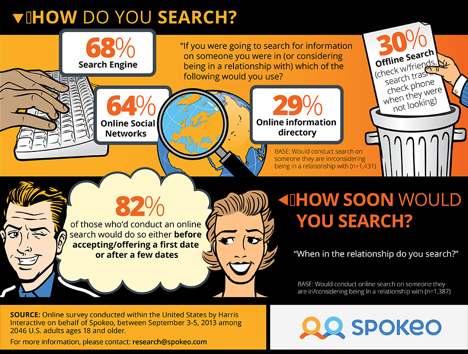
Admit it. You’ve Googled yourself at least once; though you probably did not do it just to stroke your ego. It’s important to know if your personal information is on the Internet so that you can control your message and personal brand. Social media, from LinkedIn to Facebook to Twitter, can truly define an individual. Your Facebook page or LinkedIn profile can offer an accurate or inaccurate impression of you. For one man, Thomas Robins, his online presence did not accurately reflect him. When Robins checked his online footprint on Spokeo.com, he discovered that the website had promulgated false information about him. The search engine stated that Robins, a single man, was married; it claimed he had received a degree that he had not gained; and it claimed he was worth more than his actual net worth. Robins believes that the false information made his job search more difficult.

Robins filed a class action suit against Spokeo.com under the 1970 Fair Credit Reporting Act (FCRA) alleging that the online database had published false personal information about him. Even though Spokeo.com published more positive information about him, Robins claims that the website caused him actual harm. The FCRA provides statutory damages from $100 – $1000, even if the plaintiff cannot show actual harm. As a general rule courts will only hear a case if the plaintiff alleges actual harm. In other words, a court must first ensure that the plaintiff has standing to allege an Article III injury-in-fact. But, The FCRA gives plaintiffs a cause of action without a showing actual harm. In choosing to hear Spokeo, the Supreme Court will decide if statutory damages provisions give plaintiffs Article III standing. In a reconsideration of the case, the District Court for the Central District of California ruled that Robins could not show that the false information was actually harmful, and so it dismissed his case. Robins appealed. The Ninth Circuit, siding with the Sixth Circuit in its decision in Beaudry v. TeleCheck Services, Inc and with the support of President Obama’s Administration, held that Robins did have standing to sue because Congress’ creation of a private cause of action created a statutory right, and the violation of a statutory right is a sufficient injury-in-fact to create standing. Spokeo.com appealed, and on April 27th, 2015, the Supreme Court decided that it should hear Robins’ case in its next session.  Continue reading