Return the Empty Cartridges! — Federal Circuit to Hear Patent Exhaustion Case En Banc

toner_image1

By Don Wang

All you patent law nerds out there, grab your popcorn! The next blockbuster case you have been waiting for is about to hit the courts. On April 14, 2015, the Federal Circuit, on its own motion, ordered an en banc hearing of Lexmark International v. Impression Products, Inc.. In this patent infringement case, the Federal Circuit will decide whether it will overturn two of its own precedents on the patent exhaustion doctrine.

The plaintiff-patentee in this case is the printer manufacturer Lexmark, and the products-in-suit are Lexmark’s patent-protected toner cartridges. Lexmark offers the same cartridges through two separate programs: “Regular Program” cartridges at full price and “Return Program” cartridges at a discount. Customers of the Return Program must agree to use the cartridges only once and return them after use. Lexmark contractually imposes such restrictions on both the end-user consumers and the authorized resellers. In the current suit, Lexmark alleged that Impression Products, among other cartridges resellers, infringed its patents by acquiring, refilling, and selling refurbished cartridges under Lexmark’s Return Program. Continue reading

Despite Statute of Limitations Issues, Cosby’s Accusers are Finding Ways to Litigate

gavelBy Joe Davison

In November 2014, allegations that Bill Cosby had sexually assaulted women several decades ago were widespread. Barbara Bowman wrote a first-person article in The Washington Post, claiming that Cosby had drugged and raped her in the mid-1980s. These allegations came years after Andrea Constand, another alleged victim, filed a civil suit against Mr. Cosby in 2005. In total, more than two dozen women have come forth claiming that they were sexually abused by Cosby. Bill Cosby’s fallout has been swift; Netflix pulled his comedy special, NBC dropped plans for a new Cosby sitcom, and TV Land pulled their reruns of The Cosby Show. No criminal charges have been brought against Cosby, though various investigations have been reopened.

Cosby’s actions since the allegations became public have lead to a variety of civil lawsuits, including one for defamation. In 2005, Tamara Green told the Today Show that Bill Cosby drugged and sexually assaulted her in the early 1970s. Cosby’s lawyers vehemently denied the allegations and allegedly approached a newspaper with “damaging information” about her. Tamara Green, and two others have since filed suit against Cosby for defamation.  In response, Cosby has claimed he has a right to make “privileged utterances of self defense.” Continue reading

Wireless Trumps Television: FCC Incentive Auctions of the TV Spectrum

radio-tower-2

By Sam Hampton

Responding to novel technological needs and market forces, the FCC has developed a program of incentive auctions. The agency is working to allocate more spectrum to wireless broadband services. The 2010 National Broadband Plan introduced the incentive auction as a voluntary, market-driven system to efficiently allocate the spectrum in a new technological climate; the plan was given congressional authorization in 2012. The FCC issued a notice of proposed rulemaking in September 2012, detailing proposed procedures for these incentive auctions; rules were adopted in May 2014.

The first auction under the new rule regime was Auction 97, which concluded in late January 2015. The auctioned licenses were for the Advanced Wireless Services (AWS-3) spectrum, covering the 1700MHz and 2100MHz blocks. Auction 97 set revenue records; gross bids for the auction totaled nearly $44.9 billion on over 1600 licenses. Furthermore, just 31 bidders purchased these licenses, principally wireless carriers such as AT&T, which alone bid nearly $18.2 billion. The resulting revenue was more than double the previous auction of the 700MHz auction, which took place in 2008. Continue reading

NFL Cheerleaders: restricted heavily and paid minimally

buffalo-bills-buffalo-jills-sports-illustrated

By Talia Loucks

Being a cheerleader for a winning football team like the Seattle Seahawks or the Denver Broncos sounds like a lot of fun: exciting games, screaming fans, and trips to the Super Bowl. But for the teams that are not winning any titles, the cheerleaders do not have much to cheer about. On top of cheering for a team with a losing record, many of these cheerleaders are barely even compensated for their time.

Minimum compensation may seem reasonable to the average fan: these cheerleaders get to be on the field at every game. Many want this position, and many are turned down. That should be enough for these women, right? Well, taking a closer look at the requirements shows that the NFL cheerleaders are restricted in a number of ways: the gaining of a couple pounds can result in suspension, many of the squads must pay for their own uniforms, and some are even encouraged to have plastic surgery. Additionally, cheerleaders must rehearse for long hours and participate in charity events and publicity events. All of this, plus any travel time for playoffs can make having a regular 9-5 job very difficult. Continue reading

Invasion of Wearable Technology in the Workplace

google-glasses.top_-300x193

By Cheryl Lee

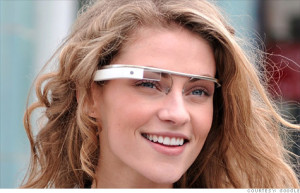
Wearable Technology is one of the hottest new technology areas today. Apple Watch, Google Glass, as well as health monitoring devices like FitBit, may be some of the most well known examples of wearable technology. However, there are many others in development. Future wearable technology even includes jewelry such as smart earrings that can monitor one’s heart rate as well as energy burned and   allows the user to sync wirelessly with a smartphone or a PC. Morgan Stanley estimated the potential market size for wearable technology at $1.6 trillion and noted that wearable devices will become the fastest consumer technology devices. IDC Worldwide Wearable Computing Device 2014-2018 Forecast and Analysis predicts that by 2018, wearable technology will account for 10% of the global electronics market. There is even a Wearable Technologies Conference in Milan, Italy, the fashion capital of the world, with a focus on bringing together the world of fashion and the world of technology.

Wearable technology refers to electronic technologies or computers that are incorporated into items of clothing and accessories, which can be worn on the body or attached to clothes. These wearable technologies, like Google Glass and Apple Watch, perform many of the same computing tasks as mobile phones and laptop computers. As the invasion of the latest wearable technologies continues to pervade our everyday lives and workplace, it creates issues for the workplace and the employers. Someone wearing Google Glass or an Apple Watch can take photos and videos of documents, which might potentially infringe upon someone else’s proprietary rights. These confidential documents can be uploaded directly to a personal account in the Cloud and then deleted from the wearable device. The risk of inadvertent disclosure of an employer’s trade secret is significant; it could result in millions of dollars in licensing revenue losses or loss of a competitive advantage. Despite such risks, the employer’s policy to regulate the usage and restrictions in the workplace may be quite challenging. Continue reading