Left Shark Still Not “All Right”: The Legal Battle Continues With New Trademark Claims

Screen Shot 2015-03-02 at 6.44.25 AMBy Julie Liu

In the most entertaining legal battle to develop out of Super Bowl XLIX, Katy Perry has famously attempted to copyright Left Shark, the much-celebrated Internet phenomenon of the month. In a more recent development, Perry has made further moves to bolster her intellectual property rights—this time with a trademark claim.

The origins of Left Shark are by now a familiar subject: two “sharks” served as backup dancers in Perry’s beach-themed halftime performance; one of them unexpectedly stole the show by bumbling his way through the choreography. The less-than-perfect performance did not escape the internet’s attention and collective amusement, and so Left Shark was born.

Before long, Fernando Sosa (of figurine company Shapeways) began recreating the shark for sale in miniature, and Perry’s lawyers responded with a cease-and-desist letter, claiming that Sosa’s product “infringes [Perry’s] exclusive rights in numerous ways.” Represented by NYU law professor Chris Sprigman, Sosa struck back by rejecting Perry’s ownership of copyright. Sprigman cited Perry’s own quotes, which indicated that she was not the “boss” of her halftime show, including, presumably, the production decisions leading to the creation of Left Shark. Continue reading
Governing Habitats on The Moon

Screen Shot 2015-02-27 at 11.34.47 AMBy Talia Loucks

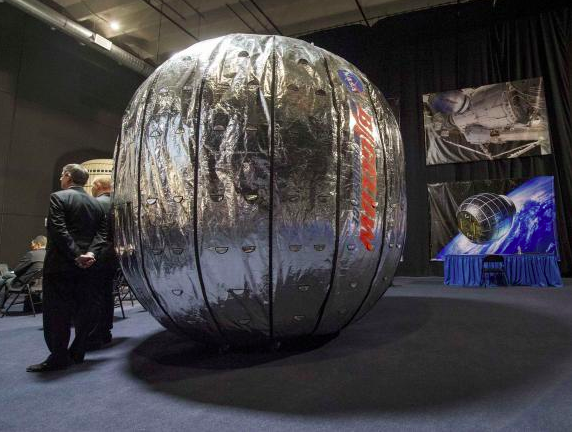
No one from Earth has been to the moon since 1972, but Google’s Lunar XPRIZE has sparked an interest in returning. The Lunar XPRIZE is a race to the moon in which competitors must land a robot safely on the moon and send back “HDTV Mooncasts for everyone to enjoy.” The deadline is next year and it has created a growing interest in moon activity. One company, Bigelow Aerospace, has even developed inflatable habitats to set up in space. The program, known as BEAM, has been developed as an attachment to the International Space Station, but Bigelow would also like to launch these habitats to the Moon. Even though the 1967 Outer Space Treaty bans sovereign ownership rights to the moon, Bigelow may one day soon be allowed to place its habitats on the Moon.

As was outlined in a recent WJLTA blog article on Asteroid Mining, the Outer Space Treaty and the Moon Agreement currently govern space law. Though no sovereign can claim ownership in space, the Outer Space Treaty has potentially left open a loophole that could allow for nongovernmental, private entities to have ownership rights in space. Additionally, the 1979 Moon Treaty, which governs lunar activity was never signed by the U.S., leaving open another potential loophole for private American entities. Continue reading

Law Enforcement, Automatic License Plate Readers and American Privacy

Screen Shot 2015-02-25 at 4.26.20 PMBy Michael Huggins

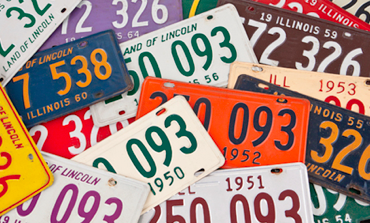
Every day, Automatic License Plate Readers (ALPR) capture millions of license plate images, which are stored in third-party databases. ALPRs have been used by law enforcement and state agencies to recover stolen vehicles and as a method of electronic toll collection on roads. Privacy activists, however, are concerned that state law enforcement may use ALPRs as a surveillance tool to track drivers’ locations and store images of drivers and their passengers. They argue that ALPRs may be used to collect information about individuals engaging in lawful activity, such as attending a peaceful gathering, or who pose no security threat.

For example, the Virginia State Police used ALPRs to record not only the license plates of vehicles attending President Obama’s inauguration, but entire campaign rallies for President Obama and former Alaskan Governor Sarah Palin as well. And in San Leadro, California, police used ALPRs to monitor Mr. Mike Katz-Lacabe’s Toyota Tercel, even though he had not been charged with a crime. When Katz-Lacabe submitted a public records request, he obtained 112 photos of his vehicles dating back two years. He was surprised to learn that he could identify people in the photos. Indeed, he was able to identify himself wearing one of his Berkeley shirts. Continue reading

FAA’s Proposed Rules Leave Little Room for Full Takeoff of Commercial Drones

Source: PetaPixel

Source: PetaPixel

By Max Burke

The Federal Aviation Administration (FAA) on Sunday released proposed rules for small commercial unmanned aircraft systems (UAS)—also known as drones or unmanned aircraft vehicles. The rules would apply to non-recreational UAS under 55 pounds and would, among other things, limit flights to daylight hours and altitudes of less than 500 feet. A drone operator, with the help of visual observers, would need to maintain visual line of sight of the drone. And an operator would also “have to be at least 17 years old, pass an aeronautical knowledge test and obtain an FAA UAS operator certificate.” (See a summary of the proposed requirements here and the full proposal here.)

Currently, the FAA effectively bans commercial use of drones. Pursuant to section 333 of the FAA Modernization and Reform Act of 2012 (FMRA), the FAA authorizes such use only on a case-by-case basis; a limited number of companies have been given authorization since September 2014. The proposed rules—which were made pursuant to the FMRA—are supposed to be the next phase in expanding commercial drone use. The FAA lists a number of UAS activities that would be allowed under the proposed framework, including crop monitoring, research and development, power-line inspections, aerial photography, and aiding certain rescue operations. Anyone can submit comments on the proposed rules to the FAA for up to 60 days after the rules are published in the Federal Register. Unfortunately, promulgation of permanent rules is not expected until 2017, nearly two years after the deadline mandated by Congress in the FMRA. Continue reading

Two Mums and a Dad: UK Approves Technique by Which a Child Has Three Genetic Parents

Screen Shot 2015-02-18 at 12.26.44 PMBy Sam Hampton

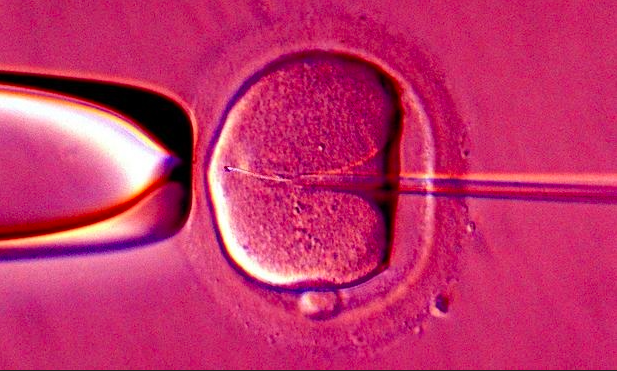
On February 3, 2015, the UK House of Commons voted to authorize a fertility technique known as mitochondrial donation. The babies that result from such a technique would have three genetic parents: one father and two mothers. The process shows promise in preventing the passing on of serious mitochondrial diseases from mother to infant. Perhaps belying the controversy surrounding a novel reproductive technology, the vote in the House of Commons was fairly one-sided; there were 382 members in approval and 128 against. Approval by the House of Lords is necessary, but if it is forthcoming, babies conceived by this process could be born in 2016.

The process involves the manipulation of embryos from two women. The nuclear DNA of a woman who will pass on a mitochondrial disease is transplanted into the de-nucleated embryo of a donor. The resulting embryo has sets of nuclear and mitochondrial DNA from two different women, and the process of in vitro fertilization is then used to carry out the pregnancy. The infant born of this process would have the genetic material of three people, but would also hopefully be free of the diseases resulting from the defective mitochondrial DNA. Mitochondrial diseases are untreatable, and those afflicted by them often do not live into adulthood. This new fertility process is the result of lengthy scientific research, and heralded as a medical breakthrough. Proponents of the process say that it provides women who would otherwise pass on these debilitating diseases with the opportunity to have healthy genetic offspring. Continue reading