Cell Phone Malware

Screen Shot 2014-10-08 at 2.34.08 PMBy Doug Logan

“But my cell phone can’t get a virus, right?” Wrong. The rise in smart-phone popularity and the “app” market have provided new avenues for unsavory people to try to attack your personal information.

“Cell phone Malware” comes in three main varieties: worms, trojans, and spyware, all of which can lead to system collapse, loss of information, and information leakage. Worms are typically transmitted via text or SMS messaging. Their primary goal is to endlessly reproduce, and worms do not require user interaction to execute. Trojans do require user interaction and can be much more dangerous because they typically transport information to a third party server. Trojans get their name because this type of malware is typically “hidden” in an application that is attractive to the user. Spyware, a broader category of malware, refers to any kind of malware that tracks and distributes a user’s information to third parties. All three of these viruses can be frustrating and potentially costly to the user.

One common source of cell phone malware is internet advertisements known as malvertisements. While impossible to keep completely secure on the internet, McAfee recommends users “[p]erform web searches on trusted search engines such as Google, Yahoo or Bing to ensure higher safety measures in your search results.” Further, McAfee suggests to “[d]ouble check the URL of any page you are visiting, especially when led there by an untrusted ad,” and to “[b]e wary of clicking on any ad that promises free product or prizes for almost no effort on your part.” Continue reading

Transportation Startups: Online Marketplace or Retailer?

Screen Shot 2014-10-07 at 2.43.03 PMBy Lydia Ansari

Sidecar, Lyft, Uber and other transportation network companies (TNCs) have been thriving in a marketplace generally free from government regulation. But this freedom may be short lived. State legislators in Colorado, California and Washington are catching-up with technology innovations in the transportation industry by proposing and enacting state-level regulations.

This push for legislation comes in response to a growing concern over passenger safety and claims that transportation network companies have inadequate insurance policies. In one instance, an Uber car driver allegedly attacked a passenger with a hammer during a late night ride, leaving the passenger hospitalized with a fractured skull and in danger of losing his left eye. The attack occurred after a disagreement over the route, and the passenger is suing Uber.

Uber strongly disclaims any liability in their terms of service, which states that people ride at their own risk when they jump into a car with “third party transportation providers.” Ride-share companies have consistently claimed protection under section 230 of the Communications Decency Act, which grants broad immunity to websites with user-generated content. TNCs argue that as platform providers that connect drivers and riders, they should not be liable for torts committed by third party drivers. However, this position may fall apart under closer inspection. Continue reading

Corvette’s New Valet Mode Implicates Occupant Privacy Concerns

© General Motors

© General Motors

By Amanda Brings

Owners of the 2015 Chevrolet Corvette beware: it may be illegal to activate the vehicle’s Valet Mode in certain states. The Corvette’s Valet Mode, an industry-first, has been advertised by GM as a “baby monitor for your baby” and a way for owners to monitor “valets behaving badly.” When activated, Valet Mode disables the car’s infotainment system, records live video, and locks the storage compartments. The system’s legality has been brought into question, however, because of its ability to capture in-car audio along with video. Indeed a number of states, including Washington, have privacy or wiretapping laws that require the consent of all parties to an audio recording. Other states with this requirement include California, Connecticut, Florida, Illinois, Maryland, Massachusetts, Michigan, Montana, Nevada, New Hampshire, and Pennsylvania. Thus, owners who use the feature to record unsuspecting valet drivers in one of these states could potentially be in violation of the law.

Washington’s Privacy Act, RCW 9.73.030, forbids public or private persons or entities from intercepting or recording any “[p]rivate communication transmitted by telephone . . . or other device . . . without first obtaining the consent of all parties in the communication.” Under the Privacy Act, consent is considered to be obtained whenever one party has announced to all other parties engaged in the communication “in any reasonably effective manner” that the communication is about to be recorded. Although the Privacy Act doesn’t define a private communication, in State v. Modica, 164 Wn.2d 83 (2008), the Washington Supreme Court held that a communication is private (1) when parties manifest a subjective intention that it be private, and (2) where that expectation of privacy is reasonable. Continue reading

Surveillance-Proof Phones: Apple, Google to Implement New Phone Encryption Technology

Screen Shot 2014-10-01 at 3.02.55 PMBy Peter Montine

Two giants of smart phone technology, Apple and Google, have announced that they are stepping up their phone encryption systems, and the FBI is not too pleased about it. This development appears to be in response to the recent air of distrust surrounding mobile phone surveillance. (The Washington Journal of Law, Technology and Arts recently published an article on the constitutionality of the surveillance methods employed by the National Security Agency.) While this new encryption technology may keep the NSA and hackers out of people’s phones, it could also impede the FBI’s ability to investigate crimes using evidence gained from smart phones.

This new kind of encryption makes it much more difficult for governmental agencies—like the FBI or NSA—to access a phone’s protected data. The encryption algorithm on the phone scrambles data saved locally, and each phone has its own unique algorithm, which is not kept by the phone companies. This means that even if a government official came to Apple with a warrant to search the phone’s data, Apple would only be able to give the agency a report full of gibberish that could only be decrypted with the user’s unique algorithm—or with five and half years of decoding (supposedly). Apple plans to include this feature in its newest operating system, iOS 8, and Google will make this feature automatic in the next version of its Android operating system. Continue reading

Can a Website Be Held Civilly Liable for Rape?

Screen Shot 2014-09-29 at 3.18.49 PMBy Nicholas Ulrich

Recently, the Ninth Circuit Court of Appeals faced that question—can a website be held civilly liable for rape—in Jane Doe No. 14 v. Internet Brands, Inc. Its decision was not the resounding “no” people probably expected. In fact, the circuit court reversed the decision of the district court, which found the plaintiff’s claims barred by Section 230 of the Communications Decency Act.

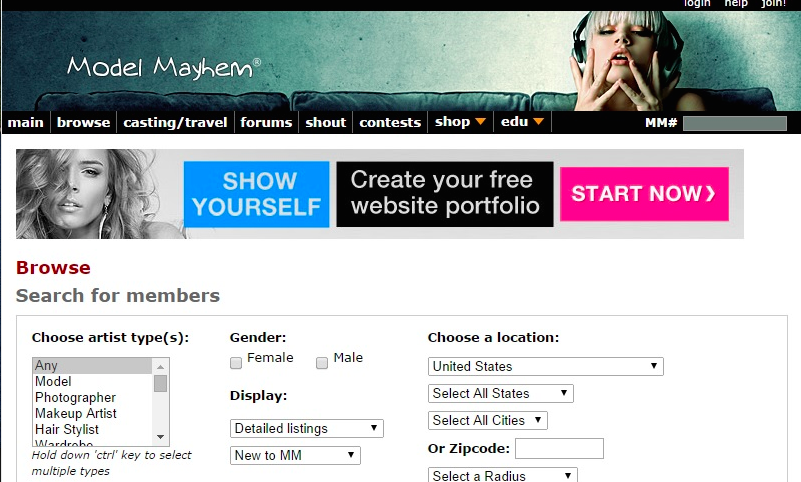
In 2011, Lavont Flanders and Emerson Callum raped the plaintiff, who remains anonymous as Jane Doe No. 14. Flanders and Callum lured her to what she thought was a modeling interview. They then drugged her, raped her, and recorded her for a pornographic video. Although Flanders and Callum had not posted an ad on the Internet Brands’s website, Modelmayhem.com, they did use the site to respond to ads posted by models, posing as talent coaches. Further, the perpetrators had a history of this behavior, having lured over 30 women in a similar fashion. Eventually, a federal prosecutor charged the two with multiple counts of enticing the victims to Florida knowing fraud would be used to induce them into sex acts, and multiple counts of administering a date rape drug. The judge sentenced each to multiple life sentences. Continue reading