Concert Night or Courtroom Fight? The Legal Fallout of Venue Negligence

By: Jacqueline Purmort-LaBue

During my two years living in Chicago, there was a live music venue that I returned to time and time again. Radius is a large, multi-room warehouse-style venue that hosts acts ranging from the dark, pumping techno of I Hate Models, to the indie-psychedelic rock beats of Unknown Mortal Orchestra, and the wrist-flicking tech house sets of Chicago native, John Summit. Located in Chicago’s East Pilsen neighborhood, Radius was previously an old steel factory and has since been transformed into a pillar of the electronic music scene. 

The Incident

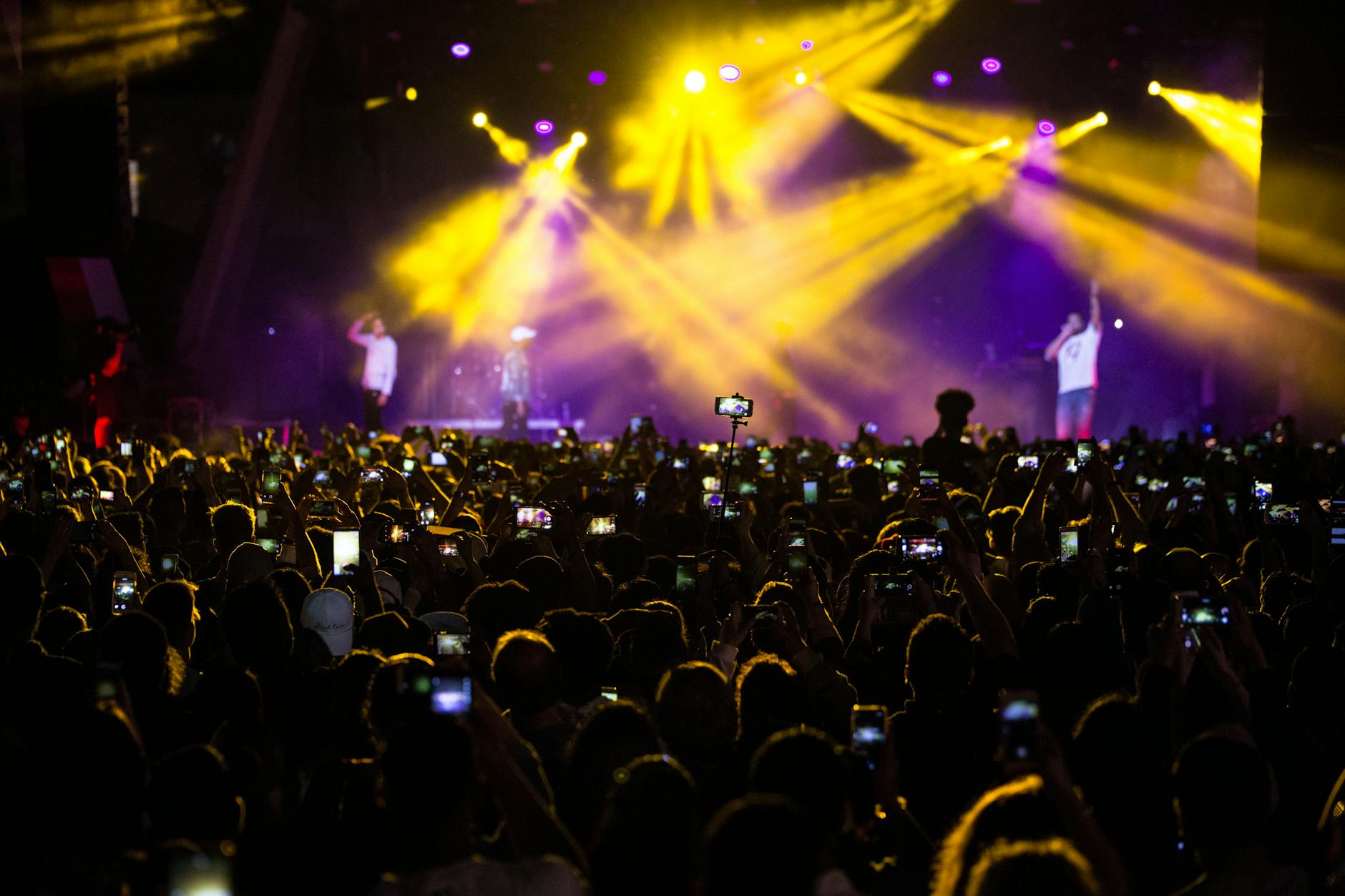
Earlier this month, during dubstep trio Levity’s set at Radius, a non-structural wood ledger that was attached to a steel frame fell from the venue’s ceiling, striking attendees. The two individuals affected were a 29-year-old man who reported shoulder and neck pain and a 26-year-old woman who sustained a laceration to the back of the head. Both were taken to Stroger Hospital in good condition. 

Chicago’s History of Venue Negligence 

Suing and slugging it out in court is the American way, so we can definitely expect a lawsuit (or two). This is not the first time the Chicago electronic music scene has faced structural tragedy and legal scrutiny. In 2014, four people attending a DJ Datsik concert at Concord Music Hall, located in Chicago’s Logan Square neighborhood, were injured when part of the ceiling came crashing down on their heads. Tina Somic, one of the victims who had suffered multiple head injuries, including a concussion, filed a premises liability suit naming Concord Music Hall, LLC and Club 2047, LLC as defendants. The complaint claimed that the venue’s owners were negligent for failing to keep the ceiling in a structurally safe condition or warn concertgoers about the hazard it posed, and that the venue negligently allowed performers to perform at dangerously high volumes, which increased the risk for a collapse. The demand for damages was $50,000. The suit never went to trial and the parties settled the matter (Agreed Order at 1, Somic v. Club 2047, LLC, 2015 Ill. Cir. LEXIS 9909 (2015) (2014-L-002082). 

Legal Implications

Premises liability law is a theory of negligence that holds a property owner responsible for any damages arising out of an injury on that person or entity’s property. The justification is that owners that occupy a property must make a reasonable effort to maintain a safe environment for visitors to it. Different states follow different criteria to determine who may recover under premises liability theory and under what circumstances, and usually fall into one of two camps: (1) focusing on the status of the person visiting the property or (2) focusing on the state of the property and the owner’s and visitor’s actions. 

Who Can Recover? Two Schools of Thought

Under the first camp, a visitor can be considered an invitee, licensee, or trespasser. An invitee is somebody invited onto a property for a commercial purpose, whereas a licensee is present on the property at the invitation or by permission of the property owner or occupant. The invitation creates an implied promise of safety. Some states draw differentiations between the standard of care between invitees and licensees while others hold them to the same standard. In many states, trespassers (visitors with no right to be there) cannot recover at all under premises liability, and only under strict conditions may have a pathway to recovery, such as increased likelihood of trespassers or in the case of a child trespasser. 

Under the second camp, different factors are considered when making a judgement, such as the circumstances in which the visitor came to be on the property, the reasonableness of the owner’s actions to repair and maintain the property or warn visitors, and the foreseeability of the injury. Generally speaking, owners or occupants have the duty to keep a property reasonably safe by regularly inspecting it, making repairs, and warning visitors of any hazardous conditions. 

Bars to Recovery

Most states, including Illinois, follow a comparative negligence regime in which an injured person who is partially or fully responsible for what happened cannot recover in full for damages arising out of a dangerous property condition. The justification for this is that visitors have a duty of care to themselves to prevent their own injury. Under a comparative negligence regime, a plaintiff who was found to be 20% responsible for the injury would only receive $80,000 of a $100,000 damages award. 

While it remains to be seen whether the injured concertgoers from the Radius incident will file a lawsuit, the venue could face legal scrutiny over its maintenance and safety protocols. Given the history of structural issues at music venues in Chicago, this incident serves as a stark reminder of the responsibilities that venue owners bear in ensuring the safety of their patrons.

As the Chicago electronic music scene continues to thrive, the balance between immersive, high-energy experiences and fundamental safety precautions remains crucial. Whether through stricter building inspections, enhanced venue regulations, or changes in how liability is determined in cases like these, one thing is certain: when the bass drops, the ceiling should not. 

#WJLTA #personalinjury #premisesliability #Chicago #music

Are Robots Really Running the Job Market?

By: Penny Pathanaporn

Today, artificial intelligence (AI) has pervaded nearly every aspect of our daily life. Residents and visitors alike in California, Phoenix, and now Texas can experience what it feels like to ride in a self-driving taxi. Over the past few years, internet users have flocked to ChatGPT for assistance on both serious and trivial matters, from creating a travel itinerary to drafting a work email. And, more recently, Elon Musk announced the highly anticipated development of Tesla Optimus, a humanoid robot that can perform everyday tasks such as grocery shopping. Considering the role that AI plays in making our lives more convenient, it is no surprise that AI has been integrated into the employment sector to increase the efficiency of the hiring process. 

How is AI used in the employment sector?

Artificial intelligence has been used to supplement several workplace procedures. For example, AI can be used to help employers screen potential candidates by filtering application materials for specific experiences or buzzwords. Employers have also used AI to review recorded interviews throughout the hiring process,  monitor employees’ computer activity,  track employees’ locations, and determine who gets promoted or laid off.

The problem with AI: furthering institutional biases 

Despite its ability to streamline employment processes, AI is far from perfect and its use can lead to harmful outcomes. The successful performance of AI models is dependent on factors such as the type of data that it has been fed and AI training techniques. Unfortunately, data that has been entered into AI models typically reflect institutional biases that exist in our society today. For instance, an AI hiring model formerly developed by Amazon was trained by a dataset that mostly consisted of men. Consequently, the AI algorithm demonstrated a preference for applications that include buzzwords mostly used amongst men. Once the bias had been discovered in the development process, Amazon ceased all work on their AI project. 

Additionally, AI models that have been trained to prioritize key traits such as optimism, outgoingness, or the ability to work well under pressure may inadvertently put candidates with disabilities (or even candidates from cultural demographics that do not value those traits) at a disadvantage. Accordingly, employers using AI tools in their hiring practices run the risk of committing employment discrimination based on sex, race, nationality, age, disability and other protected demographics.

Legal Implications of AI Usage in the Employment Sector

Under both federal and state laws, disparate treatment discrimination and disparate impact discrimination are not permitted. Disparate treatment discrimination entails intentional discrimination against protected groups, while disparate impact discrimination entails the use of facially neutral policies that disproportionately impact protected demographics.

Although actions taken by employers who use AI tools in good faith may not fall under disparate treatment discrimination, their actions are still at risk of falling under disparate impact discrimination. For example, as seen by the AI model formerly developed by Amazon, AI hiring tools trained on biased datasets are likely to prefer traits that do not correspond with certain protected groups, leading to a disproportionate impact on minorities. 

When determining whether hiring practices may disproportionately impact protected demographics, the EEOC recommends that employers utilize the “four-fifths” rule. Based on the “four-fifths” rule, if the proportion of candidates selected from one demographic is “substantially” different from the proportion of candidates selected from another demographic, then the hiring practices employed may be discriminatory. A ratio that is less than 80% between the two different proportions selected is considered to be the benchmark for “substantial” difference. 

Nevertheless, employers may be permitted to use hiring practices that disproportionately impact certain protected groups if they can demonstrate that the use of those practices is (1) related to the employment and (2) necessary for business purposes. For instance, if the job the candidates have applied for, along with the employer’s business, necessitates a fitness exam, the fact that more men than women pass the exam may not trigger disparate impact discrimination. Either way, employers should still adhere to the least discriminatory practice available in all circumstances. Lastly, employers should be very cautious of AI usage because they can still be held liable for discrimination even if the AI tools were owned or managed by third parties.  

The Crackdown on AI Use in Employment Practices 

The rapid developments in AI technology has undoubtedly led to the rise in AI-related lawsuits in the employment sector. In May 2022, the Equal Employment Opportunity Commission (“EEOC”) filed a lawsuit against “iTutorGroup” (a tutoring company). The EEOC claimed that iTutorGroup violated the Age Discrimination in Employment Act of 1967 (“ADEA”) through their use of AI in hiring practices. In August 2023, the EEOC and “iTutorGroup” settled the case, which marked the very first AI-discrimination lawsuit to be settled.

Currently, there is also an ongoing AI-discrimination class action lawsuit against a company named “Workday” in federal court. The plaintiff, Derek Mobley, alleged that Workday’s use of an AI software in screening applicants had resulted in discrimination based on age, race, and disability status. Although the federal court has not issued a final judgment on the case, the fact that the court has enabled the case to proceed as a class action lawsuit should signal to employers that they must remain vigilant when it comes to AI use. 

Looking Towards the Future 

Today, employers are highly advised to utilize third parties or external experts to assess their AI tools for any possible discrimination. Additionally, both Congress and state legislatures have begun taking legislative action to minimize the discriminatory impact of AI, such as introducing bills that require employers to notify candidates of AI usage. 

Ultimately, the functions of AI platforms are merely a reflection of the biases and prejudices that already exist in our society today. Laws, policies, and legislation can help detect and minimize the enforcement of these biases through AI. But perhaps grassroots advocacy can also provide an alternative avenue for promoting just AI usage.

#EEOC #AI #employmentlaw 

Behind the Romance: The Legal Status of Love is Blind Contestants

By: Hannah Gracedel

Do you have your snacks ready and your cozy PJs on? It’s time to binge-watch Netflix’s hit dating show Love is Blind. You start the show, but instead of discussing what they’re looking for in their life partner, contestants kick things off with a union meeting to discuss unsafe working conditions and low wages. Just kidding! However, this might not be as far-fetched as it sounds. A recent complaint filed by the National Labor Relations Board (NLRB) challenges how the show’s contestants are classified and treated. Depending on the outcome, Love is Blind, and reality TV in general, might look different to viewers at home. 

What Is Love is Blind?

Love is Blind is an unscripted reality show where singles from the same city meet to speed date in the “pods.” The pods are a set of 20 soundproof rooms, each approximately 12 by 12 feet. The contestants speak through a wall and meet face-to-face for the first time after they have accepted a proposal. The unique twist with this show is that the contestants never actually see each other on their dates. The idea is that the couples foster emotional connections without the influence of physical appearance. After the proposal, they go on a honeymoon, move in together, meet the families, and plan a wedding, all while on camera.

Contestants receive a $1,000 stipend per week during filming and up to $8,000 for appearing in all episodes. Wedding and vacation expenses are funded by production. However, contestants are responsible for many out-of-pocket expenses like hair, makeup, wardrobe, and any travel expenses not including the honeymoon phase of filming. 

The Complaint

In 2024, the NLRB issued a complaint alleging that the producers of Love is Blind misclassified contestants as independent contractors rather than employees. In determining whether someone is an independent contractor, the Board considers factors that reflect the employer’s level of control over the individual’s working conditions and work product. In addition, the complaint alleged the employer maintained unlawful contract provisions.

Why does misclassification matter?

The National Labor Relations Act (NLRA) defines an employee as any individual working for an employer. This definition is incredibly vague, making it ripe for confusion. The statute goes on to exclude individuals classified as independent contractors, supervisors, agricultural laborers, domestic workers, or those employed by their spouse or parent. Because of these exclusions, these workers are not covered by the NLRA and are not subject to its protections.

If you are considered an employee protected by the NLRA, your employer cannot fire, discipline, or threaten you for engaging in concerted activities. Examples of concerted activities are unionization, striking, and discussing wages or working conditions. Employees need not be unionized to exercise these rights. 

Therefore, being misclassified as an independent contractor means that you can be fired or penalized for activities that are fully protected for employees, leaving you without crucial safeguards to advocate for better working conditions.

What are the alleged unlawful contract provisions?

The National Labor Relation Board’s complaint alleges that the producers are enforcing unlawful contract provisions, including, among other things, a nondisclosure agreement (NDA) and an overly broad non-compete provision.

A NDA is a legally enforceable contract that creates a confidential relationship between two parties—one possessing sensitive information and the other receiving it. The recipient agrees not to disclose the information to others. NDAs are also known as confidentiality agreements. This NDA could be unlawful if the contestants are found to be classified as employees. Remember, the NLRA protects employees from engaging in concerted activities, which includes discussing wages, benefits, and working conditions. 

Additionally, the non-compete clause bans contestants from giving interviews or making public appearances for a full year after their last episode airs, even on their own behalf. While some non-compete agreements are lawful, others are not. A non-compete may be unlawful if it imposes overly broad restrictions; limits work in a large geographic area or across many industries, lasts for an unreasonably long time after employment ends, or is enforced on low-level employees without access to sensitive information. In addition, many states have laws governing non-compete agreements. For example, in Washington state, a non-compete agreement is considered void and unenforceable if an employee has earnings less than $123,394.17 in 2025.

Effects of the Complaint

The NLRB complaint is still in its early stages. The NLRB has currently scheduled a hearing for April 2025, during which an administrative law judge will answer the question of whether or not the producers violated labor laws. If the producers lose, they could appeal the decision, which would be reviewed by a five-member board appointed by the U.S. president. The board’s decision can be brought before a federal appeals court, and the entire process can take years. What could this mean for Love is Blind and other reality TV shows?

For starters, unionization is a possibility. However, it’s unclear how effective this would be. Shows like Love is Blind, The Bachelor, and RuPaul’s Drag Race replace their entire cast every season, making it difficult to establish long-term collective bargaining efforts. On the other hand, unionization could benefit those with recurring roles, such as those in franchises like The Real Housewives.

The outcome of this complaint could send shockwaves through the entire reality TV industry. If the complaint succeeds, it could embolden contestants from other shows to file similar claims, forcing production companies to reevaluate their labor practices. 

#WJLTA #LoveIsBlind #EmployeeRights #RealityTV

From Prompt to Picture: AI Art and the Ability to Copyright It

By: Alex Okun

As a general concept, Artificial Intelligence (“AI”) is not new: “chatbots” have been available for decades, and virtual assistants like Apple’s “Siri” first appeared 15 years ago. However, the latest iteration of AI – “Generative AI” – takes the concept one step further. Generative AI platforms can produce entirely new text or images based on prompts as short as a sentence. A new world of “AI art” has emerged online, and now many users are hoping to monetize their creations. However, consumers will not purchase a work from the creator if others can freely distribute copies of it. Effective commercial use requires the right to prevent third parties from doing the same, and to do that, one must first obtain a valid copyright.

Copyright Law’s “Authorship” and “Originality” Requirements

For a work to be copyrighted, it must be an “original work of authorship fixed in any tangible medium of expression.” A “work of authorship” requires an author, and the courts have consistently held that an “author” must be human. “Originality” requires that an author contribute “a modicum of creativity” to their work. However, courts have acknowledged that machines can be utilized to create a work without jeopardizing copyrightability. In the landmark case Burrow-Giles v. Sarony (1884), the Supreme Court held that a photograph could be “original” (and thus copyrightable) so long as it represents the photographer’s “intellectual conceptions.” While it is relatively clear when a camera manifests the user’s artistic choices, ambiguity arises when the machine also plays a role in creative decision-making. There is no question that AI-generated art is original; to be copyrightable, the question is where the originality came from.

Even if a work has sufficient originality, copyright will only protect the parts of it that manifest the author’s creativity. In Urantia Foundation v. Maaherra (1997), the Ninth Circuit Court of Appeals held that “divine messages” in a book could not be copyrighted because they originated from a deity rather than from a human being. Similarly, the United States Copyright Office (“USCO”) in 2023 approved the copyright of an author’s comic book but denied protection to an AI-generated image depicted in it.

One route to copyrighting AI art is to include it in a compilation of works. A compilation can be copyrighted if the author selects or arranges works in a way that requires creative discretion (like selecting the “best poems of the year” or arranging art pieces thematically). The USCO acknowledges that compilations of AI art can have sufficient originality, but each work included cannot obtain a copyright absent sufficient human authorship. Thus, copyright authorities must determine how much creativity a user must contribute to an AI-generated image to be copyrightable.

On the docket

Several lawsuits have been brought against the USCO for denying copyright claims by users of Generative AI applications. In 2022, Dr. Stephen Thaler sued the USCO over its determination that he could not copyright an image produced by his Generative AI application, “Creativity Machine.” Thaler did not claim to be an “author”; instead, he listed Creativity Machine as his employee, who had created the piece at his direction. The District Court upheld the USCO’s decision in 2023, finding that the AI application could not be the “author” because it is not human. Thaler appealed the ruling in 2024 to the DC Circuit Court of Appeals, but hearings have not yet been scheduled.

Whereas Thaler was focused primarily on the viability of non-human “authors,” a case filed in 2024 illustrates the legal issues arising from the “originality” requirement for AI users. In September 2024, Jason Allen sued the USCO for denying copyright protection for an award-winning image he created using the popular AI application Midjourney. He argues that the art was only partially generated using AI and that his contributions to the work justified a finding that it was sufficiently “original” to be copyrighted. According to filings, Allen inputted “at least 624 text prompts” to the application before the image created what he envisioned. Initial hearings took place in December 2024, but the court has not yet reached a decision.

Policy Changes

Distinguishing “machine-assisted” artistic works from “machine-generated” works has been a persistent issue for the USCO in the past several years. In 2023, the USCO issued ambiguous guidance that stated copyright protection in AI art depends “on the nature of human involvement in the creative process.” On January 29, 2025, the USCO issued clarifying guidance to resolve the confusion. It states unequivocally that “prompts alone do not provide sufficient human control to make users of an AI system the authors of the output.” To justify this policy, USCO pointed out that entering duplicate prompts multiple times can result in varying results. It also rejected the prospect of “revising prompts” (when a user enters subsequent requests to alter the initial image produced), likening it to “re-rolling the dice.”

The 2025 USCO guidance also distinguished mere prompts from “expressive inputs,” in which the user uploads media to the AI application and then asks it to modify the material in some specific way. Expressive inputs can merit greater protection because the user exercises greater control by giving the AI model a “starting point” rather than generating images from basic text. However, the USCO reaffirmed its view on severing the AI alterations from the author’s work and only protecting the user’s original work’s “perceptible” aspects in the new image. Of course, this categorically excludes AI-generated content based on media not created by the user.

In contrast, the United Kingdom’s (“UK”) copyright law specifically allows copyrighting “computer-generated” artwork and defines the author as the person who makes the “arrangements necessary” for its creation. This phrase leaves legal experts unsure whether this would mean the AI application’s programmers or its users would be deemed “authors” of AI art. However, the answer to this question may be of little consequence: many of the top Generative AI companies (including OpenAI, Midjourney, and Adobe) expressly grant their users full ownership of what they create. If US lawmakers chose to grant AI companies copyright protection in AI art, users might simply select the applications that promise to transfer ownership to them.

Conclusion

As US media companies increasingly rely on Generative AI, the ability to claim ownership in AI-generated work is a growing risk to business productivity. Resolving this issue is particularly important to content creators because production studios may need to continue relying on artists if they cannot copyright AI-generated content. Despite the greater specificity in the USCO’s new guidelines, the efficacy of these policies remains in question. The 2025 guidance is the second installment of a three-part report initiated in 2023, and it is unclear whether Congress or the Trump administration will attempt to modify these policies. Moreover, federal courts have the final say on these issues because the requirements of “authorship” and “originality” are constitutional questions. So long as this legal ambiguity persists, the “AI revolution” in the art industry will likely need to wait.

Why is Cyberbullying So Challenging to Combat?

By: Wolf Chivers

Why is it Hard to Sue a School District?

Where should parents go for help if their child is being bullied at school? Many parents might start with the school itself. All 50 states have anti-bullying laws that require schools to take action against bullying. Federal law provides additional protections against bullying based on protected categories, such as sex or disability. Despite such laws, bullying remains common, and school responses can be anemic.

A school’s failure to respond to bullying can open it to liability. However, there are barriers for families who try to sue school districts.The first barrier to suing school districts is sovereign immunity, which is the principle that governmental entities, including school districts, cannot be sued without their consent. Even if sovereign immunity does not apply (perhaps for tort claims or violations of civil rights statutes), it is incredibly difficult to bring general claims of educational malpractice—alleging the school provided a substandard education—against school districts. Consequently, unless the bullying violates federal anti-discrimination laws, the most common state-law option left available to parents is to allege that the school was negligent

Negligence claims require showing that the school owed a duty of care to the student, the school breached its duty to the student, and that the school’s breach of duty caused the student harm. That schools have a duty to respond to bullying is fairly clear; schools have a general obligation to provide for the safety of students, and many states, including Washington, require that schools intervene against bullying. In a standard negligence case, a breach of duty is caused when a person fails to act as a reasonable person would, which a school might do by ignoring reports of bullying, or not providing adequate supervision, or in a variety of other ways.

However, with the rise of social media has come a new form of bullying—cyberbullying. Cyberbullying has unique aspects that make it particularly challenging for schools to address, and might make it harder for parents to claim negligence.

Difficulties for Schools

Certain realities of cyberbullying are likely obvious at first glance. For instance, it can happen outside school hours, in the anonymity of mobile devices, far from any possible school personnel notice.

Beyond the obvious, however, schools may not be able to do as much to respond to cyberbullying as victims may want. Even minor students have constitutional rights, including the First Amendment right to free speech. There are certain circumstances in which schools can suppress student speech, but in order to do so, a school must be able to show that the student’s expression would “materially and substantially disrupt the work and discipline of the school.” 

The First Amendment’s protections mean that schools are generally not allowed to discipline students for activity that happens off school grounds and/or outside school hours. During the school day, while students are in their charge, schools stand in loco parentis; that is, in a parent’s role. However, once students leave school, giving schools the right to continue to regulate certain student speech may mean the student cannot engage in that kind of speech at all. In other words, in order to regulate a student’s expression, especially outside of school, the school has to be able to show that the conduct could be expected to disrupt school work or the school’s discipline

Where Does School Control End?

Technology, however, has complicated the formerly-clear delineation between in-school and out-of-school activities. This has led to First Amendment lawsuits against schools who have attempted to discipline students for online behavior. As a result, school policies for responding to online activity have to be highly precise and detailed to avoid undue infringement on students’ First Amendment rights.

The growth of technology has created a challenging conflict between a school’s responsibility to protect its students and its responsibility to not overreach into violating its students’ constitutional rights. Even if the school is aware of cyberbullying and willing to take action, it may be more difficult for the school to intervene if the cyberbullying takes place outside of school. It places schools in a proverbial “damned if you do, damned if you don’t” situation, facing either a potential negligence lawsuit for failing to intervene or First Amendment lawsuits for intervening. 

Difficulties for Parents

Cyberbullying also likely presents parents with challenges when pursuing negligence lawsuits. Thus far, most cyberbullying lawsuits have centered around the aforementioned First Amendment claims, often because negligence suits settle before they can set precedent. However, it is still possible to see how cyberbullying may present future difficulties for negligence claims.

The aforementioned negligence elements apply in cyberbullying cases but it may be more difficult to determine what constitutes “reasonable action” and to show that the school’s conduct harmed the student when cyberbullying is involved.

First, what is reasonable action for school officials? The “reasonable person” standard does not require the person to be perfect, but only asks that they take sensible action under the circumstances. Many school employees are poorly trained on responding to bullying, which potentially points to a school district failing to act reasonably. However, it may not entirely be the district’s fault when it comes to cyberbullying, given the lack of guidance from the courts about where the boundaries of discipline begin and end. A school’s options for responding to cyberbullying are narrow and highly specific. If a school official fails to respond, they may not meet the reasonable person standard in a traditional bullying case, but may meet it in a cyberbullying case.

The second challenge parents may face in cyberbullying negligence suits is proving the school’s failure to act caused the student’s harm. The school’s action or inaction must be the proximate cause—that is, enough of a cause for the school to be liable. Proximate cause is complicated, but the first step is to ask whether the student’s harm would be prevented but for the school’s negligence. Cyberbullying may make even that first step unclear. It may be fairly easy to envision how a school employee’s inaction could be a but-for cause of a student’s harm in a traditional bullying incident at school; if a teacher sees an altercation, fails to intervene, and one student gets pushed down the stairs, the chain of causation is relatively clear. In contrast, if a student is being bullied by a classmate via text late at night, suggesting that the school could have stopped the bullying by issuing a suspension, for example, is much more tenuous. Perhaps school discipline could have an effect, but it is less clear that the school’s inaction is a but-for cause of the harm. 

Conclusion

In short, cyberbullying’s unique characteristics create additional challenges for schools and parents alike in trying to combat cyberbullying. Cyberbullying is a serious problem that schools and the legal system are currently ill-equipped to handle. Everyone badly needs clear guidance from the courts on how schools are allowed to respond to cyberbullying, and courts need to understand the challenges distraught parents may face in trying to hold school districts accountable.

#schoollaw #cyberbullying #bullying #negligence #firstamendment