Kill Quill: Volume 2

Picture1

By Michael Rebagliati

2017 ended with a legislative bang as Congressional Republicans (rapidly) passed the most sweeping overhaul of the tax code in a generation. For many tax lawyers, 2018 has begun with a whimper as they scramble to understand what this means for their clients.

And yet, another major change to U.S. tax law still looms on the policy horizon. But this time, the change is coming not from Congress, but from the Supreme Court. On January 12th, the Supreme Court granted certiorari in the case of South Dakota v. Wayfair, Inc. Continue reading

Hollywood’s Darkest Secret: How Hollywood Employs Non-Disclosure Agreements and Confidentiality Clauses to Silence Sexual Assault Victims

hollywood-looking-down-at-los-angeles-california

By Alex Palumbo

Few disagree that 2017 became a defining “watershed” moment in the national conversation and spurred awareness of the stories and experiences of sexual assault victims. Few industries were left unaffected by this conversation by the year’s end, including the realms of politics, arts, cable news, morning news, and corporate America. Victims came forward in numbers neither seen nor heard before. As with any situation where previously hidden stories come to light, questions arise. How have we never heard these stories before? How long have the victims lived in silence? How were the perpetrators able to keep living their lives and abusing more victims? This article examines that final question specifically. How did these perpetrators continue their patterns of abuse—silencing their victims while continuing to live freely?

Continue reading

Cryptocurrencies, Tulips, and Regulation?

Picture1

By Evan Fowler

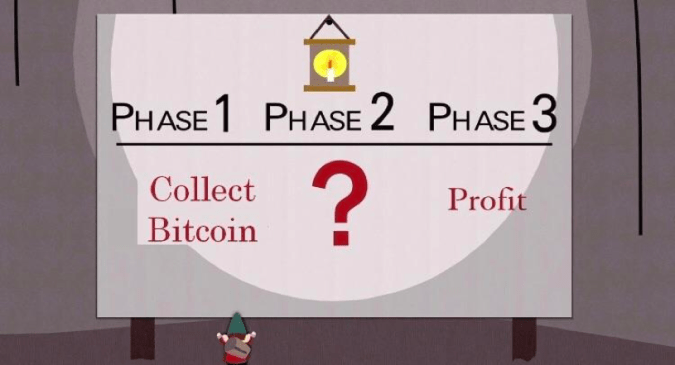
Almost 400 years ago the Dutch were really excited about tulips. In a period of three years, a tulip bulb went from a reasonable value to as much as six times the average person’s annual salary. Today we look at Dutch people selling their homes to buy tulips as crazy (we literally call that bubble “Tulip Mania”). Yet, right now we are watching South Koreans sell their homes to buy a digital “currency” – Bitcoin. Continue reading

Washington Officials Seek to Keep Net Neutral Despite FCC Repeal

network-cable-ethernet-computer-159304

By Wiley Cason

In response to the repeal of Federal Net Neutrality rules, Washington State’s governor and attorney general have both argued that state-level regulations may still prevent Internet service providers (ISPs) from discriminating amongst data offered on their networks.

Continue reading

Why Don’t We Have a Free Bluebook App?

Screen Shot 2018-01-04 at 9.35.25 AM.png

by Christine Minhee

Imagine a monastery for luddites. Outside: brain implants reverse paralysis, gene therapies cure inherited diseases, and self-driving trucks deliver personal quantum computers purchased using payments authorized by face-scanning technologies. Inside: bunioned academics with chips on their shoulders pore over their worn copies of a legal citation manual, lovingly, reverently thumbing through its 560 pages in order to confirm truths like the italicization afforded to “construed in” but not to “construing” (Rule 1.6(c)).

Their holy text is called The Bluebook, and it promises not salvation, but merely, “A Uniform System of Citation.”

The Bluebook has been skewered so many times that it should have its own shish kabob. Above the Law features posts like: Want To Work In-House? Burn Your Bluebook, It’s Sad When The Bluebook Is An Important Part Of Your Day, and Yaw Law Students Support The End Of The Bluebook. UW Law’s own write pieces entitled The Dreaded Bluebook and The Worst System of Citation Except for All the Others. And UW’s Gallagher Library has this to say:

“Think Bluebooking is challenging? So do a lot of other people! There are many different tools out there to help you create Bluebook-formatting citations. But beware–none of these tools are a perfect solution for all of your Bluebook troubles. You will need to double-check your citations to make sure they’re correct even after using one of these tools.”

(Bolded, underlined emphasis is theirs, not mine.) While some students would even call Bluebooking a form of “academic hazing,” the uniform hatred of citation is less intriguing to this author than the Harvard Law Review Association’s stubborn, litigious unwillingness to grant access to the resource in a way that is neither analog nor expensive.

A one-year, digital subscription of The Bluebook is available online for $36. A search for “Bluebook” in the App Store will yield an infuriating swarm of car-buying apps, but a quick Google search reveals The Bluebook’s availability as an iOS-only, $39.99 in-app purchase in an app called Rulebook.

And the only “free,” unaffiliated “Bluebook”—The Indigo Book—was virtually the product of happenstance. When an earlier version of The [real] Bluebook happened to fall into the public domain, an NYU law professor fought to democratize the resource in open-source format, despite The Harvard Law Review Association engaging white-shoe firm Ropes & Gray LLP to fend off the attempt. (Interestingly, the founder of the site that publishes The Indigo Book was also sued for posting the Official Code of Georgia Annotated on his website—an act the State of Georgia described as “terrorism” in its complaint.)

So, why doesn’t the Harvard Law Review publish a free web app and bring The Bluebook outside of the walled, hegemonic garden of academic publishing and into the digital age? Much has been written about copyright claims over The Bluebook, the gist being that Section 102(b) of the Copyright Act states that systems—like a uniform system of citation—cannot be protected by copyright. And according to the Harvard Law Record, a “brief glance at the history of the Internet suggests that in a world where prestige matters, where students and practitioners alike begun their practice with the Bluebook, it is certainly possible to compete with free.”