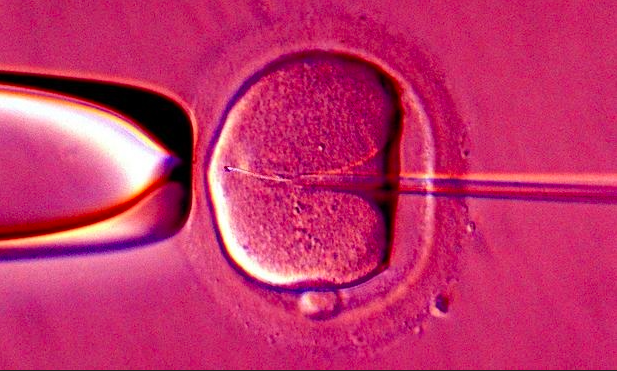
Two Mums and a Dad: UK Approves Technique by Which a Child Has Three Genetic Parents

Screen Shot 2015-02-18 at 12.26.44 PMBy Sam Hampton

On February 3, 2015, the UK House of Commons voted to authorize a fertility technique known as mitochondrial donation. The babies that result from such a technique would have three genetic parents: one father and two mothers. The process shows promise in preventing the passing on of serious mitochondrial diseases from mother to infant. Perhaps belying the controversy surrounding a novel reproductive technology, the vote in the House of Commons was fairly one-sided; there were 382 members in approval and 128 against. Approval by the House of Lords is necessary, but if it is forthcoming, babies conceived by this process could be born in 2016.

The process involves the manipulation of embryos from two women. The nuclear DNA of a woman who will pass on a mitochondrial disease is transplanted into the de-nucleated embryo of a donor. The resulting embryo has sets of nuclear and mitochondrial DNA from two different women, and the process of in vitro fertilization is then used to carry out the pregnancy. The infant born of this process would have the genetic material of three people, but would also hopefully be free of the diseases resulting from the defective mitochondrial DNA. Mitochondrial diseases are untreatable, and those afflicted by them often do not live into adulthood. This new fertility process is the result of lengthy scientific research, and heralded as a medical breakthrough. Proponents of the process say that it provides women who would otherwise pass on these debilitating diseases with the opportunity to have healthy genetic offspring. Continue reading
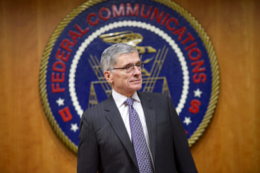
New FCC Proposal Signals Big Win for Net Neutrality Advocates

Screen Shot 2015-02-13 at 1.00.35 PMBy Denise Kim

On February 4, 2015, Tom Wheeler, Chairman of the Federal Communication Commission (FCC) announced, through a Wired op-ed piece, his plan to circulate a new proposal that would allow the FCC to use its authority under Title II of the Communications Act to protect consumer broadband internet and provide stronger “open Internet” protections. The proposal will be subject to a vote by the full commission on February 26, 2015.

The proposal is considered a big win for net neutrality advocates because it could allow the FCC to stop Internet service providers from charging content providers more money for reliable Internet access. The proposal comes as a direct response to President Obama’s speech in November 2014 where he asked the FCC to reclassify the Internet as a public utility and suggested a four point plan for ensuring net neutrality.

Net neutrality, or open Internet, relates to the idea that ISPs and governments should treat Internet data equally in order to preserve its freedom and openness. This could be accomplished by prohibiting the owner of a network from discriminating against information by slowing or tampering with the transfer of any data. Currently, the FCC attempts to ensure net neutrality through the Open Internet Order, which established “high-level rules requiring transparency and prohibiting blocking and unreasonable discrimination to protect Internet openness.” Continue reading

Mandatory Vaccination and Religious Exemptions

Screen Shot 2015-02-11 at 12.13.46 PMBy Nicholas Ulrich

The recent outbreak of measles in some states has caused many to question our present vaccination polices. Vaccinations are old as far as medical technology is concerned. Scientists created the first smallpox vaccine over two centuries ago, and mandatory vaccination requirements started cropping up as the nineteenth century progressed. Today, all states have some form of vaccination policy with regard to measles. Some states, however, allow broad exception for personal or religious reasons. One New York Times contributor, KJ Dell’Antonia, recently argued that states should do away with these exceptions. She stated broadly that the Supreme Court had already ruled that mandatory vaccination polices are constitutional. However, whether states can do away with religious exceptions is more complicated. Last month the Second Circuit issued an opinion in Phillips v. City of New York, dealing with the New York vaccination requirement, which sheds some light on how courts today will treat this question.

The Supreme Court first dealt with a vaccination requirement in 1905 in Jacobson v. Massachusetts. Massachusetts had a policy requiring a small pox vaccination during an outbreak. Jacobson refused to take the vaccine. He claimed that he had taken the vaccine as a child and became seriously ill. The state fined him, pursuant to the statute, and he challenged the fine. The Supreme Court issued a very broad opinion stating that regulation of a public health concern of the state was well within the state’s police powers. However, the Court did not consider the issue under the First Amendment, because the Court did not apply the First Amendment’s Free Exercise Clause to the states until 1940. Continue reading

The FTC Reports on the Internet of Things: Things That May Invade Our Privacy

Screen Shot 2015-02-09 at 3.11.51 PMBy Eric Siebert

The Internet of Things arguably makes our lives easier, but in doing so, does it compromise other values we hold dearly? The Internet of Things is a system whereby objects that are commonplace in a normal lifestyle can connect to the Internet, enabling them to send and receive data to optimize or otherwise increase their abilities and functionality. With such increases in functionality, however, comes the ever-present risk that frequently accompanies changes in technology: Will this have a negative impact on our privacy? This is the very question the FTC sought to address in its report on the Internet of Things distributed last week. (We previously reported on the FTC’s preliminary examination of the Internet of Things here.) The new report discusses general ideas regarding the Internet of Things and sets forth best practices for businesses to follow in order to retain adequate consumer confidence in the products and the distributing companies themselves.

The Internet of Things presents many potential benefits to consumers. Among other things, it can be used to encourage and optimize energy efficiency throughout a household through integration with various appliances. It can also protect drivers on the roadway by warning drivers of various dangers, aiding in the development of autonomous vehicles (a topic previously discussed on this blog here and here). Further, the Internet of Things can help patients with medical conditions better communicate with their physicians to better manage their conditions. However, with such benefits, the FTC has also identified several security risks created by integration of the Internet of Things, namely: (1) enabling potential unauthorized access to personal information, (2) facilitating attacks on other systems, and (3) creating risks to personal safety. Continue reading

Space, the Final (Capitalist) Frontier

Screen Shot 2015-02-06 at 2.03.38 PMBy Doug Logan

Thanks to William Shatner and the popular TV show and movie franchise Star Trek, many think of outer space as the final frontier. That sentiment has recently been fully adopted by some of the most powerful companies in the world that are interested in the nearly limitless potential that space offers. Given that most law in this area is based on international law principles, it remains unknown how U.S. courts will handle disputes in commercial space law. Issues range from colonizing Mars, to more common and immediate concerns, such as contractual disputes and telecommunications progress.

In 2014, SpaceX filed a lawsuit against the U.S. Air Force claiming that the Air Force improperly awarded a contract to the United Launch Alliance (“ULA”), a joint venture between Lockheed Martin and Boeing. The complaint alleges that the Air Force did not take competing bids from other private contractors such as SpaceX. The contract guaranteed the purchase of 36 rocket cores from ULA for national defense. Founder Elon Musk of SpaceX claims that if allowed to bid, SpaceX would save the government over one billion dollars. (SpaceX already has a 1.6 billion-dollar contract with NASA to deliver resupply materials to the international space station.) Recently, federal district court Judge Susan Bradon denied ULA’s motion that the lawsuit should be dismissed based on supposed congressional ratification of the contract. In two recent spending bills, Congress passed language stating that the money should be paid to ULA. The court was not persuaded by ULA’s argument because all of the court proceedings have been under seal, and therefore Congress could not have had knowledge of the specifics of the lawsuit and would not be in a position to ratify the contract. Continue reading