
Thanks to Technology, Home May No Longer Be Your Sanctuary

Screen Shot 2015-02-04 at 1.47.56 PMBy Farah Ali

Police can now ‘see’ through the walls of your home, even without a warrant. A company called L-3 Communications has developed the RANGE-R, a radar device with stepped frequency continuous wave technology. The RANGE-R can “detect and measure the distance to moving and near stationary personnel through the walls constructed of common building materials.” This means that the handheld radar can be placed outside of a house and can report a three-dimensional display of what is happening inside the house. It can even detect a person who is simply breathing.

The radar was designed to be used in the battlefield, specifically in Iraq and Afghanistan. But, L-3 Communications has been marketing the radar to police departments and other emergency response organizations in the United States. Over the last two years, at least 50 police agencies have obtained access to this radar. However, the use of this machine was kept under the radar until this past December when the Tenth Circuit in United States v. Denson revealed its use to the public. Continue reading
Music, Limited: Another Pre-1972 Sound Recording Suit Could Threaten Music Streaming Services

Screen Shot 2015-02-02 at 2.40.14 PMBy Jeffrey Echert

The battle over pre-1972 sound recordings continues. For the uninitiated, here’s the lowdown: Songs recorded before February 16, 1972 aren’t covered under the 1976 Copyright Act; instead, they’re covered by preexisting state copyright regimes. Over the last couple of years, this disparity has come to a head—for example, one New York state court ruled that because of a non-preemption provision in the Copyright Act, online service providers don’t get to claim DMCA safe harbor protections when dealing with pre-1972 sound recordings.

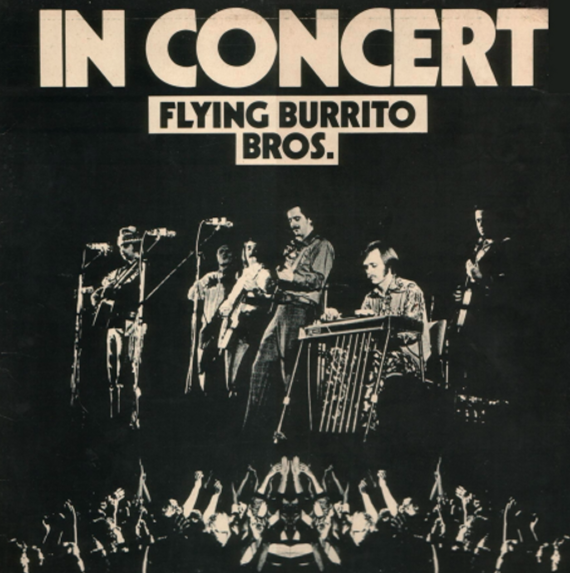
The latest player in this burgeoning battleground is Zenbu Magazines, a holding company that claims to own songs by bands such as the Flying Burrito Brothers and Hot Tuna. It brought suit earlier this month against a host of music-streaming services, such as Apple, Google, Slacker Radio, Escape Media Group, and Sony. While most of those complaints were voluntarily withdrawn less than a week later, the complaint against Sony was not. In that complaint, Zenbu alleges misappropriation and conversion of its songs by Sony’s Music Unlimited service, which delivers streaming content to PlayStation and mobile users. What’s more, the complaint purports to be a class action—we might very well see other aging musicians join suit against Sony, seeking redress of what they feel is an oversight in the copyright regime. It might even result in pre-1972 sound recordings being removed from streaming services, if the required royalties end up prohibitively high. Continue reading

High Time to Revisit the First Sale Doctrine: Omega S.A. v. Costco Wholesale Corporation

Screen Shot 2015-01-28 at 12.15.32 PMBy Chris Ferrell

Normally, James Bond is the fictional MI6 spy who subdues international chaos before it starts. However, James Bond has yet to stop the decade-long battle between Omega S.A. and Costco Wholesale Corporation. Neither side has backed down in their international fight to claim the title for the “first sale doctrine” of a watch made famous by Mr. Bond.

In 2003, Omega and Costco “discussed the possibility of Costco carrying Omega watches,” but an agreement was never met. A year later, Costco began purchasing Omega “Seamaster” watches on the “gray market” to sell in Costco warehouses in the United States. (Gray market goods, or parallel imports refer to genuine branded goods that are imported into a market and sold there without the consent of the owner of the trademark or copyright of the goods.) The Seamaster watches bore the “Omega Globe”—a copyrighted symbol—on their backs. When Omega caught wind of Costco’s actions, it sued Costco for copyright infringement, specifically the importation of copyrighted work without the copyright holder’s permission. Costco responded that its importation right was a subset of its distribution right, and that the first sale doctrine provided it with an exception to the distribution right. Continue reading

SCOTUS Hears Challenge to Colorado Law Regulating E-Commerce Transactions

By Craig Henson

The U.S. Supreme Court recently heard argument in a case that could have far-reaching implications for online retailers and their customers.

On December 8, 2014, the Court heard oral argument in Direct Marketing Association v. Brohl. Plaintiff Direct Marketing Association (DMA)—a trade organization composed of businesses that market products via catalogs, advertisements, broadcast media, and the Internet—sued the Colorado Department of Revenue (Department) in federal district court, seeking to enjoin enforcement of Colorado’s reporting and information regulations related to the state’s use tax.

Colorado requires its residents to pay a use tax on purchases of tangible goods from retailers with no physical in-state presence. This use tax primarily targets purchases from out-of-state online retailers that do not collect Colorado sales tax. The state requires its taxpayers to self-report any transactions with such non-collecting retailers on their tax returns. The state requires taxpayer self-reporting because the Supreme Court held, in Quill Corp. v. North Dakota, that the “negative” or “dormant” Commerce Clause prohibits a state from requiring an out-of-state retailer with no physical in-state presence to collect the state’s sales or use tax. Continue reading

The Hidden StingRay Within the Murky Waters of Surveillance

Screen Shot 2015-01-23 at 2.15.27 PMLaw enforcement use of IMSI catchers and their insidious efforts to hide it.

By Miriam Swedlow

Thanks to NPR’s radio program, Serial, thousands of Americans now know that a person’s movements can be verified by following the interaction between a cell phone and nearby cell phone towers. An International Mobile Subscriber Identity (IMSI) catcher, commonly referred to as a “StingRay,” takes this concept a step further. The device tricks cell phones to connect to it by masquerading as a cell phone tower. Once connected, the StingRay provides “real time” tracking of a phone’s location and is capable of obtaining data from the phone (including emails, photos, and contact files). Although Federal and local law enforcement increasingly use these devices as part of surveillance activities, they have been reluctant to disclose to judges and the public exactly how and when they use them. This is likely because IMSIs cast a broad net, gathering invasive data on scores of innocent people in the process of tracking a single suspect.

Law enforcement agencies have utilized a “smoke and mirrors” approach to keep their use of StingRay equipment a secret. After the 2001 Patriot Act, the Department of Justice declared that law enforcement would need a Pen/Trap order before using direct surveillance technology on communication systems, such as IMSI catchers. Almost fifteen years later, there have been only two published magistrate opinions on the use of IMSI catchers. The lack of judicial opinions is directly related to law enforcement’s pervasive practice of obfuscating the use of IMSI catchers in pen register applications without explicitly disclosing the nature of the technology. For example, officers in Sarasota, Florida referred to the StingRay as a “source” in official documents to obtain warrants. In Tacoma, Washington, judges learned that they had signed off on the use of IMSI catchers through local newspaper reporting. The result is that judges have unwittingly granted hundreds of orders to use IMSI catchers. Continue reading