Obama Gives His Support for Net Neutrality and for the Classification of ISPs as Common Carriers

By Max Burke

This past Monday, President Obama formally addressed the ongoing dispute over whether the Internet should be “open” and “neutral.” In a written statement and an accompanying video, the President asked the Federal Communications Commission (FCC) to “ implement the strongest possible rules to protect net neutrality.”

In case you haven’t seen or read any technology-related news this past year, here’s a quick primer on what Neil Irwin of The New York Times described as “one of the most important policy disputes that will determine the future of the Internet.” Net neutrality, or open Internet, is the idea that Internet service providers (ISPs) “should treat all Internet traffic equally” and should not be able control what websites users can or can’t access. This is essentially the system we have been living under since the dawn of the Internet. But ISPs, including Comcast and Verizon, want to be able to manage some of that access by collecting fees from certain content providers (e.g. Netflix) “in exchange for special access to Internet users.” As Irwin noted, this type of paid prioritization is essentially the business model of cable television providers (many of whom are also ISPs). And like the “boom in content for cable television customers,” ISPs believe there would be a similar “explosion of creativity on the Internet” if they were able to prioritize websites and applications. Continue reading


Let’s Get It On: Judge Allows Lawsuit to Proceed Against Robin Thicke

Screen Shot 2014-11-12 at 3.32.18 PMBy Jeffrey Echert

The ongoing saga of Robin Thicke, one marked by bizarre admissions, inconsistent statements, and general incredulity, continues. On October 30, Judge John Kronstadt, sitting in the Central District of California, denied Thicke’s motion for summary judgment in a highly publicized case against the heirs of Marvin Gaye.

We first reported on the suit nearly a year ago–-the Gaye family claims that two songs by Robin Thicke, “Blurred Lines” and “Love After War,” infringe on the copyrights of two Gaye compositions, “Got to Give It Up” and “After the Dance,” respectively. Both sides submitted their dueling musicologists, and the conclusion is this: the possibility of substantial similarity between the songs is high enough to go to trial. Given that direct evidence of copying is exceedingly rare in copyright cases, courts allow plaintiffs to show copyright infringement by (1) showing that the defendant had access to the work purportedly copied, and (2) that substantial similarity exists between the works at issue. The first point, access, wasn’t contested, but the dispute over the second, with Kronstadt’s ruling, warrants trial. Continue reading

Apple Inc. Pushes the Supreme Court to Move on Patent Claim Construction Review

Screen Shot 2014-11-10 at 2.12.07 PMBy Miriam Swedlow

Apple Inc. recently filed a writ of certiorari with the Supreme Court requesting that the Court review the Federal Circuit’s ruling in Ancora Tech., Inc. v. Apple, Inc. in light of recent and pending decisions from the high court. The case underscores the need for clarification of the standard of review for patent construction in light of complex technology.

Apple’s petition, filed on October 20, presents the following issues: (1) Whether review of Ancora should wait until after the Court’s ruling in Teva Pharm. USA, Inc. v. Sandoz, Inc., which will determine whether review of patent claim construction should be done de novo, because the Federal Circuit applied de novo review in rejecting the district court’s claim construction of a key term in the case; and (2) Whether the Court should grant, vacate, and remand Ancora for reconsideration after the Court’s June 2, 2014 rejection of the Federal Circuit’s patent indefiniteness standard in Nautilus, Inc. v. Biosig Instruments, Inc.

Ancora holds a patent on an anti-piracy process that checks software and determines whether it is operating within the scope of a license. Unlicensed software is prevented from operating. Ancora filed suit against Apple, alleging that Apple’s iOS mobile operating system infringes on this patent. A key issue in the case is the scope of the term “program” within the patent claim. The district court held that the claim construction of the term “program” described “a set of instructions for software application that can be executed by a computer.” Applying this definition, the district court dismissed the claim on summary judgment. Ancora appealed and the Federal Circuit applied de novo review of the claim construction. It rejected the district court’s construction of “program” as limited to application programs and ruled that Apple’s iOS program violates Ancora’s anti-piracy patent. Continue reading

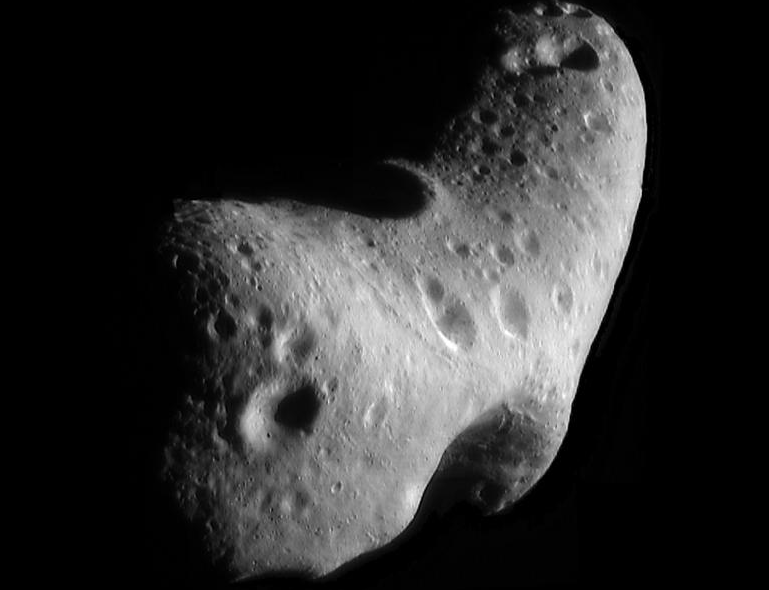
Mining in the Final Frontier

Image credit: NASA/JHUAPL

Image credit: NASA/JHUAPL

By Talia Loucks

It all began when aerospace consultant, Gregory Nemitz, claimed he owned an asteroid. In 2003, Nemitz sent NASA an invoice, demanding $0.20 a year for storage of a NASA probe on his asteroid. When NASA refused to pay, Nemitz filed suit against the United States, alleging it had taken his property without just compensation. A federal district court dismissed Nemitz’s suit, ruling that he had failed to prove he had any property rights. The Ninth Circuit affirmed the district court’s dismissal. The Supreme Court has yet to rule on whether a general right to own property exists in space, but this case makes one certain: A property in space right cannot come from simply creating a website and claiming ownership.

Move ahead 13 years and it is no longer solely NASA and other sovereign nations’ space programs parking their spacecraft outside of the earth’s atmosphere. There is a growing space economy being developed through private companies. This new economy includes tourism, exploration and now asteroid mining.

Asteroid mining, if successful, could be extremely lucrative. Valuable minerals such as platinum, palladium and gold could be mined. One of the most valuable resources believed to be available for mining from asteroids, however, is water. Additionally, asteroids may hold all of the components for life and could be a window into the history of the universe while helping to continue to advance science. Continue reading

GPS Tracking and the Exclusionary Rule

Screen Shot 2014-11-05 at 5.11.04 PMBy Nicholas Ulrich

A year ago, the Third Circuit in United States v. Katzin issued an opinion on GPS tracking, stating unequivocally and for the first time that a warrant is required before police can place a GPS tracking device on someone’s vehicle. Nine months ago, the Third Circuit agreed to rehear Katzin en banc. (We previously covered this case and discussed the uncertainty this rehearing created as to the warrant requirement.) About a month ago, the Third Circuit published its en banc decision. In contrast to the resounding endorsement of the warrant requirement by the panel, the en banc court focused on the good-faith exception to the exclusionary rule. The court ultimately allowed the GPS tracking data to be admitted at the trial even though it was obtained without a warrant.

The uncertainty as to whether a warrant is required stems from the Supreme Court’s decision in United States v. Jones. In Jones, the Supreme Court for the first time stated that placing a GPS tracker on a vehicle is a “search” within the meaning of the Fourth Amendment. The Court, however, did not state specifically whether a warrant would be required for such searches in the future, or, in the alternative, whether some lesser standard such as reasonable suspicion would suffice. (Check out our blog post following the Jones decision.) Continue reading