
THE UNKNOWN PRICE OF FREEDOM: The real cost of Getty Images’ free-for-all evolution

Getty-Images-icon

By Annie Allison

Getty Images recently announced that it will stop charging (and in some cases suing) for non-commercial uses of its copyrighted imagery and will start allowing bloggers and social-media users embed stock pictures in a controllable way. Getty’s new strategy will allow anyone to select an image and copy a code to use that image on their own website. While proponents cheer Getty for adapting to the rapidly evolving online marketplace, others question what the costs of these free images may be on privacy.

Craig Peters, senior vice president of business development, content and marketing at Getty Images explained the reasoning for the company’s shift in approach: “It’s incredibly easy to find content online and simply right-click to utilize it. … The vast majority of infringement in this space happen[s] with self-publishers who typically don’t know anything about copyright.”

Under its new strategy, Getty Images will serve the image much like YouTube currently does with its videos and will include the full copyright information and a link back to the image’s dedicated licensing page. “There’s a value for Getty Images and the content owners,” says Peters. “We’ll have access to the information on who and how that image is being used and viewed, and we’ll… utilize that data to the benefit of our business.”

Continue reading

Could The Innocence of Muslims Change Copyright Law?

googlegavel-188By Pedro Celis

The anti-Islamic YouTube video The Innocence of Muslims has had widespread ramifications. It caused riots around the world and played a prominent role in the Benghazi scandal. But could the YouTube video also lead to groundbreaking copyright case law?

The Ninth Circuit recently ordered Google to remove the video from YouTube. The court ruled that Cindy Garcia, an actress who appeared in the video for approximately 5 seconds, proved that she was likely to succeed on her copyright claim against the filmmaker. Garcia argued that she had an independent copyright in her performance in the film, despite the fact that she received $500 for her performance. Although she did not contest that her performance was both scripted and directed, the court found that her performance had enough creativity to support an independent copyright claim.

Continue reading

Live Video Testimony: The New Frontier, or Just a Bad Idea?

Live Video TestimonyBy Shira Zucker

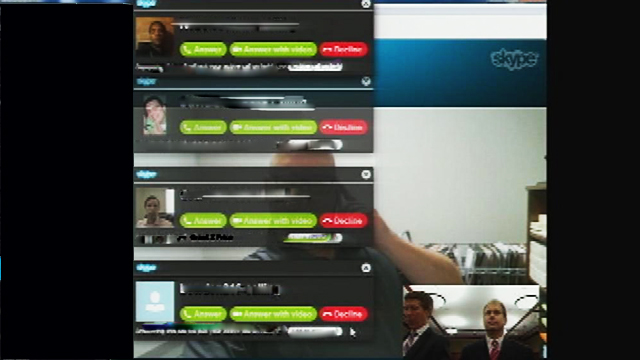
Last summer, those who tuned in to watch live telecasts of the George Zimmerman murder trial witnessed the prosecution fumble through an embarrassing technological snag.  The prosecution’s cross-examination of a defense witness who appeared remotely via Skype was interrupted when dozens of other Skype users “jammed” the chatline.  According to at least one source, pranksters had posted the witness’s Skype username to the online community 4chan and the username was broadcast on national television.  After a barrage of distracting “pings,” the judge aborted the Skype testimony and ordered that it continue via speakerphone.

Remote testimony is not new to courtrooms.  Back in 1990, the Supreme Court ruled in Maryland v. Craig that testimony by an alleged child sex abuse victim via Closed-Circuit Television (CCTV) did not violate the Confrontation Clause of the Sixth Amendment.  An increasing number of trial courts have since ruled that live web-based video interviews in criminal trials do not impinge the defendant’s right to confront witnesses against him.  Notably, the CCTV technology used in Craig transmits a closed signal.  Arguably, web-based technologies could increase the risk of interference with the defendant’s right of cross-examination or the jury’s ability to adequately assess the witness’s body language and demeanor, due to the threat of technical glitches or unsecure networks.

Continue reading

Protecting the Text: Court Settles National Debate on Privacy in Washington State

PhoneBy Rachael Wallace

On February 27th, the Washington State Supreme Court reversed two cases in which criminal defendants had their text messages read and later used against them in trial. The Washington State Supreme Court is one of many courts weighing in on this national debate: whether text messages are “private” and protected from warrantless searches under state and federal constitutions.

Courts at the state and federal level have struggled with the intersection of technology and privacy, so much so that the U.S. Supreme Court is scheduled to hear arguments next month on the issue. In Washington, the Supreme Court did not reach the question of whether the warrantless searches of cell phone text messages violated the U.S. Constitution; instead, the Court determined that these warrantless searches violated the state constitution and the Washington privacy act.

Continue reading

Cybersquatter “Trumped” in New York District Court

TrumpBy Alex Boguniewicz

The rich really do get richer. Last week, a federal magistrate judge awarded Donald Trump $32,000 in a case that pitted the billionaire business tycoon against a 34-year old Brooklyn “domainer”—a speculator in unused domain names that may later be desired by individuals and businesses. While we could write off this suit as yet another chapter in the bizarre canon of Mr. Trump’s litigation history it may indeed have implications for the world of online parody and freedom of speech. The judge’s award sent the message that cybersquatting, even when not done for profit, can cost you big time. But is this really what cybersquatting legislation was meant to protect, and does this case overly restrict online fair use?

Cybersquatting is the act of registering, selling, or using a domain name with intent to profit from another’s trademark. Celebrities such as Kevin Spacey and Bruce Springsteen faced difficulty in reclaiming their names from cybersquatters in early cases. To combat this, Congress passed the Anticybersquatting Consumer Protection Act (ACPA), codified at 15 U.S.C. §1125(d), in 1999. A plaintiff bringing an ACPA claim must essentially show (1) its mark—even if it is a personal name—is distinctive or famous; (2) the defendant’s domain name is identical or confusingly similar to the plaintiff’s mark; and (3) the defendant registered the domain name with the bad faith intent to profit from the plaintiff. The ACPA goes on to list nine nonexclusive factors that the courts may consider in determining whether a person acts in bad faith.

But the courts also must take into consideration genuine First Amendment and fair use defenses. In Mayflower Transit LLC v. Prince, the District Court of New Jersey held that the drafters of the ACPA intended to specifically target those with the bad faith intent to profit. Noncommercial uses of a mark, on the other hand, such as for comment, criticism, parody, or news reporting, were determined to be outside the scope of the act. While the defendant in Mayflower registered a domain that was confusingly similar to the plaintiff’s distinctive trademark, he did not act with bad faith intent to profit by using to website to criticize the plaintiff’s company. Conversely, in PETA v. Doughney, the defendant was not afforded First Amendment protection for creating a parody site under the name peta.org—People Eating Tasty Animals—when he suggested that PETA “settle” or “make an offer.”

Continue reading