New Jersey Case Against Andrew “Weev” Auernheimer Dismissed for Lack of Venue


Image

Andrew “Weev” Auernheimer

By Eric Siebert

On April 11, the Third Circuit Court of Appeals vacated a conviction against Andrew Auernheimer (known among hackers by the nickname “Weev”) on venue considerations. The original case charged Auernheimer with conspiring to violate the Computer Fraud and Abuse Act (“CFAA”) under 18 U.S.C. § 1030, and identity fraud under 18 U.S.C. § 1028(a)(7). After being indicted on both counts by a federal grand jury, Auernheimer moved to dismiss the indictment based, in part, on improper venue. The United States District Court for the District of New Jersey denied his motion and found that New Jersey was a proper venue because 4,500 residents were affected by Auernheimer’s actions. Rejecting this reasoning, the Third Circuit reversed the district court’s decision and ruled that venue was improper, finding that New Jersey was not the site of any “essential conduct elements” of the crimes for which Auernheimer was charged.

The charges against Auernheimer centered on the unauthorized collection of about 114,000 iPad users’ email addresses through AT&T’s servers (AT&T was the exclusive data service provider for iPads at the time). Daniel Spitler, Auernheimer’s co-conspirator, first recognized that he could crack into AT&T’s registration and log-in systems, allowing him to extract the emails of any user that had previously registered their accounts through AT&T. After sharing his discovery with Auernheimer, the two proceeded to collect over 100,000 emails through a “brute force” attack on AT&T’s servers. While still collecting email addresses, Auernheimer contacted members of the media, including a reporter at Gawker, in order to publicize their activities. Gawker published a story about the hackers and the flaw exploited in AT&T’s system, mentioning some names of affected individuals, but only showing redacted images of a few email addresses. Importantly, at all times relevant to the case, Spitler was in San Francisco, California, Auernheimer was in Fayetteville, Arkansas, the servers accessed by the two were physically located in Dallas, Texas and Atlanta, Georgia, and it was undisputed that the Gawker reporter was not in New Jersey. Continue reading →
Pandora’s Box, Reopened: A Shift in Record Labels’ Litigation Tactics May Mean Serious Problems for Online Streaming Services

ImageBy Jeffrey Echert

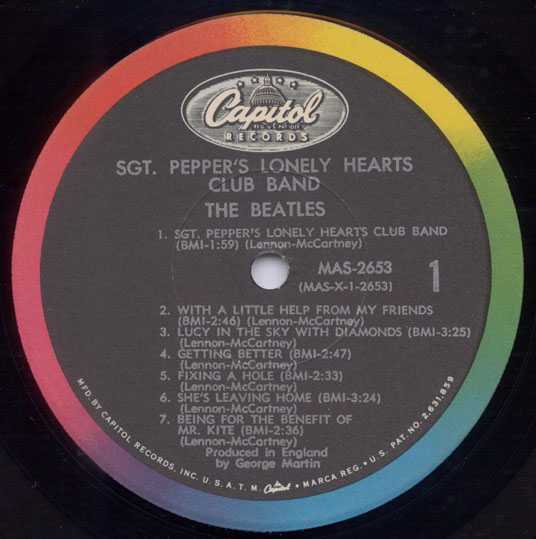
Pandora’s in trouble again. We previously covered Pandora’s licensing dispute with performing rights organizations ASCAP and BMI, but this time around, it’s a bit more serious. A group of record labels, including Capitol, Sony, and UMG, filed a lawsuit against the streaming music service, claiming that it’s infringing the copyrights in a host of sound recordings, including works by the Beatles, Bob Dylan, and David Bowie. But the record labels filed the complaint in New York state court, alleging state law misappropriation. Why not go for federal charges, with their statutory damages provision? Because the record labels are specifically claiming infringement of recordings made before 1972, which aren’t protected under federal copyright.

Targeting pre-1972 recordings is a relatively new tactic among record labels, but one they’ve taken a shine to. Just last year, a group of labels filed suit in California state court against SiriusXM Radio alleging the same state law misappropriation theory. So what’s with the sudden shift in tactics? It might stem from Universal Music Group v. Escape Media, a 2012 New York state appellate decision. There, the court ruled that the 1976 Copyright Act explicitly refused to abridge the rights and remedies available to state law copyright holders in pre-1972 recordings – and that later federal laws (like the Digital Millennium Copyright Act) can’t reduce those entitlements. The DMCA gives online service providers a safe harbor from the consequences of their users’ infringing actions– if they comply with the DMCA’s notice and takedown regime, they aren’t liable for the actions of third parties. While filtering out copyrighted content is difficult, it’s better than a lawsuit. But the court denied Escape Media that safe harbor–it simply wouldn’t float as a defense for pre-1972 recordings. Without a defense, the court found that Escape Media infringed all the pre-1972 recordings at issue. While some might question the merits of a New York state court making important decision about federal copyright law, the same question came up in a federal case and is currently on interlocutory appeal to the Second Circuit. Continue reading →

Wearable Technology: Better and Worse Than You Thought

ImageBy Doug Logan

The idea of wearable electronics has long been associated with distant technologies that never quite materialize. But as technology keeps marching forward, so does the prospect of having highly functional devices that are layered on, attached to, or even embedded into our bodies. Many are now familiar with Google’s Google Glass, the wearable eyewear that provides users with a functional screen and camera attached to a pair of glasses, yet fewer are familiar with other wearable technologies on the horizon.

Intel recently announced its “Make It Wearable” competition finalists. The finalists include: a project aimed at allowing users to run on a treadmill and read at the same time by tracking the vertical motion of the user and matching the text’s movement; a jacket that cools down hot people and warms cold people; a wisdom tooth monitoring device that tracks conditions in one’s mouth after wisdom teeth removal; a small listening device designed to track the voices of those speaking to children; and a special fabric designed to absorb human sweat and carbon dioxide in order to produce oxygen. Continue reading →

Suit over Michael Jackson Hologram Could Signal Future of the Holography Industry

Screen Shot 2014-04-17 at 9.43.11 AMBy Alex Boguniewicz

The phenomenon of bringing deceased musicians back to life on stage via “hologram” technology may have hit a bump in the road with the most recent suit involving the controversial process. We have previously covered some of the copyright implications of these holographic resurrections, but now Hologram USA and Musion Das Hologram Limited have filed a complaint in the Federal District Court for Central California against Cirque Du Soleil alleging patent infringements stemming from Cirque Du Soleil’s use of a Michael Jackson hologram in a stage show. Hologram USA and Musion claim to exclusively hold the North American patents on the devices that generate these images. This case will likely prove to be a major indicator of whether we will see more artists performing on stage via this method, or whether this will become a tightly guarded industry.

These images are not holograms in the strict sense of the word, but instead have their origin in a 19th Century illusion technique known as “Pepper’s Ghost,” an effect that creates an eerie image by carefully manipulating an object’s reflection against a backdrop. Musion used this trick as the basic starting point to develop apparatuses that create the illusion of a three-dimensional image “virtually indistinguishable from real-life bodies.” Musion holds the patents for two devices necessary to generate this projection: 1) a tool to display the moving images on the stage (the “519 Patent”) and 2) the actual projection apparatus and method for the Pepper’s Ghost illusion (the “212 Patent”). Musion subsequently granted Hologram USA an exclusive license to use these patented devices. Together, the two inventions allowed Pepper’s Ghost to make the leap from theme park and magic show mainstay to live concert prop, most notably during the 2012 Coachella Valley Music and Arts Festival, when Tupac Shakur “performed” on stage with Dr. Dre and Snoop Dogg nearly 16 years after his death. Continue reading →

Death by Drones: Is a U.S. Citizen Entitled to Due Process?

ImageBy Nicholas Ulrich

Last Friday, Judge Rosemary Collyer of the District Court for the District of Columbia dismissed the case brought by Nasser Al-Aulaqi over the drone killings of his son, Anwar Al-Aulaqi, and grandson Abdulrahman Al-Aulaqi. Unmanned U.S. drone strikes in Yemen killed Anwar and Abdulrahman, both of whom were United States citizens. The Obama Administration specifically targeted Anwar after deeming him a terrorist and placing him on a “kill list.” Though suspected of facilitating the attempted Christmas Day bombing of Northwest Airlines Flight 253 in 2009, Anwar was never charged, tried, or convicted of any crimes. Despite this, a U.S. drone killed him on September 30, 2011 while he was driving a car in Yemen.

Two weeks later, an unmanned drone strike killed Anwar’s teenage son, Abdulrahman, while he was sitting in an open-air café in southern Yemen. Abdulrahman and the six others killed with him were not specifically targeted nor officially deemed terrorists by the Obama Administration. Rather, they were mere bystanders in a strike intended for Ibraham Al-Banna, an Egyptian national. Incidentally, Al-Banna was not killed in the strike.

Continue reading →