European Court of Justice Allows Linking to Publicly Available Online Content

GavelBy Evan Brown

Can you infringe copyright by linking to somebody else’s work? In the United States, courts have largely answered “no,” relying on the fair use doctrine. According to a recent ruling of the European Court of Justice (ECJ), the answer in the European Union (EU) is also now “no,” at least so long as the link-targeted content is freely available to anyone on the Internet.

The ECJ was responding to a certified question from a Swedish appellate court. That court was hearing a copyright infringement case brought against an aggregator site called Retriever Sverige that linked to, among other things, articles from the Swedish newspaper Göteborgs-Posten’s website. Notably, the organization of Retriever Sverige’s own site made it difficult to determine whether a user clicking a link had actually accessed the newspaper’s website rather the aggregator’s. This was similar to the scenario faced by U.S. courts in Kelly v. Arriba Soft and Perfect 10 v. Google. But while those cases turned on fair use consideration, the ECJ based its ruling on the nature of Internet distribution itself.
Continue reading

Jewel-Osco Can’t “Be Like Mike”: Seventh Circuit Holds Grocery Chain’s Congratulatory Advertisement Constitutes Commercial Use

Michael-Jordan-Jewel-Kosco-A-SHOE-IN-ad-via-LIKELIHOOD-OF-CONFUSION-blogBy Amanda Brings

Want to take out an advertisement spread to congratulate Michael Jordan on his induction into the Naismith Memorial Basketball Hall of Fame? According to the Seventh Circuit’s recent decision in Jordan v. Jewel Food Stores, Inc., you better have the NBA legend’s permission before you do.

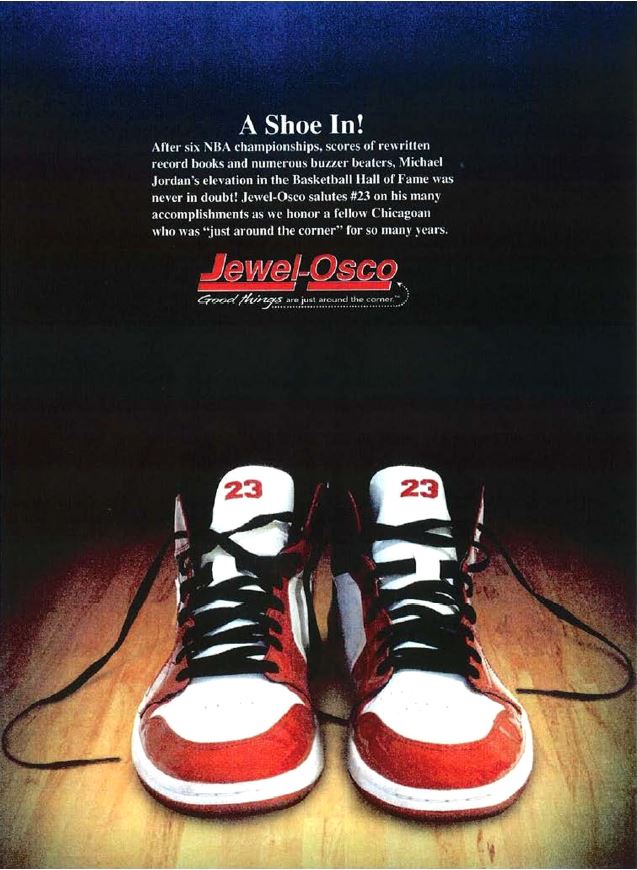
In 2009, grocery chain Jewel-Osco placed a congratulatory advertisement in a Sports Illustrated special edition issue commemorating Michael Jordan’s career and his induction into the Hall of Fame.  The advertisement featured a pair of basketball shoes bearing Jordan’s famous number 23 and the headline “A Shoe In!” with the following text:

“After six NBA championships, scores of rewritten record books and numerous buzzer beaters, Michael Jordan’s elevation in the Basketball Hall of Fame was never in doubt! Jewel–Osco salutes #23 on his many accomplishments as we honor a fellow Chicagoan who was ‘just around the corner’ for so many years.”

The advertisement also included Jewel-Osco’s logo and slogan, “Good things are just around the corner.”

As the Seventh Circuit stated in its opinion, “To Jordan the ad was not a welcome celebratory gesture but a misappropriation of his identity for the supermarket chain’s commercial benefit.” Continue reading

The Bitcoin E-Pickpocketing Scandal: What’s a Consumer to Do?

bitcoin-1editBy Misa Bretschneider

On Tuesday, Mt. Gox, the world’s leading Bitcoin exchange, abruptly closed down its website amid reports that the company had lost 744,408 Bitcoins—equivalent to about $380 million, or 6% of the total Bitcoins in circulation—in a large-scale theft.  The theft, which apparently went unnoticed for years, involved a transaction malleability glitch that allowed hackers to take advantage of unconfirmed transaction payments and seep funds from Mt. Gox without notice—until now.

The theft further mars Bitcoin’s already shaky reputation, and the latest attacks signal another “setback for efforts to gain legitimacy for the virtual currency.”  However, some optimists view the theft as merely “growing pains” for the cyptocurrency, arguing that the fall of Mt. Gox will only lead to a more stable future for the Bitcoin.  As Anthony Hope, a former British Treasury official and now head of compliance at Hong Kong-based MatrixVision, noted, “It’s good for us as a business, not so good for us as consumers . . . Over the longer term it will be good for Bitcoin because over time the entire ecosystem will be made more robust.” Others are not so optimistic, viewing this most recent incident, the latest in a string of thefts, as writing on the wall that the end of Bitcoin is near.

Continue reading

Destroying Expression in the Name of Expression: A Civil Disobedience Tradition

Winter Blog Photo

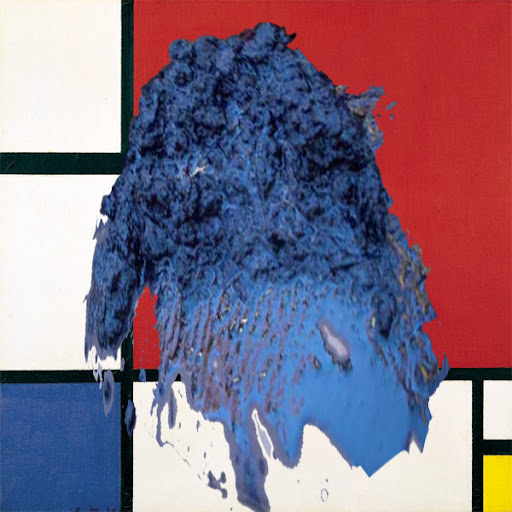
In 1996 Jubal Brown destroyed this work by Piet Mondrian to make a statement about “oppressively trite and painfully banal art”

By Matthew Fredrickson

On February 18, Maximo Caminero intentionally destroyed a vase from Chinese artist Ai Weiwei’s exhibition while it was housed at the Pérez Art Museum in Miami, Florida. After he destroyed the vase, he was promptly arrested and charged with criminal mischief. Caminero did not resist arrest; rather, according to the Miami New Times, he “waited for authorities peacefully and never resisted punishment.” Caminero said that he “did it for all the local artists in Miami that have never been shown in museums here.” Caminero explained that he chose Ai’s exhibition in particular because he saw a photo depicting Ai destroying a vase, which he viewed “as a provocation by [the artist] to join him in an act of performance protest.”

Unsurprisingly, though, the Museum and Ai did not approve of Caminero’s “protest.” The Museum’s official statement on the matter noted that “we have the highest respect for freedom of expression, but this destructive act is vandalism and disrespectful to another artist and his work.” Similarly, Ai said Caminero’s “argument does not support the act,” and “[i]f he really had a point, he should choose another way, because this will bring him trouble to destroy property that does not belong to him.” While it is true that Caminero’s act falls well outside First Amendment protections, to say that it was mere, nonsensical vandalism denies a strong and respected tradition in civil disobedience: the public destruction of artistic work to achieve a political effect.

Continue reading

Oh, “Dumb Starbucks,” What Art Thou?

dumb-starbucks-coffee-650x487By Farah Ali

In the beginning of February, the establishment “Dumb Starbucks” opened up its first faux store, pushing the boundaries of trademark law. The storefront looks like an actual Starbucks both inside and outside; complete with the Starbucks logo, drink names, and music. However, the word “Dumb” is placed in front of each of these. For example, you can order a “Dumb Grande” size of “Dumb Vanilla Latte” and buy a “Dumb Nora Jones” CD.

The store claims to avoid trademark trouble because adding the word “Dumb” in front of words is sufficient to classify the establishment as a parody. In fact, the owner is a comedian who claims that the storefront is a museum and the coffee—given out free of charge—qualifies as an art piece. Shortly after opening, however, the Los Angeles Health Department shut down the shop. The usually litigious Starbucks has not yet pressed charges. Still, this venture has tested the edges of trademark law, particularly the doctrine of dilution by blurring.

A strict reading of 15 U.S.C.§1125(c)(3)lays out exceptions to otherwise diluting uses. “Dumb Starbucks” relies on §1125(3)(a)(ii), which excludes parodic uses. By adding the word “Dumb”, it could certainly be said that the store is making fun of the famous franchise. However, employing close statutory reading, the exclusion excepts any fair use “of a famous mark by another person other than as a designation of source for the persons’ owns goods or services”. Since “Dumb Starbucks” is effectively using the Starbucks logo as its own, the argument that its use falls under this exclusion is fairly weak.

Continue reading