R U Driving?

By Kristine JacobsKristin Blog photo

How much thought do you put into a text message before you send it? Do you consider where the recipient is and what he might be doing? A New Jersey court wants you to do just that.

Last month New Jersey became the first state in which the sender of a text message can be held liable for an accident that results when the recipient reads the text message. The New Jersey Appeals Court concluded that “a person sending text messages has a duty not to text someone who is driving if the texter knows, or has special reason to know, the recipient will view the text while driving.”

Continue reading →

Better Charges? The Glafira Rosales Indictments Might Have Missed the Mark

Blog Picture (1)By Matthew Fredrickson

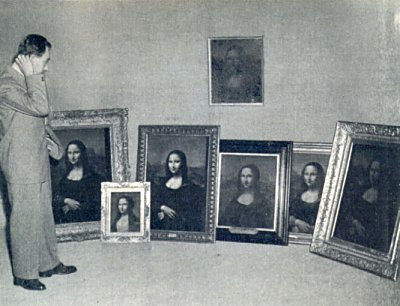
Glafira Rosales was arraigned last month on criminal charges because of her suspected involvement in the sale of counterfeit artwork to two Manhattan galleries, but the charges seem inadequate. Starting in the early 1990s, Rosales allegedly resold 63 works of Pei-Shen Qian as those of more famous painters, making millions of dollars. The complaint against her originally alleged eight counts of tax fraud. On July 19, 2013, Rosales was arraigned on her first indictment, which added counts of wire fraud and money laundering. On August 19, she was arraigned again on a superseding indictment, which added conspiracy to commit wire fraud and money laundering.

After the first indictment, The Art Newspaper reported that allegations of Rosales’ false statements and sale of counterfeit artwork constituted wire fraud. Though this classification is essentially true, these charges appear to have very little to do with the false statements and counterfeit pieces themselves, or the damage to the international art community. These charges do not appear to punish the real crime: stealing the artists’ names.

Continue reading →

Conceptualizing the 2013 DREAMers While Commemorating the 1963 “Dream”

DREAMersBy Chelsey Heindel

Fifty years after the historic March on Washington for Jobs and Freedom, last week provided numerous occasions to commemorate the exalted civil rights event—Dr. Martin Luther King, Jr.’s clarion call for freedom—and ongoing efforts to realize social equality. Despite a surplus of media coverage, audiences overwhelmingly encountered only abbreviated broadcasts of King’s “I Have a Dream” speech due to its copyright protection.

Continue reading →

Will the Explosion of 3D Printing Mark the Implosion of Copyright Law?

ku-bigpicBy Misa Bretschneider

Last Wednesday marked another chapter in the clash between 3D printing and copyright law. Square Enix, the Japanese game developer behind Final Fantasy VII, devastated gaming fans when it pulled the plug on the sale of fan-made, 3D-printed Final Fantasy VII figures. When Joaquin Baldwin decided to use 3D printing technology to recreate and sell high-quality figures of the game’s most popular characters on Shapeways (a marketplace for user-designed 3D-printed objects), the figures started selling like hotcakes. However, Square Enix soon learned of Baldwin’s efforts and sent a DMCA takedown notice to Shapeways. Adhering to its takedown policies, Shapeways promptly removed the merchandise from Baldwin’s profile “[i]n order to comply with the DMCA and protect intellectual property right owners”.

Continue reading →

Washington Journal of Law, Technology & Arts Publishes Summer 2013 Issue

The Washington Journal of Law, Technology & Arts (LTA Journal) has published its Summer 2013 Issue. The LTA Journal publishes concise legal analysis aimed at practicing attorneys on a quarterly basis.

The issue’s first article, by Managing Submissions Editor Caitlin Forsyth, is “Repairing the Antibiotic Pipeline: Can the GAIN Act Do It?” The article explores the GAIN Act, which incentivizes pharmaceutical companies to invest in antibiotic research and development, and suggests why the Act may not solve the growing antibiotic resistance problem.

Articles Editor Matthew Fredrickson contributed the second article, “Conformity in Confusion: Applying a Common Analysis to Wikipedia-Based Jury Misconduct.” The article discusses the United States Court of Appeals for the Fourth Circuit’s decision inUnited States v. Lawson, a case of first impression about a juror’s use of Wikipedia during deliberations and the presumption of prejudice.

Managing Operations Editor Chelsey Heindel wrote the third article, “Medical Advances, Criminal Disadvantages: The Tension Between Contemporary Antiretroviral Therapy and Criminal HIV Exposure Laws in the Workplace.” The article addresses a 1988 exposure law which criminalizes intentionally exposing individuals to the human immunodeficiency virus (HIV). The article highlights the stark contrast between the exposure law and the technological advances in HIV treatment, and considers the ways in which state legislatures and legal practitioners can simultaneously encourage responsible HIV treatment while honoring the utilitarian justifications underpinning criminal exposure laws.

The issue’s fourth article was written by Associate Editor-in-Chief of Production, Christopher Young. The article is titled “A First Amendment Defense to the Federal Cyberstalking Statute in the Age of Twitter” and suggests invoking the overbreadth doctrine to exonerate a client who is charged with violating the federal cyberstalking statute.

See the full issue here: https://digital.lib.washington.edu/dspace-law/bitstream/handle/1773.1/1273/9WJLTAno1Complete.pdf?sequence=1