What Do Rap, Friedrich Nietzsche, and Kate Moss Have In Common?

By Bryan Russell

Apparently not much . . . or at least, not enough to constitute copyright infringement. Vincent Peters, “professionally known As Vince P,” sued Kanye West for copyright infringement of his song Stronger. Vince P v. West, No. 10 C 3951, slip op. at 1 (7th Cir. Aug. 20, 2012). On August 20, 2012, the Seventh Circuit Court of Appeals affirmed the trial court’s dismissal of Vince P’s infringement suit for failure to state a claim under FRCP 12(b)(6). Continue reading

Radio Broadcaster to Pay Performance Royalties for the First Time

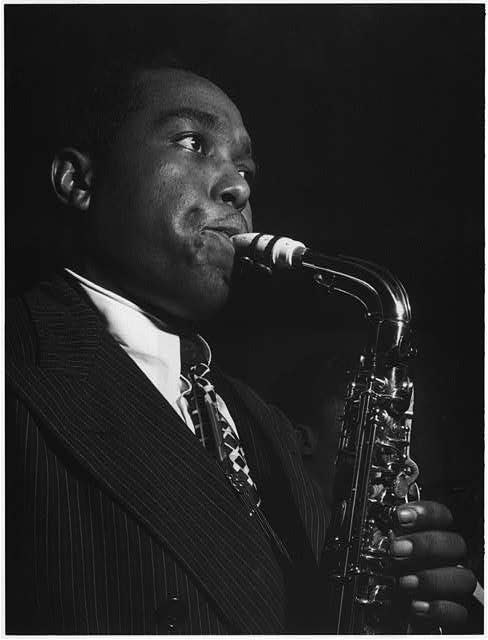
From the Collection of William P. Gottlieb

Big Machine Label Group, a major music recording label, and Clear Channel Communications recently structured a landmark licensing fee arrangement; their deal marks the first time any U.S. radio broadcaster has agreed to pay performance royalties to a record label or performer for the use of their sound recordings. This development is a telling sign that an anomaly in U.S. copyright law, which several members of the 111th Congress tried unsuccessfully to eliminate, remains a pressing issue in the U.S. radio and recording industries.

Under current U.S. law, terrestrial broadcasters—as compared to satellite broadcasters—are required to pay licensing fees to the composers of the recorded music they air. But they are not required to pay the performers or record labels responsible for those recordings. Under this regime, a radio company that broadcasts Charlie Parker’s heavily improvised 1947 recording of “Embraceable You” would be required to pay a significant fee to the estate of composer George Gershwin, but not to Charlie Parker’s estate. By contrast, most other countries require all broadcasters to pay royalties to both composers and performers. And unlike terrestrial broadcasters, U.S. satellite and internet broadcasters are also require to pay both groups.

The Performance Rights Act, a bill introduced in 2009, would have required terrestrial broadcasters to pay fees to performers as well. The bill died in part because of a stand-off between radio and recording industry interest groups. Big Machine and Clear Channel’s recent deal is an indication that at least some members of these groups are bypassing the legislative impasse with private compromise.

Announcing WJLTA’s Summer 2012 issue

The Washington Journal of Law, Technology & Arts (LTA Journal) has published its first issue of the 2012-13 school year. The LTA Journal publishes concise legal analysis aimed at practicing attorneys on a quarterly basis. This quarter’s edition includes four articles by student members of the LTA Journal. Continue reading

$44,000,000 Judgment against Pro Se Litigants for Willful Counterfeiting: Online Commerce Leaves a Paper Trail

Photo Credit: Preston Smalley of Flickr

By Bryan Russell

In Coach, Inc. v. Allen, 2012 U.S. Dist. LEXIS 100829, at *28-29 (S.D.N.Y. July 18, 2012), the court ruled on summary judgment that “[b]ecause Defendants have clearly acted in bad faith by distributing counterfeit versions of Coach’s merchandise, I grant the request that Coach receive the maximum amount of statutory damages for willful infringement for twenty-two separate acts of infringement.” As noted by the court, “the statutory maximum [is] $2,000,000 per counterfeit trademark.” Id. at *23. While the court declined to show its math, twenty-two multiplied by two million equals forty-four million dollars—$44,000,000. What happened? Continue reading

Vindication for Video Gamers

Photo Credit: Dan Anderson of Flickr.

By Aaron Orheim

Electronic Arts Inc. (“EA”) recently settled a major class action lawsuit brought by gamers who purchased some of the most popular video game titles over the last decade. The lawsuit alleged that EA held an illegal monopoly on sports licenses and used that anticompetitive edge to drive up the price of its games. Parties settled for $27 million, and EA will not renew some of its exclusive licenses in order to increase competition in the future.

The litigation can be traced back to 2004 when EA entered into exclusive licensing agreements with the NFL and NCAA. Its long running game franchises—NCAA Football, Madden NFL Football, and Arena League Football (AFL)—became the only officially licensed football games. Only EA could produce the likenesses of players and teams. Immediately EA raised its prices. For example—with competition out of the way—EA raised the price of Madden $29.99 to $49.99 in one year’s time.

The plaintiff class and EA settled in late July. Of course class action lawsuits often benefit the attorneys more than the class itself. But customers who purchased these EA titles within the last eight years will be eligible to recover monetary damages. Plaintiffs will be eligible to recover anywhere from $1.95 to $6.79 per game. Moreover, EA will not renew its AFL and NCAA exclusive licenses when they expire in 2004.

Naysayers will argue that EA still gets to keep its lucrative deal with the NFL. That game is one of the highest selling annual titles, and no other serious competitor challenged the NCAA and AFL titles before EA signed exclusive agreements. In fact, EA has not produced an AFL game since 2007. Moreover, critics will point out that many class members may fail to recover their damages or prefer that EA maintain its current dominance of the market.

This case presents a very interesting case study for litigants. The stakes are high, as these are some of the most well-recognized games, even among non-gamers. EA made a very smart settlement. By agreeing to pay a large sum now, it maintained its cash cow—the Madden franchise—for years to come. Intellectual property litigants should follow this example and clients’ long-term plans in mind when settling a case.

It will take several years for gamers to see a change, if any, in the status quo. This settlement could lead to better games at lower prices. Alternatively, EA could be so far ahead in the game that its competitors can only stand and watch as it continues its solo run towards virtual gridiron greatness.