Selling the Writing on the Wall: Does Copyright Protect the Work of Graffiti Artists?

By Parker Howell
Editor in Chief
 

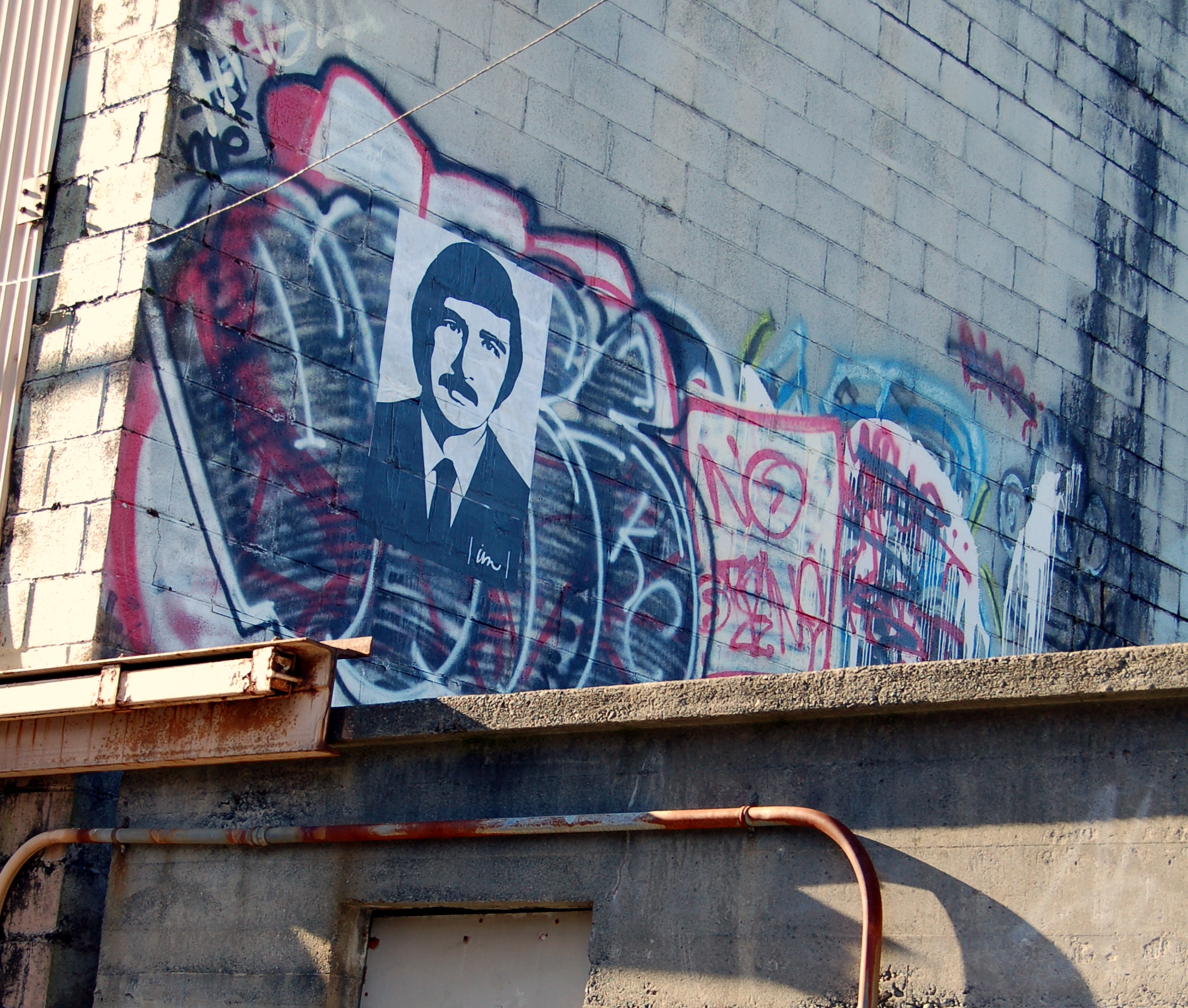
Is it possible to “steal” a piece of graffiti art? The Wall Street Journal recently posed this question in reporting about a Michigan lawsuit stemming from the removal of a mural attributed to the famous British street artist Banksy. A nonprofit art gallery allegedly removed the unsolicited work – which depicts a child holding a paint bucket next to the phrase, “I remember when all this was trees” – from a defunct Detroit factory in order to save it from destruction; the building owners argued that the piece could be worth $100,000, according to the Journal. But the apparent owners of the building demanded return of the work and monetary damages.

This scenario is reminiscent of one that played out recently in Seattle: Amazon.com, Inc. reportedly removed and installed in its new headquarters complex street art created on the walls of a former building on the site. The artists cried foul, asking for recognition for their work.

As graffiti by the likes of Banksy, director of the Academy Award-nominated documentary “Exit Through the Gift Shop,” gains international popularity, economic forces may cause more of this traditionally taboo artwork to be removed from private and public streetscapes and transported to galleries or private collections (read more about blossoming graffiti in Detroit here). As a result, we may see further lawsuits like the one involving the Banksy piece. While it may appear unfair to street artists that their work is removed and displayed or sold for profit by third parties, property law doctrines suggest that artists probably have few property rights to their unauthorized works that would allow them to control disposition of the pieces or to profit from their display or sale. However, federal copyright law might provide some graffiti artists with a degree of protection against unauthorized removal, display, and reproduction of their creations – depending on how one interprets the scant federal case law on the subject.

What rights, if any, an artist has to a particular graffiti mural hinges on whether it was authorized by a property owner. Unsolicited street art may qualify as criminal vandalism under state or local laws. Moreover, under traditional property law principles, the owner of property where graffiti is made typically should own the physical work (i.e. the wall containing the painting). (An interesting case might arise if a graffiti artist claimed to have “mistakenly improved” property with valuable graffiti.)

Street artists might try to claim the protections of the Copyright Act, 17 U.S.C. § 101, et. seq., although it is unclear whether this doctrine would provide recourse. Under copyright law, an artist receives certain exclusive rights in her creative work, such as to control display and distribution of copies.  If a copyright violation is found, the owner of the copyright may receive actual damages plus the infringer’s profits, or statutory damages.


Continue reading

Can Apple Enforce a Trademark in “App Store” Against Amazon?

Amazon.com logo

By Duncan Stark
LTA Blog Editor
 

Amazon.com, Inc. in March launched the Amazon Appstore, prompting a trademark infringement lawsuit by Apple. The Amazon Appstore is a service that collects and distributes mobile applications for the Android mobile operating system, competing with the Google-developed Android Market to offer both free and paid application downloads. Though the service does not compete directly with Apple’s App Store because Apple maintains the only authorized application store for its devices, the service managed to get Apple’s attention in another way. This article will discuss briefly both the facts and the legal implications of this trademark dispute.

In July 2008, Apple filed for a U.S. trademark in the term “App Store” for “retail store services … on handheld digital devices” (trademark serial number 77525433). The application was approved despite opposition from Microsoft, which argued that the term could not be granted protection because it is generic. While this opposition is pending and Microsoft has decided to avoid the issue by calling its app store the “Windows Marketplace for Mobile,” Amazon has been undeterred.

On March 18, Apple filed suit for trademark infringement and dilution and unfair competition against Amazon for the latter’s use of the name “Appstore.” The suit alleges that though Apple was not the first to create a mobile applications store, it was the first to label one an “App Store.” Apple also alleges that it “has extensively advertised, marketed and promoted the App Store service … spending millions of dollars on print, television, and internet advertising,” and that “the enormous public attention given the App Store service, and the success of the service, have cemented the public’s identification of App Store as a trademark for Apple’s service.”

In order to show trademark infringement under either the federal Lanham Act or state common law, Apple must show that Amazon’s use of the term “Appstore” is likely to cause confusion in a reasonable consumer as to the source of the software. Here, the fact that Amazon has appended its name in front of the contested term, and that Amazon removed the space, may help the Internet retailer to argue that customer confusion will be limited. In order to show dilution of its mark, Apple must show first that its mark is famous and distinctive. Apple also must prove that Amazon diluted the mark either through blurring (impairing its distinctiveness) or tarnishment (harming its reputation). Continue reading

The Social Network, Part 2: Mark Zuckerberg Wins Again

Gareth S. Lacy

Yesterday the Ninth Circuit refused to rescind a $65 million settlement agreement between Facebook founder Mark Zuckerberg and Harvard graduates Cameron and Tyler Winklevoss. The Winklevosses argued they should be released from their 2008 agreement with Zuckerberg because Facebook allegedly misrepresented its market value during settlement negotiations. But the Ninth Circuit upheld the settlement because the Winklevosses, “with the help of a team of lawyers and a financial advisor,” had “settled . . . and signed a release of all claims against Facebook.”

The conflict began in 2004 when the Winklevosses sued Mark Zuckerberg for allegedly stealing their idea to build an exclusive social network at Harvard, events dramatized in the 2010 Academy Award-winning film, The Social Network. Facebook countersued. The parties reached a $65 million settlement agreement in February 2008. But the Winklevosses soon attacked the settlement on the grounds the Facebook allegedly overstated the company’s value during negotiations. They claimed Facebook violated SEC Rule 10-b, which prohibits fraud in connection with the purchase or sale of securities.

After the district court refused to modify the $65 million settlement, the Winkelvosses appealed to the Ninth Circuit. In a terse opinion written by Chief Justice Alex Kozinski, the court refused to rescind the settlement:

The Winklevosses are sophisticated parties who were locked in a contentious struggle over ownership rights in one of the world’s fastest-growing companies. They engaged in discovery, which gave them access to a good deal of information about their opponents. They brought half-a-dozen lawyers to the mediation. Howard Winklevoss—father of Cameron and Tyler, former accounting professor at Wharton School of Business and an expert in valuation—also participated. A party seeking to rescind a settlement agreement by claiming a Rule 10b–5 violation under these circumstances faces a steep uphill battle.

Had the Winklevosses prevailed, the settlement agreement value might have quadrupled to more than $466 million.

Law, Technology & Arts Blog has provided a copy of the Ninth Circuit’s decision here. Copies of the Winkelvoss’s appellate brief, the response from Facebook, the Winkelvoss’s reply and a transcript of the oral argument are also available.

Thinking Outside the Record: 360-Degree Deals in the Music Industry

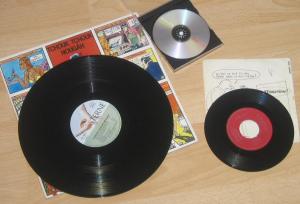
Vinyl records and music paraphernalia on a table.

Record companies are responding to poor album sales by seeking additional rights from artists beyond those to their music. Under these “360-degree deals,” record companies get access to revenue from sources including touring and merchandise, book deals, fan clubs, and even movie and television careers. The increased use of 360 deals reflects the recording industry’s shift away from goods such as records and toward services such as streaming music, cell-phone ringtones, and concert ticket sales.

Before digital music and MP3 files, a recording contract involved an upfront payment to the musician and funding to produce a record. Success was measured by the number of records sold (“units”); artists earned royalties after record companies recouped their investment in producing the record. Unit sales have fallen in half over the last decade, and today consumers purchase more individual MP3 tracks than albums. As a result, record companies are seeking 360 deals so that they receive rights to non-recording activities, such as entertainment rights or rights to publicity.

A typical 360 deal clause might grant the record label a “right to participate in any and all of an artist’s activities in and throughout the entertainment industry including, without limitation, activities as a singer, performer, musician, writer, composer, author, publisher, producer, mixer, or actor, in connection with tours, performances, merchandizing, fan clubs, advertisements, sponsorships, endorsements, or any public appearance.” Other rights might include use of the artist’s name, likeness, logos, websites, or videogames. The record company’s interest in these activities is obviously negotiable, but might include a percentage of publishing receipts, tour revenues, and other entertainment net receipts. Continue reading

Posting Break: Exam Time

Posting will be temporarily suspended while members of the Washington Journal of Law, Technology & Arts prepare for final exams. Regular posting will resume March 31. Thanks for your continued interest in our Journal!