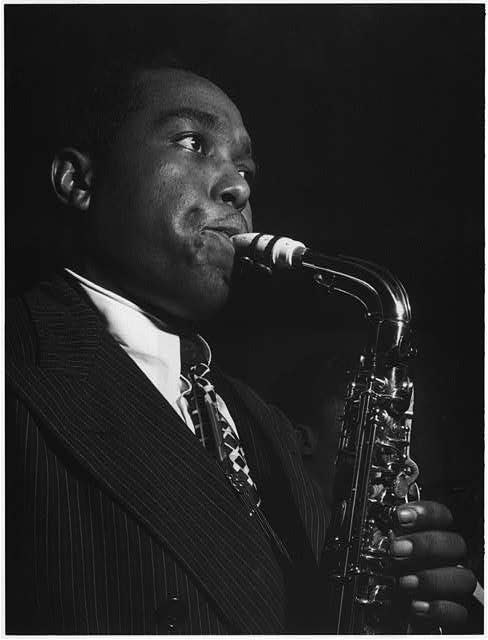
From the Collection of William P. Gottlieb
Big Machine Label Group, a major music recording label, and Clear Channel Communications recently structured a landmark licensing fee arrangement; their deal marks the first time any U.S. radio broadcaster has agreed to pay performance royalties to a record label or performer for the use of their sound recordings. This development is a telling sign that an anomaly in U.S. copyright law, which several members of the 111th Congress tried unsuccessfully to eliminate, remains a pressing issue in the U.S. radio and recording industries.
Under current U.S. law, terrestrial broadcasters—as compared to satellite broadcasters—are required to pay licensing fees to the composers of the recorded music they air. But they are not required to pay the performers or record labels responsible for those recordings. Under this regime, a radio company that broadcasts Charlie Parker’s heavily improvised 1947 recording of “Embraceable You” would be required to pay a significant fee to the estate of composer George Gershwin, but not to Charlie Parker’s estate. By contrast, most other countries require all broadcasters to pay royalties to both composers and performers. And unlike terrestrial broadcasters, U.S. satellite and internet broadcasters are also require to pay both groups.
The Performance Rights Act, a bill introduced in 2009, would have required terrestrial broadcasters to pay fees to performers as well. The bill died in part because of a stand-off between radio and recording industry interest groups. Big Machine and Clear Channel’s recent deal is an indication that at least some members of these groups are bypassing the legislative impasse with private compromise.