My Other Bag Isn’t Infringing

lvBy Alex Bullock

If you ever find yourself at the grocery store with only your designer handbag to put your apples in, know that the option to carry a canvas tote bag with designer style won’t be going away anytime soon.

That’s because My Other Bag (“MOB”) sells utilitarian canvas tote bags featuring images of designer-brand handbags on their sides—which play on the belief that “my bag is a [fill in luxury brand here].” In June 2014, Louis Vuitton (“LV”), one of the world’s most valuable and well-known luxury fashion brands, filed a lawsuit in the Southern District of New York Continue reading

YouTube’s Content ID Policy Change Now Saves Lost Monetization for Fair Use Videos

youtube-cashBy Dan Goodman

As the late Notorious B.I.G. said, “Mo Money, Mo Problems.” Whether you believe that statement or not, it is certainly, and thankfully, becoming less true the world of monetizing videos on YouTube through fair use.

The issue of fair use in regard to Content ID claims and Digital Millennial Copyright Act (“DMCA”) takedown notices continues to be a hot topic in the world of YouTube. Most recently demonstrated in Lenz v. Universal Music Corp., the Ninth Circuit held that copyright holders must consider fair use and have a subjective belief that the material in use was in violation of copyright law before sending a takedown notice.

Continue reading

DMCA Takedown Notices: Never Enough, Always Too Much

picture1By Ari Robbins

Digital Millennium Copyright Act (“DMCA”) takedown notices are headed to the Supreme Court where they could themselves be facing a takedown. These notices are issued outside of a court process and are supposed to warn online hosts that content on their websites might constitute copyright infringement. Per the Ninth Circuit decision that is headed to the Court, Lenz v. Universal Music Corp., the sender of a takedown notice must have a subjective belief that material related to a notice is not fair use. Imposing such a standard has far reaching implications for all senders  and recipients of DMCA takedown notices.

Continue reading

Courtroom Theatrics Find New Meaning as Hamilton Sues for Copyright Infringement

hamiltonBy CaroLea Casas

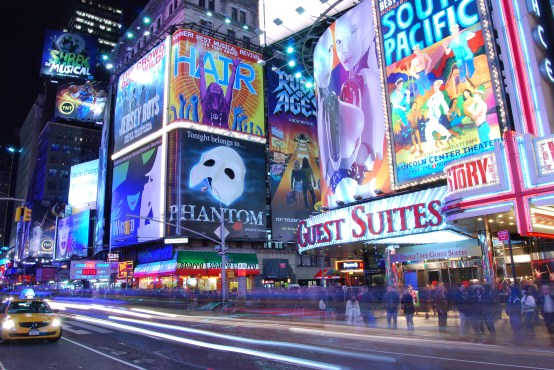
Lin Manuel Miranda’s musical Hamilton is a hit – it’s on Broadway, a national tour, and most likely on your neighbor’s favorite playlist after the soundtrack’s historic debut on music charts.

Even people who have never seen the production know every word to all forty-six songs.  First Lady Michelle Obama herself was quoted by the New York Times as saying “[Hamilton is the] best piece of art in any form that I have ever seen in my life.” With a cast composed predominately of people of color, Hamilton brings a fresh voice, perspective, and representation to an age-old art form. The show is no longer just a production – it is a brand that fans love; and one that its copyright holders are zealously guarding. Continue reading

Screenshot Through The Heart, And Richard Prince’s To Blame

Rasta.jpgBy Gwen Wei

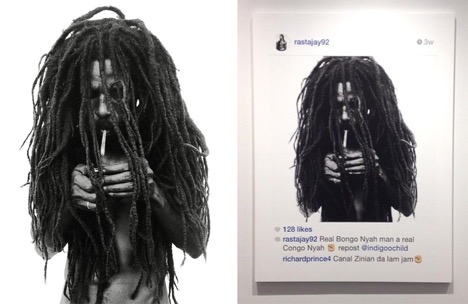
Earlier this year, three artists separately sued appropriation careerist Richard Prince for copyright infringement. The works in question? Photographs with valid and registered copyrights—each framed in an Instagram screenshot by Prince.

Sound familiar? The incidents seem to be an ugly throwback to 2015, when Prince took screenshots of multiple photographs from the Instagram account of pin-up brand Suicide Girls, printed them, and sold each print for $90,000. But none of this is new ground for Prince. Such incidents define his forty-year career: rephotographing the photos of others, reprinting J. D. Salinger’s The Catcher in the Rye with his own name substituted for the author’s, or writing out lines out of joke books for display at art galleries.

Continue reading