Let’s Play Trademarks: The Peculiar Sensation of Sony and the Fine Brothers

gamerBy Gwen Wei

As it turns out, it’s a terrible idea to try to lock down the Internet’s favorite toys via trademark. Who knew?

Certainly the news seems to have come as a shock to a few businesses in the new year. On October 28, 2015, Sony Computer Entertainment America applied to trademark the phrase ‘Let’s Play’. According to its application, Sony intended the trademark for goods regarding “electronic transmission and streaming of video games via global and local computer networks; streaming of audio, visual, and audiovisual material via global and local computer networks”. Continue reading

Bluebook and Baby Blue: Copyright Conundrums and Trademark Troubles

bluebookBy Kiran Jassal

Law students across the United States are familiar with “The Bluebook: A Uniform System of Citation,” prepared by the Harvard Law Review Association. Recently, the manual’s copyright and trademark protections have come into question. More specifically, the Engelberg Center on Innovation Law and Policy at New York University joined Public Resource to publish “Baby Blue,” a public domain version of The Bluebook. Publishers of Bluebook vehemently defend their work, claiming copyright and trademark infringement. Professor Christopher Sprigman, of NYU Law, explained Baby Blue’s open access objective in an interview with the NYU Journal of Intellectual Property and Entertainment Law. To show support for the project, Yale Law students have started a petition, stating Baby Blue “will ensure that no one…is denied access to these rules of legal citation”. The question remains, however, whether Baby Blue infringes on any of Bluebook’s publisher’s intellectual property rights. Continue reading

YouTube Remixers & Small Statutory Offenders in Focus

YOUTUBER_ICONBy Andrew H. Fuller

There is little doubt that YouTube content creators have been causing waves in the copyright world since its inception. For example, in 2009, YouTube started to mute the audio tracks of any videos or streams posted by users that contained unauthorized copyrighted music. Another common and popular genre of YouTube content is remixes, where YouTube artists create content by altering and sampling from existing, copyright protected content. Most YouTube content creators are unaware and unconcerned about copyright laws or infringement claims until YouTube cracks down on them. Those who are vaguely familiar often assume that their use is within the bounds of Copyright’s Fair Use exception. Given the general (mis)understanding around Fair Use and the courts’ treatment and application of this exception, the Lanham Act would seem ripe for an update. While the technological landscape of media dissemination and user consumption has radically shifted, the laws around copyright haven’t changed. Continue reading

Grumpy Cat Trumps Technoviking: Monetizing Memes

grump_vikingBy Robin Hammond

How to monetize a meme: Step 1: stumble upon an Internet sensation; Step 2: pursue IP rights immediately and vigilantly.

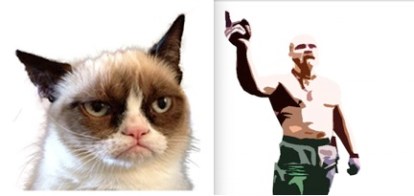
It is clear who would win in a fight between Grumpy Cat and Technoviking. It is also clear who has won in the realm of Intellectual Property (“IP”) rights. Technoviking is a man who was thrust into internet fame by a viral video on youtube.com. Grumpy Cat is a genetically abnormal cat, which achieved similar notoriety through reddit.com. Both cases illustrate the benefits of prompt IP right designations. Continue reading

A Step Toward Protecting Fair Use on YouTube

h13tuhz14ceqcmsazeb5By Juliya Ziskina

Since its beginning, YouTube has been involved in battles over copyright infringement, and over the years, YouTube has increased its policing of pirated material. The most common cases of copyright infringement involve using songs in a film or video without permission of the copyright holder, or placing segments of movies or music videos on websites where it is easy for the public to download them. Therefore, the giants of the entertainment industry have begun cracking down on websites such as YouTube.

YouTube, in response to these accusations, started to remove videos that may use segments of music or film without the copyright owner’s permission. Fan videos that incorporate a celebrity picture slideshow using a song as the primary audio track and videos of musicians playing covers of famous songs are common examples of videos that have been deleted from YouTube as a result of alleged copyright infringement. However, a widely known example of proper fair use is, for instance, a segment by the TV host Stephen Colbert that rebroadcasts cable news clips for the comedian to react to. Continue reading