Rated T for Tobacco: The Impact of Tobacco Imagery on Movie Ratings

MPAABy Alex Bullock

Whether you should smoke or not is a personal choice. However, whether smoking is good or bad for your health is not really a matter of opinion (spoiler, it’s bad for you). Smoking is certainly not a habit that we, as a society, want to encourage children to pick up (at least not anymore). Yet, one place that has an impact on children’s perception of smoking is at the movie theater.

Continue reading

Slippery Slope for Online Service Providers with New California Appellate Court Ruling

ispsBy Tyler Quillin

The most important law governing the internet just had its 20th birthday earlier this year, the Communications Decency Act (CDA). Signed by President Bill Clinton in 1996, the CDA grants online service providers immunity from liability for most illegal activities of their users. What’s more, the CDA not only allows large internet-based companies like Facebook, Amazon, and Yelp! to survive because they don’t have to individually each user’s activity, it also enables a large portion of the freedom of speech the general public enjoys online daily.

Yet, despite 20 years of precedent, the CDA has come under scrutiny. Most notably, a California appellate court issued a ruling that included an order for Yelp!, a nonparty to the case, to take down a defamatory post involving an attorney who sued a former client for posting defamatory comments and reviews on Yelp!. Along with the court order to take down the reviews, the attorney won on a default judgment to the tune of over $500,000.

Continue reading

Screenshot Through The Heart, And Richard Prince’s To Blame

Rasta.jpgBy Gwen Wei

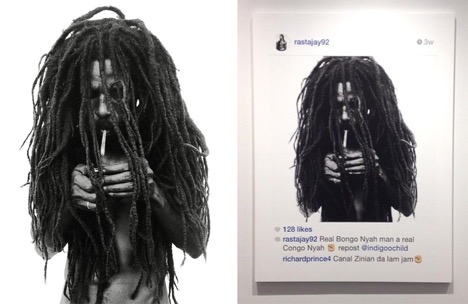
Earlier this year, three artists separately sued appropriation careerist Richard Prince for copyright infringement. The works in question? Photographs with valid and registered copyrights—each framed in an Instagram screenshot by Prince.

Sound familiar? The incidents seem to be an ugly throwback to 2015, when Prince took screenshots of multiple photographs from the Instagram account of pin-up brand Suicide Girls, printed them, and sold each print for $90,000. But none of this is new ground for Prince. Such incidents define his forty-year career: rephotographing the photos of others, reprinting J. D. Salinger’s The Catcher in the Rye with his own name substituted for the author’s, or writing out lines out of joke books for display at art galleries.

Continue reading

Don’t “Shoot!”: Recording Police Behavior Doesn’t Qualify for First Amendment Protections (At Least in the Eastern District of Pennsylvania)

cldcBy Samuel Daheim

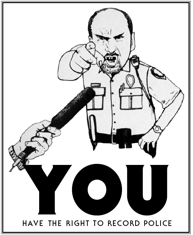
Our constitutional right to the freedom of expression under the First Amendment reaches a broad spectrum of wide-ranging activities. From flag burning to expenditures on campaigns for elected governmental office, the First Amendment protections of expression reach the lives of all U.S. citizens. However, on February 19th of this year, the federal district court for the Eastern District of Pennsylvania held that First Amendment protections of expression do not cover observing and recording police activity in a public forum where such observations and recordings are not accompanied by criticism or challenge to police conduct. Continue reading

Can Kazakhstan Use the United States Legal System to Attack Free Speech?

laikrastis-respublika-63491024By Juliya Ziskina

The government of Kazakhstan has pursued one of its fiercest critics, the newspaper Respublika, with lawsuits and threats for fifteen years. But despite blocks, bans, and overwhelming distributed denial-of-service (DDoS) attacks, Respublika continues to publish on its websites, which critically report on the country’s affairs and provide a forum for discussion from the relative safety of servers hosted in the United States. Because Respublika’s site is blocked in Kazakhstan, the news service also posts its articles to third party sites, including its Facebook group.

Earlier this month, the Kazakhstan government had a major setback in its attempt to use the U.S. legal system to attack Respublika. A federal judge in California rejected Kazakhstan’s demand that Facebook turn over information about users associated with Respublika’s account on the social media site. The judge found that Kazakhstan lacked the appropriate judicial authorization to pursue such discovery, rejecting Kazakhstan’s claims that its Computer Fraud and Abuse Act (CFAA) lawsuit gave it free rein to obtain information about its critics. The CFAA is a federal anti-hacking statute that prohibits unauthorized access to computers and networks and was enacted to expand existing criminal laws to address a growing concern about computer crimes. It also allows civil actions to be brought under the statute as well. Continue reading