Fables: Free For All or Owned By One?

By: Drew Carlson

What does it take to release a copyrighted work into the public domain? On September 15, 2023, writer Bill Willingham decided to test just that, releasing his comic book series Fables into the public domain after years of fighting with his publisher, DC Comics (“DC”). Can an author release a work into the public domain before the copyright protection expires? If the author is the legal owner of the copyright, then he or she may do so, but this is often not the case. Willingham will need to prove he is the sole owner of the Fables copyright. 

Once Upon a Time

Willingham is the writer of the award winning comic book series Fables, published by DC Comics for their adult-oriented Vertigo imprint. The series is set in a universe where characters from fairy tales and folklore have taken refuge in modern day New York. They live in a secret community, hiding from both regular humans, and the Adversary who conquered their homelands.

According to Willingham, he signed a “creator-owned publishing contract” with DC, which made him the sole owner of the intellectual property but forbade him from “publish[ing] Fables comics” or licensing the property “through anyone but them.” The series’ copyrights were registered with the Copyright Office, each within two years of the work’s creation. It is not known which party submitted the registration. The copyrights list Willingham as author of the text, and DC as author of the art via work for hire.

The partnership between Willingham and DC did not live happily ever after, as disputes eventually arose. These disputes included DC failing to consult with Willingham when contractually required, underreporting his royalties, and trying to convince him to write future issues as “work for hire.” These slights culminated on September 15, 2023, when Willingham announced on his Substack that “the comic book property called Fables, including all related Fables spin-offs and characters, is now in the public domain.” His subsequent posts reiterated this point, saying, “As the sole owner and creator of the comic book property called Fables . . . I alone had the right . . . to do this.” He posted four blog posts in total discussing his decision. Willingham chose not to publish his full contract with DC for privacy reasons.

DC responded to Willingham’s declaration with its own, saying “The Fables comic books and graphic novels published by DC . . . are owned by DC . . . and are not in the public domain.

What is the Public Domain?

The public domain is a term for intellectual property that is owned by everyone. Under copyright law, owners hold many exclusive rights to their work, such as the right to publish, reproduce, or create derivative works. By contrast, public domain works, because they belong to everyone, have no limitations on their use.

Some public domain works were once copyrighted, their rights having expired, e.g. Pinnochio or Sherlock Holmes; others were always in the public domain, works such as Cinderella or Snow White that were never granted copyright protection for one reason or another. 

Does Willingham own Fables?

If Willingham’s contract says what he claims, he does own Fables. Under copyright law, the author of the work is the initial owner. However, if more than one individual contributes substantial elements to the work, while intending their contributions to join into one joint work, they are joint-authors. Joint-authors each own an equal and undivided share in the entire work. No joint owner can convey more than they own. For instance, none of them can make an exclusive license without the other owners’ written permission since that would violate the other owners’ rights. Comic books where one author writes the text and the other draws the art qualify as joint works. Works made by employees are “works for hire,” where, unless agreed otherwise, the employer is considered the author of the work. Copyrights can also be transferred or assigned. 

When a copyright is registered within five years of the work’s creation, the registration and the facts within are presumed valid, which may be rebutted if a party “offers some evidence” to dispute the registration’s validity.

The Copyright Office lists both Willingham and DC as the authors of Fables, Willingham for the text, and DC for the art. Since comic books are joint works, and the copyrights were registered within five years of creation, Willingham and DC comics are presumed joint-owners of Fables.

However, this presumption can be rebutted by showing disputing evidence, such as Willingham’s contract. If Willingham is correct that his contract gives him sole ownership of Fables, then it would prove that DC transferred any ownership it possessed as a joint-author to Willingham. Thus, Willingham would be the sole owner. 

It is unknown whether Willingham or DC registered Fables’ copyrights as joint-works. If Willingham did, then DC might try to argue that Willingham did not treat Fables as his. However, such an argument could be countered with the fact that DC themselves assigned their rights to Willingham. Willingham could also point out that he has followed his contract for over twenty years.

How does sole ownership versus joint ownership affect Willingham’s authority to release Fables into the public domain?

Can Willingham Place Fables into the Public Domain?

Willingham has the authority to release Fables into the public domain provided that he is the sole owner. While there is no express provision for abandonment in the Copyright Act, several court cases say that proprietors can abandon a copyright if they both intend to abandon the work and perform an overt act demonstrating that intent. However, an owner must be very clear about what they mean to abandon. Once, a man made several meditation videos and repeatedly said he neither cared about copyrights nor wanted to control his videos. These statements released one of his videos into the public domain, but were insufficient to release his later ones. On the other hand, in 2002 an architect provided designs for a competition, signing a document saying that he retained no copyrights to them. This admission released such designs into the public domain.

Willingham clearly intended to release his work; he said so multiple times. He also made not one, but four overt acts via his Substack posts, which repeatedly stated his intent to surrender all of Fables into the public domain. Therefore, if Willingham is indeed the sole owner, he may release Fables into the public domain.

If Willingham and DC are joint-owners, though, then Willingham cannot release Fables into the public domain. The rule regarding exclusive licenses stipulates that one owner cannot negate another’s right without written permission. Willingham did not have DC’s permission, meaning he cannot unilaterally terminate their share.

What happens next?

DC Comics publicly maintains that it owns Fables, but it has not filed any legal action. Since a lawsuit against Willingham or accused infringers risks a court declaring the entire series to be within the public domain, DC will likely avoid litigation whenever possible. Instead, it will use the undetermined nature of Fables’s ownership to deter would-be copiers through the threat of a potential lawsuit. Things will likely not stand at this stalemate for long though, as there will inevitably be those who take Willingham at his word and use Fables for their own creative works. DC will quickly have to decide how many alleged violations it can let slide before going to court.

Happily Ever After?

If Willingham is indeed the sole owner, per his claimed contract, then a court would likely find the series to be properly released into the public domain. If Willingham is not, then DC retains its exclusive right to publish the series. Ultimately, the answer to this question centers on contract law, specifically whether DC transferred its ownership. Without viewing Willingham’s contract, it is impossible to say for certain who will prevail. Should Willingham prevail, the threat of placing works into the public domain will hand creators a bargaining chip against unscrupulous publishers. Should DC emerge victorious in litigation, publishers will have a reinforced blueprint to compel creator compliance.Will Fables be freed into the public domain to live happily ever after or remain trapped within the walls of its wicked stepmother’s copyright control? We will just have to wait and see.
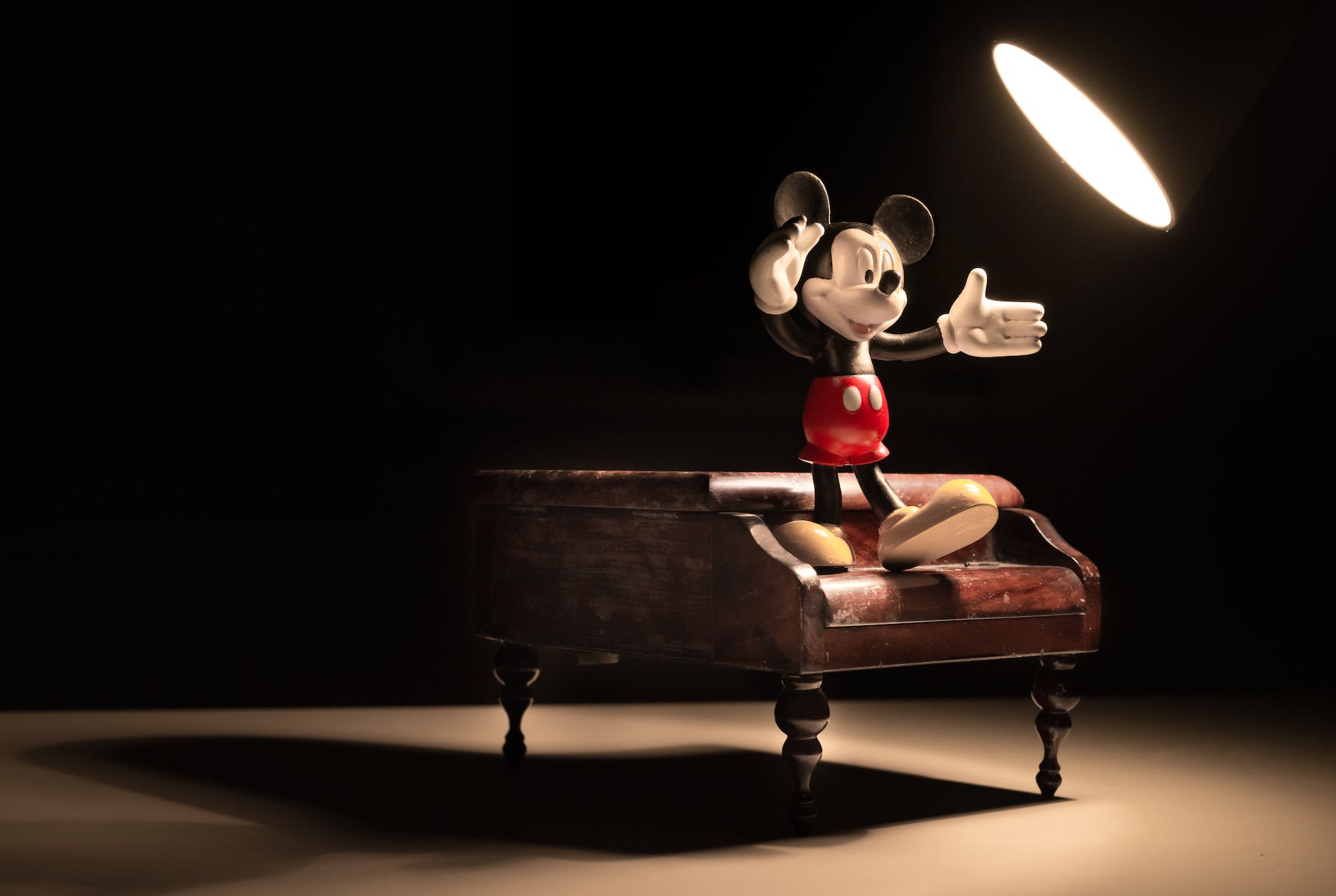
Can we go see Mickey? We have Mickey at home! Mickey… at home?

By: Kevin Vu

Nearly 100 years ago, Walt Disney released “Steamboat Willie,” showcasing Mickey Mouse’s first adventure. That mouse would kickstart what is now one of the world’s biggest companies, Disney. Today, Disney does a variety of things: it operates its own streaming services, runs a majority of the world’s most popular theme parks, and releases some of the world’s highest grossing movies. At the center of all that success is Mickey Mouse, who’s been dubbed “the world’s most famous cartoon character.” But Mickey is no longer just Disney’s to parade around, recently Mickey has become part of the public domain. What does being part of the public domain really mean though? This blog will explore and explain Mickey’s complicated history with copyright, what the public domain is, and what being in the public domain means for both Mickey’s future and others similarly situated to him. 

Copyright’s Origins

Copyright law originates from Article I, Section 8, Clause 8 of the United States Constitution which provides that Congress shall have the power “To promote the Progress of Science and useful Arts, by securing for limited Times to Authors and Inventors the exclusive Right to their respective Writings and Discoveries.” Copyright is a set of protections from the federal government for originally created works. Copyright disallows others from using the work without the author’s permission, and as was alluded to earlier, protection generally lasts for the author’s lifetime plus 70 years after the author’s death. In 1790, Congress used that power to pass the first Copyright Act which extended protection of works to 14 years, with a renewal period of another 14 years. 

Then, in 1909, a new Copyright Act doubled the length of protection for works from 28 years to 56 years, along with adding protections for motion pictures. “Steamboat Willie” was then released in 1928, and fast-forwarding some years and some minor changes to the Copyright Act, Disney entered the copyright arena in 1998. By that time, Mickey’s copyright was set to expire in 2003. Disney, worried about its copyright for Mickey, successfully lobbied Congress to protect him for 20 more years—extending his copyright expiration date to 2024. But that was the final extension for the mouse, as he is now part of the “public domain,” no longer just the sole property of Disney. 

What’s the Public Domain?

In contrast to copyrighted works, the public domain consists of “creative materials that are not protected by intellectual property laws such as copyright, trademark, or patent laws.” That means that items which were not originally subject to intellectual property protections, like laws for example, are part of the public domain and freely usable by individuals. Creative materials, like Mickey, which were previously protected under laws like copyright may also become part of the public domain once their copyright has expired.

Once something is in the public domain, it is fair game for any one to use. As the United States Supreme Court articulated in Dastar Corp. v. Twentieth Century Fox Film Corp., uncopyrighted materials are not protected under federal law. Further, because Article I, Section 8, Clause 8 vests the power to protect creative endeavors in Congress, states are precluded from passing copyright laws under the Supremacy Clause of the U.S. Constitution. This means that anyone can use works in the public domain without obtaining permission or giving credit to the original author, and no one can ever own that work.

Mickey… at home?

One can immediately see why Mickey’s move to the public domain is problematic for Disney. 20 years ago, it was estimated that Mickey Mouse had made over $5.8 billion for Disney. This explains why Disney was adamant about lobbying Congress for copyright protection extensions, as Mickey going to the public domain could affect his worth. 

Fast-forwarding to today, Mickey has entered the public domain, with one company has already announced that they plan on making a Mickey Mouse horror movie, following in the footsteps of “Winnie-the-Pooh: Blood and Honey,” a Winnie the Pooh slasher movie created when Pooh Bear entered the public domain in 2023. Ultimately, it remains to be seen what else individuals will do with Mickey.

But luckily for Disney, Mickey’s presence in the public domain does not spell the end of their rights to the iconic character. Copyright law makes distinctions between versions of characters meaning only the “Steamboat Willie” version of Mickey is in the public domain and usable by anyone. The red shorts, big-boots, and high-pitched voice of the current Mickey Mouse remains Disney’s property, and is therefore subject to copyright protection. Another thing to note is that Disney’s use of Mickey as a brand or symbol is protected under trademark law. So, while “Steamboat Willie” Mickey is freely usable, individuals should be careful not to confuse that character with his newer versions, and avoid making it seem like Disney endorses their new creative work. As some commentators have noted, Disney is actively seeking to protect its brand and anyone seeking to use Mickey should seek out legal counsel.  

Ultimately, it remains to be seen whether Mickey’s introduction into the public domain will create new, expansive creative works, or if Disney will continue to aggressively fight for the mouse. Whatever the case, Mickey’s move into the public domain is a historic event, and its effects remain untested.

Football is Back: the Renaissance of EA Sports College Football

By: Karina Paup Byrnes

What is it like waiting a decade to play a video game? Just ask fans of Electronic Arts (EA) Sports National Collegiate Athletic Association (NCAA) Football. Over ten years ago, what was thought to be the final iteration of EA Sports’ popular game was released in 2013, NCAA Football 2014. The NCAA Football series had been a profitable investment for EA, with NCAA Football 2014 selling over 1 million copies. However, no subsequent iteration of the game was released due to an antitrust class action lawsuit that was filed by then current and former NCAA athletes whose likenesses were portrayed in EA’s game without compensation. O’Bannon v. NCAA challenged the NCAA’s prohibition of athletes receiving compensation for their name, image, and likeness (NIL).

In July 2009, Ed O’Bannon, a former UCLA men’s basketball player, filed the lawsuit. In 2008, EA Sports published an NCAA basketball video game with a character depicting O’Bannon without his consent. O’Bannon sued the NCAA, the Collegiate Licensing Company (CLC), the entity responsible for licensing the NCAA’s brand, and EA. Numerous players joined the lawsuit as plaintiffs, representing over 24,000 college athletes who had been featured in various EA’s football and basketball video games between 2003-2014. Before the trial began, EA Sports and the CCL settled with the athletes for $40 million, leaving the NCAA as the sole defendant. The settlement was paid to tens of thousands of players, with each player eligible for up to $4,000. O’Bannon received roughly $15,000 for being a lead plaintiff.

With the NCAA proceeding as the defendant in the trial, in a major decision, the United States Court of Appeals for the Ninth Circuit ruled in favor of O’Bannon. The judges held that the NCAA refusing to allow college athletes to profit off of their name, image, and likeness, “constituted an anti-competitive conspiracy by the more than 1,200 member NCAA colleges, conferences and affiliate organizations.” The Court found that the NCAA conspired to deny men’s basketball and football players of the monetary value of their names, images, and likenesses  for commercial gain.”

The O’Bannon decision led to an influx of additional lawsuits against the NCAA, eventually forcing the NCAA to amend its rules to allow college athletes to profit off of their name, image, and likeness. This new provision has momentously impacted college sports, with student athletes collectively earning nearly  $1 billion in the first year of the rule change. These changes have also greatly benefited the companies that want to partner with athletes in using their name, image, and likeness.

In the wake of the O’Bannon decision and the NIL revolution in college sports, EA Sports has quickly seized the opportunity to revive the extremely profitable NCAA Football series with the consent of the athletes depicted in the game. However, this announcement was not without controversy, with athletes arguing that EA’s original offer of $500 payments to each athlete for their likeness is much too low.

Additionally, a lawsuit was brought against EA Sports over NCAA Football 2025 by the Brandr Group, a company representing dozens of colleges and universities, over a licensing dispute regarding their clients’ name, image and likeness rights. The complaint alleges that EA Sports did not negotiate with the Brander Group, despite the agency firm representing many NCAA Division 1 schools. Instead, EA Sports contracted with a different licensing representative company OneTeam Partners, cutting the Brandr Group out of the deal. The Brandr Group alleged that this practice hurt the college athletes wanting to be featured in the video game because the individual players have far less bargaining power if they are not able to be represented by their university’s licensing representative. Ultimately, the Brandr Group dropped its lawsuit and decided to “monitor the progress of NCAA Football before determining whether further legal action is needed to protect its clients.” Yet, the Brandr Group’s argument highlights the important question of who has the authority to represent college athletes in a group licensing contract when there is no players’ union?

As of February 15, 2024, the numerous legal roadblocks impeding the release of NCAA Football 2025 have now been resolved. Now with more clarity on the legal landscape, EA Sports has officially dropped a teaser for its video game, signaling the game’s impending release. The excitement is palpable, with rumors buzzing, predicting who will be featured on the cover and if the projected release date of Summer 2024 will hold true. EA Sports is equally as excited, cashing in on their investment of over a decade of labor to the joy of fans who have kept the interest of the game alive. It is hard not to view NCAA Football 2025 as a licensing feat. The sheer scale of coordination necessary to produce and license the properties for a project this large is no small task and demonstrates the power that athletes now hold over their name, image, and likeness. However, it is important to remember that a power imbalance nonetheless exists between college athletes and the billion-dollar companies they partner with. To preserve the Ninth Circuit’s reasons for allowing NIL deals in the first place, athletes should be supported in guiding the new landscape of licensing.

Musk on the Brain

By: Bella Hood

Unsurprisingly, inventing a novel brain implant requires navigating through a field of legal landmines. Elon Musk’s company, Neuralink, founded in 2016, continues to forge ahead in the development of a chip that the company is now calling Telepathy. Despite managing an abundance of legal hurdles and more guaranteed on the horizon, last month, Neuralink implanted the chip into a human for the first time.

Neuralink’s headlining product is the size of a quarter and designed to sit in the part of the brain that controls movement. Neuralink states that “the device is designed to interpret a person’s neural activity, so they can operate a computer or smartphone by simply intending to move – no wires or physical movement are required.” According to the company website, “the implant is powered by a small battery charged wirelessly from the outside via a compact, inductive charger that enables easy use from anywhere.” Musk, the owner and active user of X, posted on the social media site recently saying the first target users will be “those who have lost use of their limbs” and adding, “imagine if Stephen Hawking could communicate faster than a speed typist or auctioneer. That is the goal.” While Neuralink and Telepathy are getting a lot of attention, this is not the first time a brain-computer interface (BCI) has been implanted into a human. In fact, in the late 1990s, a scientist named Phil Kennedy developed a BCI that allowed a paralyzed patient to move a computer cursor using her brain.

One of the larger regulatory impediments has proven to be the U.S. Food and Drug Administration (FDA). The FDA is the federal agency responsible for ensuring the safety, efficacy, and security of medical devices, among other things. In 1976, Congress made FDA approval a requirement for medical devices to be sold in the U.S. The agency is led by the Commissioner of Food and Drugs, who is appointed by the President of the United States.

Neuralink announced in September 2023 that it received FDA approval to launch its first “in-human clinical study.”  The FDA previously denied permission in 2022 noting “major safety concerns” involving “the device’s lithium battery; the potential for the implant’s tiny wires to migrate to other areas of the brain; and questions over whether and how the device can be removed without damaging brain tissue.” The clinical trial will seek people ages 22 and older living with quadriplegia due to spinal cord injury or amyotrophic lateral sclerosis. Despite receiving approval to conduct the clinical study, Neuralink is only on step 3 of 5 on the FDA’s device development process.

Aside from FDA approval, the development of the chip has stoked anger amongst animal welfare groups and brought accusations of illegal conduct. In February 2023, the U.S. Department of Transportation conducted an investigation into alleged “unsafe transport of contaminated hardware.” Pete Buttegieg is the current Secretary of Transportation, appointed by President Biden in 2021. The Department oversees all national transportation policy. The investigation came after an animal welfare group claimed public records, including emails between Neuralink executives and the University of California, Davis, showed that Neuralink potentially violated federal hazmat law in 2019. Because UC Davis is a public institution, it is subject to public records requests. 

Neuralink’s run-ins with federal agencies do not stop there. The same animal welfare group filed a complaint with the U.S. Department of Agriculture in 2022 accusing Neuralink of violating the Animal Welfare Act which regulates the treatment of animals in research, transportation, sale, and handling.

Between 2018 and December 2022, the company killed roughly 1,500 animals, including pigs, sheep, and monkeys. Critics lament that while animal deaths are certainly not uncommon in scientific research, the process and speed of Neuralink’s research has exacerbated the mistreatment of these animals.

Yet another area of law Neuralink has exposed itself to is securities regulation. In November 2023, Four Democratic House Representatives sent a letter to the Securities Exchange Commission (SEC) demanding an investigation into Musk’s recent statements regarding the company’s handling of animals. The lawmakers are concerned that the billionaire’s statements “downplayed investor concerns about the results of its animal testing.” The Securities Act of 1933 was enacted after the stock market crash in 1929 and designed to protect investors by increasing transparency surrounding financial information and prevent misrepresentation by issuers of securities. By downplaying the animal abuse incidents, Musk may have painted a more stable picture of the private company than was accurate at the time, leading investors to increase their investments. It remains to be seen whether Musk will face further investigations over potential securities fraud.

Aside from concerns over animal welfare, transportation, and securities exchange compliance, new issues with data privacy will no doubt come to the forefront if Musk’s device continues to develop. Experts have already expressed concern over the ownership of personal data collected by the implant and who will have access to sensitive information about users. Seeing as the biggest hurdle by far, a human successfully living with and utilizing the implant, has yet to be surpassed, Neuralink’s legal team is sure to have no shortage of problems to tackle in the foreseeable future.

Whatever Happened to Trust Busting in Sports?

By: Mayel Tapia-Fregoso

Professional sports leagues in the United States (US) have existed since the first professional baseball league emerged in 1858. Since then, Major League Baseball (MLB), the National Football League (NFL), among other leagues, have dominated US sports with little competition from other independent leagues. These sports leagues have, in large part, escaped the comprehensive antitrust regulatory scheme laid out in the Sherman Antitrust Act. Despite the law’s enforcement, sports leagues have nonetheless enjoyed soaring profits because of their monopolies over broadcasting, labor, licensing, and media rights. Recent lawsuits against Major League Baseball and the National Football League are the latest in a series of cases designed to curb these professional leagues’ power and reveal the effects sports league monopolies can have on consumers.

A Brief History of Antitrust Regulation 

In 1890, Congress passed the Sherman Antitrust Act (Sherman Act), the first federal law outlawing monopolistic business practices. Congress designed the Act to combat previously unregulated industries, such as oil. Such industries were dominated by a single company and restricted interstate commerce. The Act empowered private parties to bring lawsuits against monopolist companies to enforce antitrust laws and seek damages for violations of the Sherman Act. Today, the Sherman Act “promotes consumer welfare by enhancing economic efficiency in commerce.”

Before the First Radio, There Was . . . Sports!

Professional sports have been a core part of American culture for more than one hundred years. The National Association of Base Ball Players was founded in 1858, eventually becoming Major League Baseball in 1903. Other major sports leagues, like the National Football League formed in 1920, were founded in the following decades of the twentieth century. These entities are the primary leagues within their respective sports, and have little competition from other leagues. 

How Do Professional Leagues Fit into Antitrust Laws’ Regulatory Scheme? 

Antitrust laws are designed to regulate national sports leagues, however some leagues are structured more like economic monopolies rather than single entities. In most sports leagues, along with its assets like land, player rights, media rights, and intellectual property. These teams collude with one another to control the supply of a product to increase profits, limit competition, and dominate the market.

Leagues with antitrust exemptions and those that have evaded the Sherman Act’s reach have monopolized their respective industry (labor, media rights, region exclusivity, licensing etc.). For example, if an athlete wants to play professional baseball, an MLB team must draft or sign the player, obtaining the rights to that player. Professional baseball athletes have few other options to play professional baseball besides MLB and MLB-affiliated minor league baseball teams (MILB). MILB teams or “farm teams” are teams affiliated with specific MLB clubs whose rosters are composed of players whose rights are owned by an MLB team. MLB teams have agreements with MILB teams to develop players they have signed or drafted, some of whom eventually feed that MLB team’s roster. MILB leagues and teams exist to develop players’ talent and provide MLB teams with a steady supply of players. MILB teams do not compete with any MLB teams—they are often located in small media markets. Currently, there are nine independent leagues composed of teams not affiliated with MLB teams. However, many of these leagues, like the American Association of Professional Baseball, have specific partnerships with MLB and, coincidentally or otherwise, do not have teams in any city where an MLB team plays. 

Other leagues have faced more direct competition. Over the years, a few independent football leagues have challenged the NFL’s foothold in the market. In 1986, the United States Football League (USFL), facing bankruptcy, challenged and defeated the NFL in an antitrust lawsuit. Despite finding that the NFL prevented the USFL from securing a television contract, the jury found the USFL was not damaged “except to the extent of $1.” In 2019, Charlie Ebersol and Bill Polian founded the Alliance of American Football (AAF), which held its season during the NFL’s offseason months. Even with the backing of a billionaire investor, the AAF could not stay afloat and ultimately failed because the NFL refused to partner with the league. In March 2024, a new United Football League will try its luck taking on the NFL this Spring.

The lack of competition from independent leagues has contributed to monumental revenues for these sports leagues. The NBA earns an estimated $12 billion annually, behind MLB’s $14 billion and the NFL’s astounding $25 billion.

Recent Challenges to Sports Leagues’ Anti-Competitive Behaviors

Recently, groups of plaintiffs are wielding antitrust laws to challenge leagues’ anti-competitive behaviors. In 2023, a group of plaintiffs filed a class action lawsuit against the NFL seeking $6.1 billion in damages, alleging that the NFL clubs conspired to suppress out-of-market telecasts of football games with the NFL’s broadcast partners. NFL games are distributed to broadcasters, like Fox and CBS, through regional coverage to only a specific region; for example, each team’s home market can view the games without blackout restrictions. In the NFL, a blackout restriction is when a team’s televised game is only available for viewership in that team’s media market.  To watch their team play, out-of-market fans must subscribe to NFL & DirecTV’s streaming platform called “NFL Sunday Ticket.” However, Sunday Ticket forces subscribers to choose between paying for every out of market game or not watching at all. The plaintiffs allege that the NFL and DirecTV collusion to suppress out-of-market telecasts violate the Sherman Antitrust Act. Judge Philip S. Gutierrez approved the plaintiff’s class-action status to two groups of Sunday Ticket subscribers and denied finding summary judgment for the NFL. In his order, Judge Gutierrez stated that a reasonable jury could find that the NFL conspired with its broadcasting partner to suppress telecasts in violation of the Sherman Act. The case is now heading for trial.

This is one of many lawsuits that has challenged the business model of professional sports leagues. MLB avoided a challenge to its antitrust exemption by settling a lawsuit filed by Tri-City ValleyCats and other non-MLB affiliated minor league teams. The plaintiffs alleged that MLB clubs colluded to cut ties with certain independently owned MILB teams, like the Tri-City ValleyCats, and their MLB affiliation. The aggrieved MILB teams argued that the MLB clubs replaced them with other MILB teams owned by MLB owners. The United States Court of Appeals for the Second affirmed the lower court’s decision to dismiss the case, citing MLB’s antitrust exemption. MLB settled with the plaintiffs before the US Supreme Court had a chance to consider the case.

Professional sports have become a multi-billion-dollar industry because of sports leagues’ successful business practices, which arguably cross the line into anticompetitive behavior. The recent wave of antitrust lawsuits highlights the call by some for tighter regulation of professional sports leagues and the consequences leagues’ anticompetitive behavior can have on consumers.