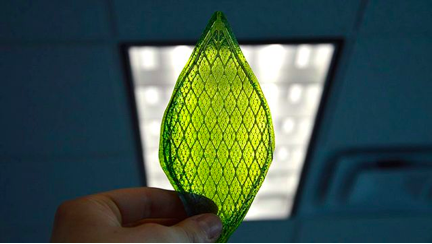
Artificial Nature: Will the astounding become common?

leafBy Robin Hammond

From artificial leaves to digital rodent brains, computer scientists are successfully implementing processes from the natural world. Does the Alice ruling on software patentability provide a glimpse into how these technologies will be treated in the future? In 15 years, will computer-implemented natural processes be patent-ineligible?

The utilization of natural processes in computing is astounding. Recently, researchers in Melbourne developed a solar-power device that is close to simulating photosynthesis. The Energy and Environmental Science journal published these details in an article; in the article, researchers claim “This simple and adaptable system addresses key criteria for the large-scale deployment of an artificial photosynthesis device” to “provide a cheap, clean and renewable source of hydrogen as the ultimately sustainable fuel.” In August, news broke that IBM had created a digital equivalent of a small rodent’s brain, a type of chip with neuro-synaptic architecture, called TrueNorth. Both the chips and subsequent software recreate a brain’s neurons and synapses. The TrueNorth chip is another leap forward for computing through ‘deep learning’. Deep learning operates in two stages: “First, companies … must train a neural network to perform a particular task. If they want to automatically identify cat photos, for instance, they must feed the neural net lots and lots of cat photos. Then, once the model is trained, another neural network must actually execute the task. You provide a photo and the system tells you whether it includes a cat. The TrueNorth, as it exists today, aims to facilitate that second stage.”

It has taken many years, but the courts are finally addressing the realities of software patentability. In Alice, the Supreme Court did an about-face in terms of the validity of business-method and software patents. No longer are ideas or processes patentable because a computer executes them. While the opinion did not itself mention software, it has heralded in a new age of hostility at the U.S. Patent and Trademark Office toward business-method and software patents, with many courts overturning patents under the new standard of Alice.

In 15 years, will natural processes that are merely implemented by computers be novel enough to qualify for patents? Or will the two-step inquiry applied in Alice be similarly interpreted once these processes become commonplace? The analysis under Alice begins with the question: does the invention consist in significant part of a patent-ineligible concept—for example, a law of nature, natural phenomenon or abstract idea? If so, the invention is patent-eligible only if the remaining parts of the invention have an “inventive concept”—one or more elements that ensure a patent on the invention amounts in practice “to significantly more than a patent upon the ineligible concept itself. In Alice, the patents at issue were for computerized escrow. The court decided that the abstract idea of escrow was patent-ineligible and performing escrow on a computer was not sufficient to provide an inventive concept: “A mere instruction to implemen[t an abstract idea] on … a computer … cannot impart patent eligibility.”

Does the shift in the patentability of software patents in Alice foretell the future of the patentability of artificial nature? One could foresee a future where the idea of brain functioning (arguably a natural phenomenon) is in itself not patentable, and the mere implementation of specific neuro-synaptic architecture by a computer would not rise to the level of inventive concept. Or will future courts embrace Judge Rader’s broad interpretation of the applicability of §101? Where natural laws are restricted to “universal constants created, if at all, only by God, Vishnu, or Allah”; “even gravity is not a natural law“; and the slightest bit of labor mixed with nature is property under Lockean reasoning.

Image source: http://maxmania.pl/nauka/syntetyczny-lisc-wytwarzajacy-tlen/.

The Continuing Saga of Cell Phone Tracking

cell phone, blog post

By Kelsey O’Neal

We count on our cell phones to be fast. We hate waiting for a call or a text. Our cell phones constantly emit signals to the closest cell tower. These fast signals instantly gratify us. But as you carry your phone, it creates a mass of data called cell site location information (CSLI). You don’t even have to use your phone; just having it on creates the cell site location information. U.S. federal law is divided on whether the government needs a warrant to get this information. On July 29th, 2015, U.S. District Court Judge Lucy Koh issued an opinion which requires that a government agency get a warrant before it requests 60 days of cell site location information.

Judge Koh wrote that tracking cell phones with historical cell site location information is particularly dangerous because law enforcement can use the cell site information to look into people’s homes and learn detailed information about an individual’s personal life. Judge Koh ruled that the government must obtain a search warrant to access these personal details because: (1) people expect privacy from government intervention when they are at home; (2) people have a higher expectation of privacy when it comes to long-term surveillance, and (3) cell phone location data can reveal a great deal about an individual because everyone turns on their cell phone and carries it with them. Twelve states agree with Judge Koh; six states already have a law that requires the police to get a warrant, and six are trying to get one.

However, not all states or courts agree with Judge Koh. Early this year, an 11th Circuit panel held that the police do NOT have to get a warrant to look at CSLI. Additionally, a 6th Circuit panel in Cincinnati held that you do not have a reasonable expectation of privacy if you accidentally butt-dial, ahem, pocket-dial, somebody. Why? The court compared it to leaving your curtains open; while there is still a privacy interest, it’s not nearly as strong because you are letting people look in your home. It would be simple to protect your privacy by shutting your curtains, or, by password protecting your phone.

It looks like this particular fight could head toward the Supreme Court, and the result could impact all cell phone users. Until that time, you should probably put your phone in airplane mode the next time you rob a bank.

Image source: http://thesceneisdead.com/2013/04/08/edc-vegas-protip-75-do-not-expect-cell-phone-service/.

An Action-Packed Summer for PTAB

uspto_seal_full_colorBy Don Wang

If you spent this past summer looking forward to the most recent Fantastic Four movie, I am deeply sorry for the utter disappointment. However, if you have been following the news of the Patent Trial and Appeal Board (PTAB) instead, this has been a truly great summer! Following the roll-out of the American Invents Act, the United States Patent and Trademark Office (USPTO) started to solicit public comments for a proposed rule change package for trials before the PTAB and has proposed a pilot program to have a single Administrative Patent Judge determine the institution of an Inter Partes Review. Continue reading

The UK Orders Google to Remove Links to “Right to be Forgotten” Stories

google_img By Juliya Ziskina

The United Kingdom’s Information Commissioner’s Office (ICO) has ordered Google to remove search results linking to news stories about the removal of information under the 2014 “right to be forgotten” ruling. Under the “right to be forgotten” ruling, Europeans who feel they are being misrepresented by search results that are no longer accurate or relevant—for instance, information about old financial matters, or misdeeds committed as a minor—can ask search engines like Google to delink the material. If the request is approved, the information will remain online at the original site, but would no longer come up under certain search engine queries.

Google had previously removed links relating to an offense committed by an individual almost 10 years ago. At the time, the individual had requested removal of the links under the “right to be forgotten” ruling. Several publications produced news stories detailing this removal request, and it became a news story in itself. Google retained links to those articles, and they still appeared in the search results for the individual’s name. The individual complained—and now the ICO has ordered Google to remove the newer articles. Google refused to remove links to these later articles, which included details of the original criminal offense. Google argues that these articles are an essential part of a broader news story about the “right to be forgotten,” and that the articles are in the public interest.

Google faces criminal charges and financial sanctions if it does not comply with the ICO’s order. These criminal consequences and fines may have a dire effect on Google’s ability to freely distribute information.

The “right to be forgotten” ruling gives European nations a mechanism to censor legal information and web pages. Not only does the ICO want to invoke the right to be forgotten, but it also wants to erase evidence that it implemented the policy. The EU designed this law to protect privacy, but these new developments are an unsettling new leap into government censorship.

However, Europeans can still use American Google to get uncensored information. European governments cannot force Google to alter results on its American search engine. The “right to be forgotten” ruling restricts Google.co.uk, but leaves Google.com untouched. European governments may eventually try to patch this hole. But for now, the right to be forgotten disappears at the American border.

Image Source: http://searchengineland.com/google-right-to-be-forgotten-form-192837.

China Poised to Tighten Grip on Cybersecurity with New Law

CyberSecurityBy Andrew H. Fuller

As Cybersecurity becomes a prominent global issue for nation states, governments consider options to curb their nation’s digital vulnerability. On July 6th, China, an undisputed major player on the global digital frontier, released the Cyber Security Law of the People’s Republic of China (“CSL”) for public comments. The CSL will, among other things, encourage education and training in cybersecurity related fields, establish new protections and rights for personal and sensitive data, and create government set standards for information technology hardware and software. Once adopted, the CSL will be the first Chinese law that exclusively focuses on cybersecurity. Continue reading