NFL Cheerleaders: restricted heavily and paid minimally

buffalo-bills-buffalo-jills-sports-illustrated

By Talia Loucks

Being a cheerleader for a winning football team like the Seattle Seahawks or the Denver Broncos sounds like a lot of fun: exciting games, screaming fans, and trips to the Super Bowl. But for the teams that are not winning any titles, the cheerleaders do not have much to cheer about. On top of cheering for a team with a losing record, many of these cheerleaders are barely even compensated for their time.

Minimum compensation may seem reasonable to the average fan: these cheerleaders get to be on the field at every game. Many want this position, and many are turned down. That should be enough for these women, right? Well, taking a closer look at the requirements shows that the NFL cheerleaders are restricted in a number of ways: the gaining of a couple pounds can result in suspension, many of the squads must pay for their own uniforms, and some are even encouraged to have plastic surgery. Additionally, cheerleaders must rehearse for long hours and participate in charity events and publicity events. All of this, plus any travel time for playoffs can make having a regular 9-5 job very difficult. Continue reading

Invasion of Wearable Technology in the Workplace

google-glasses.top_-300x193

By Cheryl Lee

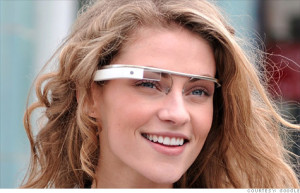
Wearable Technology is one of the hottest new technology areas today. Apple Watch, Google Glass, as well as health monitoring devices like FitBit, may be some of the most well known examples of wearable technology. However, there are many others in development. Future wearable technology even includes jewelry such as smart earrings that can monitor one’s heart rate as well as energy burned and   allows the user to sync wirelessly with a smartphone or a PC. Morgan Stanley estimated the potential market size for wearable technology at $1.6 trillion and noted that wearable devices will become the fastest consumer technology devices. IDC Worldwide Wearable Computing Device 2014-2018 Forecast and Analysis predicts that by 2018, wearable technology will account for 10% of the global electronics market. There is even a Wearable Technologies Conference in Milan, Italy, the fashion capital of the world, with a focus on bringing together the world of fashion and the world of technology.

Wearable technology refers to electronic technologies or computers that are incorporated into items of clothing and accessories, which can be worn on the body or attached to clothes. These wearable technologies, like Google Glass and Apple Watch, perform many of the same computing tasks as mobile phones and laptop computers. As the invasion of the latest wearable technologies continues to pervade our everyday lives and workplace, it creates issues for the workplace and the employers. Someone wearing Google Glass or an Apple Watch can take photos and videos of documents, which might potentially infringe upon someone else’s proprietary rights. These confidential documents can be uploaded directly to a personal account in the Cloud and then deleted from the wearable device. The risk of inadvertent disclosure of an employer’s trade secret is significant; it could result in millions of dollars in licensing revenue losses or loss of a competitive advantage. Despite such risks, the employer’s policy to regulate the usage and restrictions in the workplace may be quite challenging. Continue reading

“Dislike” – Service of Process Via Facebook Messenger

judge

By Christian Kaiser

Suppose you are sitting across from a hot date at a trendy restaurant downtown. Like all of the dates you get from Tinder, this date starts off great. It is intellectually stimulating. You talk about your interests. You might also talk about the Seahawks, or why Nelson Cruz is going to hit 40 homeruns this year, etc. Then you slip in that you are a lawyer, to which your date replies, “Tell me something ‘lawyerly.’” Since you are a Securities lawyer for a big Seattle law firm, you blurt out the first thing that pops into your head: “Have you heard about the rule against perpetuities?” As you begin to explain this fascinating legal issue, your date’s eyes predictably glaze over, and she starts to check her iPhone. You do the same and check your Facebook. You have a new message, which reads: “You have been served.” The message specifies a date and time when you must appear in court. The words “general partnerships are fine” and “you guys won’t ever fight” begin echoing through your head as you remember those East Coast clients from a few years back. You look up at your date and tell her you have to leave. As you exit the restaurant, you call your friend in your firm’s litigation department and ask whether Facebook Messenger meets the constitutional standards of due process for service of process. To your surprise, he answers “yes.”

This March, in FTC v. PCCare247, Inc., the Southern District of New York ruled that serving notice over Facebook was constitutionally adequate for service of process on international defendants. (https://www.ftc.gov/enforcement/cases-proceedings/122-3243-x120057/pccare247-inc-et-al). In this case, the defendants were located in India, and more traditional means of service had failed. Under FRCP 4(f)(3), a judge can order means of process, so long as it is “(1) not prohibited by international agreement; and (2) comports with constitutional notions of due process.” International conventions do not prohibit service of process via Facebook and, as the S.D.N.Y. stated, the circumstances in which the Facebook accounts would be served ensured service was constitutionally proper. In PCCare247, Inc., service was sent in two ways: via email and through Facebook Messenger. The court found that the defendants’ Facebook accounts were legitimate because they listed the defendant company as the defendants’ current employer, and a number of the defendants were friends with each other on Facebook. This, along with the similarities between Facebook Messenger and email, convinced the court that the standards of due process were met.  Continue reading