To Kill a Robocaller

ROBOCOPBy: Ben Cashdollar

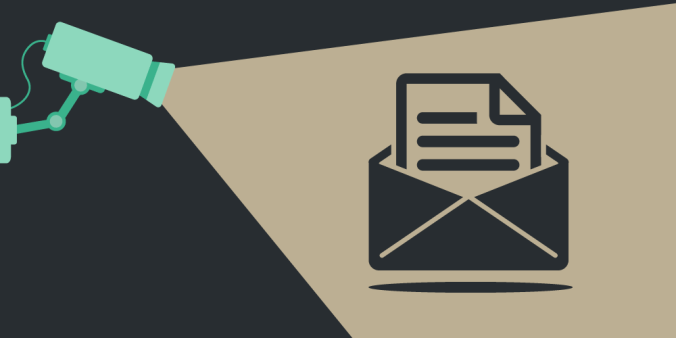
There are no two-ways about it: robocalls are the worst. At one time or another everyone has been waiting to receive an important phone call, felt the paroxysm of equal-parts excitement and anxiety accompanying their phone’s ringing, only for that emotive maelstrom to be compounded with frustration and annoyance when the caller is revealed to be a robot informing them of an “exciting, once-in-a-lifetime opportunity!” Unsatisfied by merely preying upon our emotions, robocallers prey upon our wallets as well – according to Consumers Union robocalls, and other such phone scams, result in more than $350 million in financial losses annually.

Continue reading

I Spy with my Little Eye: Is the Construct of Privacy Disappearing in the Wake of the Technology Age?

government.jpg

By: Treja Jones

Despite the fact that privacy is not a constitutionally guaranteed right, people can reasonably expect that when they are alone, they are not being watched, recorded, or studied . . . or at least, that was true at one point. In today’s technologically advanced society, it could very well be that no matter where you are, or what you’re doing, you’re never actually alone; you’re always being recorded, watched, or tracked in some way, shape or form. Advancements in technology, such as video surveillance, facial recognition, and the like, were created with intentions of simplifying both the process of criminal investigation and the routines of everyday life. But how far is too far? Are you ever actually alone? Do you ever actually have privacy?

Continue reading

Are Smartwatches and Fitness-tracking Wearables Medical Devices? Should They Be?

smartwatches-2x1-0319

By: Matthew Jurgensmeier

Pedometers have been around for hundreds of years. More advanced GPS-tracking devices are much newer, and have been gaining popularity over the last decade. The first real “smartwatch” that could pair with a user’s phone emerged around the year 2012 and the market has exploded since then. Now, smartwatches can be seen nearly everywhere. Smartwatches provide convenience and ease of use for activities that range from answering phone calls and paying with a credit card to tracking heart rate and activity level. However, when these devices blur the line between something designed for convenience and a medical device, consumers should be aware that they aren’t buying an FDA-approved medical device. While the information provided by these devices may be useful, the accuracy of the information is contested. Given the dubious readings from these devices and the lack of governmental oversight, it is unlikely that a mass-marketed medical device exists.

Continue reading

ATTENTION COLLEGE APPLICANTS, COLLEGES ARE WATCHING YOU

Email-Surveillance

By: Michael McNeil

Around 20 million people will apply to college this year, and when they do, colleges will be watching them. Using big data analytics software from companies like Technolutions Inc., schools will know when an applicant opens an email, how long they spend reading it, and whether they click on any attachments or hyperlinks. They will see when an applicant visits their website, what they look at, and how long they stay on each page. They will know when an applicant visits their school, calls and asks for information, or RSVP’s to an event the school is participating in. All this and more will be tracked, annotated, and measured, so that the college can assess the applicant’s “demonstrated interest” in attending their school.

Continue reading

Netflix Choosing Its Own Adventure in Bandersnatch Lawsuit

Bandersnatch_Netflix_Ringer.0

By: Ariana Morello

After two years in the making, on December 28, 2018, Netflix released the long awaited Black Mirror: Bandersnatch.  For those who are unfamiliar, Black Mirror centers around technology and its potential consequences, often providing a bleak look into a dystopian future.  Due to its interactive and non-linear form, Bandersnacth was the first-of-its-kind and became widely popular with Netflix fans.  The movie follows protagonist Stefan as he attempts to become a famous video game creator.  By employing interactive storytelling, Netflix gives viewers the ultimate power; allowing them to choose between two scenarios, scene by scene.  The options range from tame scenarios, such as what Stefan will have for breakfast and what music he will listen to, to the morbid where viewers decide if Stefan should kill his father and what to do with the body.  As viewers choose each scenario, they subsequently seal Stefan’s fate.  Choices made earlier in the movie impact later options, with some storylines only reachable by a specific series of choices.  As a result of this new concept, Bandersnatch has gained mass popularity, with many viewers watching and rewatching the hours of footage to achieve different endings.  Amongst this mass popularity however, publisher Chooseco LLC (“Chooseco”) has filed a lawsuit against Netflix for trademark infringement due to Netflix’s use of the phrase “Choose Your Own Adventure.”

Continue reading