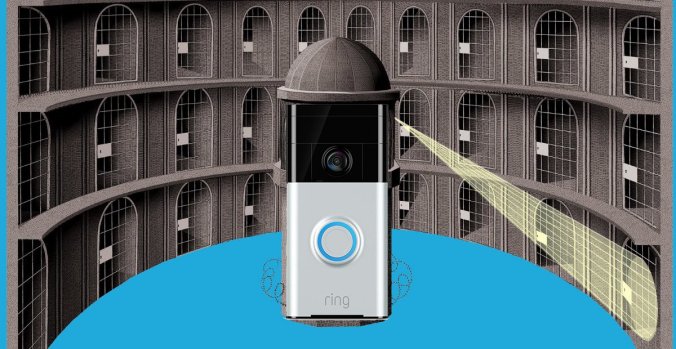
How Ring & Rekognition Set the Stage for Consumer Generated Mass Surveillance

du9gby7uuaak9do

By: Jevan Hutson

If every home on a street, in a neighborhood, or in a town had a Ring surveillance system, the individual cameras, taken together, could construct an extremely intimate picture of daily public life. By integrating facial recognition and contracting with local and federal law enforcement agencies, Amazon supercharges the potential for its massive network of surveillant consumers to comprehensively track the movements of individuals over time, even when the individual has not broken any law. Fully realized, these technologies set the stage for consumer generated mass surveillance.


Continue reading

Rentberry v. City of Seattle: Can Seattle Rein in The Free Market Without Violating the First Amendment?

1_gn99-v8v79csfzshonckfq

By: Kyle Cianchetta

Is bidding on rental properties on the internet “commercial speech,” thus protected by the First Amendment, or conduct which may be regulated by the government. We will likely find out this year, as Judge Jones of the United States District Court, Western District of Washington, is set to rule on the matter.

Continue reading

Algorithmic Injustice: The Increased Prevalence of Biased Code in Courts and Law Enforcement

ai-2_meitu_1-900x400

By: Noelle Symanski

Algorithms and artificial intelligence, more specifically machine learning, are technologies that have seen increased use in many professional fields. We use this technology to make Google searches, swipe on online dating profiles, predict stock prices, and even control traffic lights. As algorithms become ubiquitous across fields, these programs have also made their way into the criminal justice system. Law enforcement agencies and courts have begun using technology to drive practices such as suspect identification and sentencing.

Continue reading

Like, Comment, Vote: Social Media’s Influence on Political Participation

socialmedia

By: Treja Jones

With the average American spending 116 minutes per day scrolling through social media (which amounts to over 5 years of social media use over a lifetime), social networking sites such as Twitter, Facebook, and Instagram have expanded their purpose beyond entertainment and social connection to include uses such as news reporting, marketing, and even shopping. It comes as no surprise that Americans are also turning to social media to get political updates and to support and follow political platforms. This begs the question; what influence has social media had on political participation?

Continue reading

Buyer Beware: How Modern Cars Can Spy on You


533344-connected-car-internet-of-things

By: Matthew Jurgensmeier

In the modern economy, data is essential to survive. Whether used to improve products and processes or sold for a profit, data drives companies. While it might be understandable that social media platforms, such as Facebook, Instagram, Snapchat, and Google, make their money by allowing companies to target users with advertisements, how data is monetized in other contexts may be less clear. Social media and search-based businesses collect user data based on activity both on-and-off site and allow incredibly well-targeted consumer advertising. What consumers may be less aware of is that the information these platforms keep on users could pale in comparison to the data collected by modern vehicles.

Continue reading