“Dislike” – Service of Process Via Facebook Messenger

judge

By Christian Kaiser

Suppose you are sitting across from a hot date at a trendy restaurant downtown. Like all of the dates you get from Tinder, this date starts off great. It is intellectually stimulating. You talk about your interests. You might also talk about the Seahawks, or why Nelson Cruz is going to hit 40 homeruns this year, etc. Then you slip in that you are a lawyer, to which your date replies, “Tell me something ‘lawyerly.’” Since you are a Securities lawyer for a big Seattle law firm, you blurt out the first thing that pops into your head: “Have you heard about the rule against perpetuities?” As you begin to explain this fascinating legal issue, your date’s eyes predictably glaze over, and she starts to check her iPhone. You do the same and check your Facebook. You have a new message, which reads: “You have been served.” The message specifies a date and time when you must appear in court. The words “general partnerships are fine” and “you guys won’t ever fight” begin echoing through your head as you remember those East Coast clients from a few years back. You look up at your date and tell her you have to leave. As you exit the restaurant, you call your friend in your firm’s litigation department and ask whether Facebook Messenger meets the constitutional standards of due process for service of process. To your surprise, he answers “yes.”

This March, in FTC v. PCCare247, Inc., the Southern District of New York ruled that serving notice over Facebook was constitutionally adequate for service of process on international defendants. (https://www.ftc.gov/enforcement/cases-proceedings/122-3243-x120057/pccare247-inc-et-al). In this case, the defendants were located in India, and more traditional means of service had failed. Under FRCP 4(f)(3), a judge can order means of process, so long as it is “(1) not prohibited by international agreement; and (2) comports with constitutional notions of due process.” International conventions do not prohibit service of process via Facebook and, as the S.D.N.Y. stated, the circumstances in which the Facebook accounts would be served ensured service was constitutionally proper. In PCCare247, Inc., service was sent in two ways: via email and through Facebook Messenger. The court found that the defendants’ Facebook accounts were legitimate because they listed the defendant company as the defendants’ current employer, and a number of the defendants were friends with each other on Facebook. This, along with the similarities between Facebook Messenger and email, convinced the court that the standards of due process were met.  Continue reading

Guided into the Wilderness: FDA’s Guidance on Mobile Medical Apps Leaves Many Unanswered Questions

Screen Shot 2015-04-17 at 12.12.13 PMBy Miriam Swedlow

Let’s face it; the FDA has a tough job. It must navigate the thin line between balancing public safety and facilitating business innovation. It is perpetually in the zone of “damned if they do and damned if they don’t.” This scenario is currently playing out in the relatively new concept of mHealth, a term used to describe medical services delivered over a mobile device (“m” is for mobile).

The past decade has seen an explosion in health and medical-related apps available to medical professionals and consumers. Apps provide access to medical textbooks or allow users to track health data such as calories and blood pressure. Apps can also directly connect to medical devices such as blood pressure cuffs or cardiac leads, or allow doctors to remotely monitor a patient in real time. Given the broad range of applications, the FDA has struggled to determine when an app becomes a medical device subject to regulation under the Federal Food, Drug, and Cosmetic Act (FD&C Act). On February 9, 2015 the FDA published its updated Guidance for Industry and Food and Drug Administration Staff on Mobile Medical Applications. Despite providing manufacturers some clarity, the Guidance falls short of creating a clear indication of what will or will not fall within FDA oversight. Continue reading

Washington Journal of Law, Technology & Arts Publishes Winter 2015 Issue

The Washington Journal of Law, Technology & Arts (LTA Journal) has published its Winter 2015 Issue. The LTA Journal publishes concise legal analysis aimed at practicing attorneys on a quarterly basis.

Patrick Holvey, a 2015 J.D. candidate at NYU School of Law and registered Patent Agent, wrote the first article, “The Anti-Clone Wars: Towards a Reinvigoration of the Doctrine of Patent Misuse and the Per Se Illegality of Anti-Cloning Provisions.” The article argues that anti-cloning provisions improperly broaden the patent grant, constrain competition in unpatented subject matter, harm competition, and should be considered by the courts to constitute per se patent misuse or, in the alternative, patent misuse under a rule of reason analysis.

Submissions Editor Christopher Ferrell wrote the second article, “Standing Room Only: MadStad Engineering and the Potential to Challenge the Constitutionality of the America Invents Act’s ‘First-Inventor-to-File’ Patenting System.” The article explores the ramifications of the MadStad Engineering v. USPTO ruling and examines the constitutionality of the first-inventor-to-file patent system.

In the issue’s third article, “The Code-Based Interpretation of Authorization: An Incomplete Picture,” Managing Articles Editor Nicholas Ulrich examines the two leading interpretive theories on the issue of authorization under the Stored Communications Act: the code-based theory and the trespass theory. The article argues that the appropriate approach to authorization looks to both theories.

Associate Editor-in-Chief of Operations Jeffrey Echert contributed the fourth article, “Radio Revolution: The Local Community Radio Act’s Expansion of Possibilities for Low-Power FM Stations.” The article explores the struggle to establish low-power FM radio stations (LPFMs) and argues that the Local Community Radio Act is a step in the right direction for LPFMs, but not without obstacles.

See the full issue here.

Visit the Washington Journal of Law, Technology & Arts Website: http://www.law.washington.edu/wjlta/

New Executive Order expands foreign cyber-attack retaliation options

Screen Shot 2015-04-10 at 2.38.07 PMBy Denise Kim

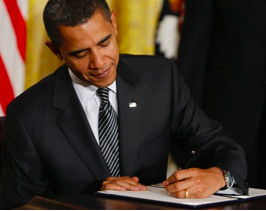
On April 1, 2015, President Obama signed a new executive order designed to block the property of certain persons engaging in significant malicious cyber-enabled activities. Over the past several years, the number of malicious cyber-attacks has continued to increase and experts predict that major cyber-attacks will continue to increase over the next decade.

In support of the new executive order, President Obama declared a national emergency to deal with this threat after finding that the “increasing prevalence and severity of malicious cyber-enabled activities originating from, or directed by persons located, in whole or in substantial part, outside the United States constitute an unusual and extraordinary threat to the national security, foreign policy, and economy of the United States.” Continue reading

Alleged Corruption Casts Doubt on Silk Road Trial

Screen Shot 2015-04-08 at 12.02.43 PMBy Juliya Ziskina

The Department of Justice has charged two of the law enforcement agents involved in the complex multi-agency investigation into the Silk Road for stealing hundreds of thousands of dollars (at the very least) in bitcoins.

When charges were announced against Ross Ulbricht in October 2013 and the website was shut down, the authorities called Silk Road “the most sophisticated and extensive criminal marketplace on the internet.” Several thousand drug dealers and other vendors used the site from January 2011 through its closing to sell hundreds of kilograms of illegal drugs and other illicit goods to more than 100,000 buyers, according to charges filed in Manhattan. The site generated over $213 million in revenue during that period, and Mr. Ulbricht, operating under the pseudonym “Dread Pirate Roberts,” took millions of dollars in commissions, federal prosecutors in Manhattan charged. (We previously covered takeaways from the trial here.) Continue reading