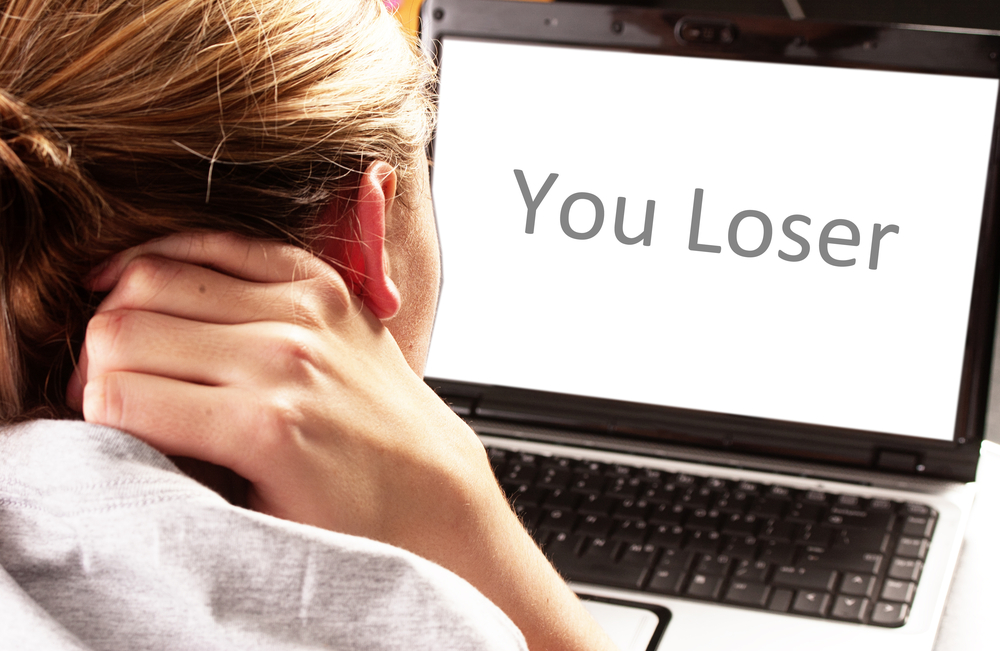
Cyberbullying: Should Parents be Held Liable?

shutterstock_89683588By Farah Ali

In May 2011, Dustin Athearn and Melissa Snodgrass, seventh graders at Palmer Middle School in Georgia, created a fake Facebook page to taunt another student, Alexandria Boston (Alex). The students set up the fake Facebook profile under Alex’s name and used a “fat face” application to create and post an unflattering picture of her. The fake account also stated that Alex was a homosexual and that she endorsed racist viewpoints. To create further damage, the fake persona connected to over 70 Facebook friends, and it sent friend requests to Alex’s classmates, teachers, and family members. Dustin and Melissa used the profile to post graphically sexual, racist and offensive material. This included insinuating that Alex had mental health disorders and took illegal drugs.

When the school found out, Principal Cathy Wentworth called Dustin and Melissa to her office and had them sign a written statement explaining their involvement. Wentworth sent a form to the students’ parents explaining that the students would be disciplined with a two-day in-school suspension for their harassment of Alex. Dustin’s parents grounded him for a week. However, it was not until 11 months later in April 2012 that the profile was taken offline. In fact, the fake profile continued to send and accept new friend requests and users could still view and post on the profile before Facebook finally deactivated the account. Continue reading

Washington State Starts a Battle With Patent Trolls

Screen Shot 2014-10-20 at 3.43.28 PMBy Robin Hammond

Can a state use consumer protection laws to punish patent trolls?

The Washington State Senate Law and Justice Committee is considering penalizing patent trolling. The committee recently discussed a proposed ‘patent troll prevention act’ in a work session on October 2, 2014. The bill in its current form would create a new consumer protection law to fine patent infringement in bad faith. Violators could face a fine of up to $25,000.

The bill outlines a number of factors that a court may consider in determining whether an assertion of patent infringement has been made in bad faith. For example, bad faith may be shown when a person asserting the claim: should have known the assertion was meritless, provides inadequate information in the initial demand letter, or fails to provide basic patent information on request. A court may also consider the reasonableness of the asserting party’s diligence in comparing the ‘infringing’ activity and the patent, and the reasonableness of proposed licensing fees or timeframes. The bill also lists factors which indicate good faith, including diligence, timeliness, and reasonableness. It also names three types of patent holders that are presumed to act in good faith: an investor in the patent, an original assignee, or a university. Continue reading

BYOD: Bring Your Own Devices or Bring Your Own Disasters?

Screen Shot 2014-10-17 at 5.00.50 PMBy Denise Kim

What happens when personal phones are no longer for personal use? Gone are the days where we were issued separate business phones. We have entered into a new era where personal devices are used for work and work devices are used for personal use.

Bring Your Own Device (BYOD) is widely adopted to refer to employees who bring their own computing devices to the workplace for use and connectivity on the secure corporate network. It refers to an increasing trend of employees using personal devices in the workplace or for work purposes. BYOD policies have become an increasing trend in the workforce with more than 50% of midmarket organizations supporting BYOD as a way to boost productivity and reduce costs with the highest percentage of support coming from the legal sector. BYOD policies have the benefit of saving costs and increasing productivity since users have more sharing capabilities. Such sharing capabilities give employees more ability and freedom to share information on mobile devices. Continue reading

Liking and Sharing Your Health Information: Privacy Concerns Raised Amidst Rumors of “Facebook Healthcare”

Screen Shot 2014-10-16 at 7.04.19 AMBy Alex Boguniewicz

Every day millions of people share their interests, photos, and locations on Facebook. So why not share how you are feeling—medically that is. At least that seems to be the idea behind Facebook’s rumored plans to provide a platform for healthcare services. This month, anonymous employees of the social networking company leaked information that Facebook is planning to develop health applications, allowing users to make healthy lifestyle choices and connect with “support communities.” As part of this program, users would have to disclose private health information to Facebook. We have previously examined Facebook’s policy of forwarding user information to online advertisers and its alleged violations of European Union’s privacy laws. Due to Facebook’s history of privacy issues, this potential health program has raised the concern of some attorneys, especially given the extremely sensitive nature of private health information.

The rumored program would involve users sharing certain health information with Facebook, which would then be used to connect the users to a “support community” of other users suffering from the same illness or condition. The idea is similar to other websites dedicated to putting people in touch with each other to openly discuss their health struggles. It is also likely spurred on by the recent success of Facebook’s organ donor program. The organ donor program directs users on how to become organ donors in their state and then allows them to share their registration on their profiles. The initiative was a huge success, with hundreds of thousands of users registering to be organ donors within days of its launch. Continue reading

SEC Clarifies the Parameters for the Use of Crowdfunding in Connection with Social Media

Screen Shot 2014-10-13 at 3.13.42 PMBy Eric Siebert

News of successful crowdfunding efforts are present everywhere we look these days. From ideas of sock monkeys for cancer patients to ideas for dry composting toilets, crowdfunding has given everyday individuals who lack access to a large pot of financial resources the ability to make their otherwise lofty ideas become a reality. Crowdfunding has been described by the SEC as “an evolving method of raising capital that has been used outside of the securities arena to raise funds through the Internet for a variety of projects ranging from innovative product ideas to artistic endeavors like movies or music.” Although crowdfunding is not typically seen as a method for selling securities (due to the plethora of SEC regulations surrounding such sales), Title III of the JOBS Act creates an exemption to normal securities rules, allowing small businesses to more easily sell securities via crowdfunding. This exemption exists for small business as long as they comply with certain regulations.

Prior to the JOBS Act, the SEC restricted sales of securities to only accredited investors and a limited number of non-accredited investors. The majority of the population does not meet the high net worth or income standards to be qualified as an accredited investor, and thus cannot easily purchase a company’s securities. Under Section 5 of the Securities Act, businesses either had to comply with such requirements or face stiff penalties from the SEC.

However, pursuant to the JOBS Act, signed into law in April 2012, small U.S. business startups and entrepreneurs can sell securities to unaccredited investors (i.e., the general public) without having to deal with many burdensome SEC requirements. This crowdfunding exception is codified in Section 4(a)(6) of the Securities Act. This section allows a company (an “issuer” under the language of the Securities Act) to use the crowdfunding exception if, among other things, the company sells no more than $1 million in securities in any 12-month period and no more than a certain amount to any single investor. Continue reading