Breaking the Impasse over Jailbreaking

JailbreakingBy Kristine Jacobs

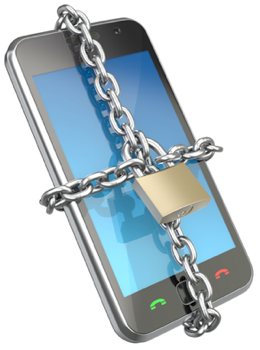
Wireless phone customers may soon be able to switch carriers while keeping their same wireless mobile devices. Though it is currently illegal for a consumer to unlock a cellphone without the carrier’s permission (thereby allowing it to be used on other wireless networks), just two weeks ago the five largest wireless carriers all agreed to allow consumers to unlock phones once the consumer’s contract with that carrier has expired.

Mobile phones may be purchased either “locked” or “unlocked.”  A locked device contains a subscriber identification module (SIM) lock that only allows a specific type of SIM card to be used.  Thus, a locked phone purchased from Verizon Wireless will only work with a Verizon SIM card; SIM cards from other carriers will not work with the phone.  An unlocked phone gives the consumer several advantages, including the most flexibility in choice of wireless carrier and the possibility of avoiding overseas roaming charges.  So why do consumers still buy locked phones?  The answer is simple—price.  Locked phones are subsidized by the carrier. In return for the subsidized price, the consumer must enter into a service contract with that carrier.  So in choosing between a locked or unlocked phone, the consumer must weigh the price of the phone against the benefits of an unlocked phone.

Continue reading

Washington Journal of Law, Technology & Arts Publishes Fall 2013 Issue

The Washington Journal of Law, Technology & Arts (LTA Journal) has published its Fall 2013 Issue. The LTA Journal publishes concise legal analysis aimed at practicing attorneys on a quarterly basis.

The issue’s first article, by Editor-in-Chief Evan Brown, is “Shaking Out the ‘Shakedowns’: Pre-Discovery Dismissal of Copyright Infringement Cases after Comparison of the Works at Issue” which, in an era of copyright trolling, discusses the willingness of several courts to grant motions to dismiss in copyright infringement cases when discovery is unlikely to produce material evidence. The article examines the circumstances under which pre-discovery dismissal is likely to be granted, the courts’ reasoning for granting dismissal in such cases, and the potential effects on copyright infringement and litigation.

Articles Editor Megan Haslach wrote the second article, “Trouble for Trolling: Courts Reject Copyright Trolling Tactics.” The article addresses the issue of copyright trolling, and examines how courts have discouraged trolling tactics by dismissing suits filed by copyright trolls acting in bad faith.

Associate Editor-in-Chief of Communications, Peter Dang, contributed the third article “Criminal Defenses to Anti-Circumvention Charges for Modifying Video Game Consoles.” The article explores the DMCA and its application to the modification of video game consoles, and focuses specifically on the DMCA in the criminal law context.

The issue’s fourth article was written by Dina Neda Rezvani and is titled “Can You Hear Me Now? The Race to Provide America with Universal, High=Speed Wireless Coverage.” The article discusses the circuit split on key interpretations of the Telecommunications Act, and the need for consistency in its application.

GPS Trackers: After Jones the Water Remains Murky

ImageBy Nicholas Ulrich

Last week, two events further clouded the issue of whether law enforcement officers need a warrant to place a GPS tracking device on someone’s vehicle. After the Supreme Court’s landmark 2012 decision United States v. Jones, which brought GPS trackers within the scope of the Fourth Amendment, only one circuit court had definitively spoken on whether a warrant is required before police can use the devices. In United States v. Katzin, the Third Circuit unequivocally stated that a warrant is required before law enforcement can place GPS tracking technology on someone’s vehicle. Last week, however, the court agreed to grant an en banc rehearing of Katzin. This vacates the original decision. In addition, the Second Circuit decided United States v. Aguiar, which dealt with a comparable GPS tracking situation. The Second Circuit, however, did not address whether a warrant is required. The court merely alluded in dicta that Jones had changed “the landscape.”

Continue reading

New Front in Legal Battle over Nazi-Looted Art: Turning of the Tide or a Mere Ripple of Change?

US-soldiers-carrying-loot-001By Misa Bretschneider

Last week marked another chapter in the long-standing crusade to reclaim Nazi-expropriated artwork. On December 9th, a unanimous three-judge panel for the Ninth Circuit reinstated claims by a prominent Jewish family, the Cassirers, seeking to recover ownership of a $20 million masterpiece confiscated by the Nazis during World War II.

The artwork in dispute, Rue St.-Honore, Apres-Midi, Effet de Pluie, was painted in 1898 by French impressionist master Camille Pissarro. While Julius Cassirer originally purchased the painting in 1899, his children were forced to hand over the painting to the Nazi government in 1939 in order to obtain a visa allowing them to flee Nazi Germany.  In the ensuing years, however, the painting was never successfully recovered by the Cassirer family. Instead, the painting switched hands among various art collectors and ultimately found its way to Spain’s Thyssen-Bornemisza Museum.

Continue reading

Unzipping Genes: How 23andMe’s Legal Struggles Affect the Future of Genetic Research

G3400117-Designer_babies-SPL (1)By Farah Ali

This holiday season, many people might have chosen to give personal genetic testing spit kits as stocking stuffers. For $99, the company 23andMe offered to provide your loved ones with genetic information about potential health risks and lineage. But, alas, this is no longer an option.

23andMe has broken barriers advancing the commercialization of genetic testing. But a recent controversy arose around the U.S. Food and Drug Administration’s (FDA’s) official letter telling 23andMe to discontinue selling personal genetic testing kits until the company provides more concrete data supporting the results of their testing. 23andMe initially chose to ignore this demand. Less than a week later, the company found itself facing a class action suit alleging misleading advertising. This series of events has spawned legal debates about the extent of the FDA’s regulatory reach and the implications of genetic data collection, especially as it relates to the Genetic Information Nondiscrimination Act (GINA).

Continue reading