Fifth Circuit Backpedals on Jurisdictional Limits for Wiretapping, Maintains the Status Quo

Alex PostBy Alex Boguniewicz

Only last week, this was going to be a very different article.  It was supposed to detail a bold holding and the creation of a circuit split that was likely to generate debate about the law’s response to mobile technology.  However, in an unexpected sua sponte rehearing of United States v. North, the Fifth Circuit withdrew its decision that a federal district court could not authorize a wiretap over a cell phone and a listening post outside of its jurisdiction.  The court ultimately determined that the evidence collected from the wiretap should be suppressed, but based on a completely different issue. The court ignored the jurisdictional question altogether.  So what happened?

The case involves standard drug-deal monitoring by the Drug Enforcement Administration (DEA).  The defendant, North, argued that evidence of a phone call he made while in Texas to another Texas resident, monitored from a Louisiana listening post, should be suppressed since the Mississippi district court that issued the wiretap order did not have jurisdiction in either Texas or Louisiana.  In August, the court held that a district court cannot authorize the wiretapping of a cell phone call when neither the cell phone nor the listening post was within the court’s territorial jurisdiction.
Continue reading

Resurrected Legislation Introduces Royalties for Visual Artists

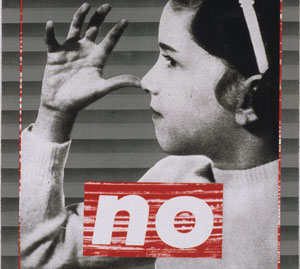
No

“No” by Barbara Kruger

By Rachael Wallace

New York Democratic Representative Jerrold Nadler hopes to reintroduce his “Equity for Visual Artists Act” in Congress this year. In 2011, Rep. Nadler first introduced the bill , which would provide visual artists with a 7% royalty on artwork resold for more than $10,000 after the initial sale. But the act has many opponents and is particularly unpopular among art museums and auction houses.

Seattle’s own Kimerly Rorschach, President of the Seattle Art Museum, was recently quoted by the Huffington Post opposing resale royalty acts for visual artists, claiming the bill would “encourage closed-door, private sales at the expense of public auctions, potentially depriving museums of vital information about the availability and pricing of works of art.”

Continue reading

EA Discontinues NCAA Football game: An Athlete’s Right of Publicity

Denard_covers_20130423124136_320_240By Peter Dang

Over the last year, debate has increased over the issue of paying college athletes. Texas A&M’s Heisman-winning quarterback Johnny Manziel was suspended half a game for allegedly signing autographs for money. NFL Pro Bowl running back Arian Foster claimed he “took money on the side” in college to pay for rent and food. These, and numerous other recent controversies involving college athletes seeking to receive a slice of the enormous revenue pie that they’ve contributed to producing, have dragged the issue into the spotlight.

The National Collegiate Athletic Association’s (NCAA) bylaw 12.5.2.1 states that an intercollegiate athlete will be ineligible for participation if the individual “accepts any remuneration for or permits the use of his or her name or picture to advertise, recommend or promote directly the same or use of a commercial product of any kind.”  This prevents colleges athletes from profiting off their own image, even though their colleges and universities actively do so. One such lucrative source of profit involving the athletes’ right of publicity is video games.

Continue reading

Will the Supreme Court Finally Take Aim at the Trolls?

TrollBy Doug Logan

The Supreme Court has accepted review of two cases that could slow the rash of unfounded patent litigation that many have seen as slowing innovation, clogging courts, and unjustly enriching companies that do not produce anything of value. Currently almost 60 percent of all patent cases involve so-called patent trolls, up from 19 percent in 2006. And these numbers do not count the lawsuits that are not filed but are instead settled outside of court. With all these problems lurking in the background, many think the Supreme Court will use this opportunity to change the patent litigation calculus by making it less profitable for patent trolls to bring frivolous and costly lawsuits.

Continue reading

Could an Internet Streaming Service Kill Broadcast Television?

TV antennaBy Pedro Celis

That’s what ABC, NBC, CBS, and FOX claim in their petition to the Supreme Court. The four major broadcasters are seeking an injunction against a service that streams broadcast television over the Internet. The service, called Aereo, charges users $8 a month to stream broadcast television to their computers, mobile devices, or TVs (via Roku or Apple TV). Users can watch programs live (with a 6–7 second buffering delay) or record up to 20 hours of programming to stream later. But neither Aereo nor its users pay any copyright licensing fees.

Aereo avoids paying fees by using thousands of small antennas in their data centers. When a user selects a program, one antenna tunes in to that station and either streams the content exclusively to that customer, or records the program in a hard drive space partitioned to that customer. And each of Aereo’s data centers streams only to customers that live within the range of the broadcast coverage it receives. According to Aereo, the company essentially just rents antennas and DVR space to its customers. But networks believe Aereo essentially rebroadcasts their programming without paying any licensing fees.

Continue reading