The Other Type of Robot Battery

Picture1By Daniel Healow

While the words “robot” and “battery” are commonly used in the same sentence, these phrases are usually referring to electricity, not assault. Unfortunately, use of the latter definition is increasing in frequency due to an uptick in malicious human actions taken against intelligent robots undergoing real-world testing. As the number of independently-operating robots have multiplied in humans’ daily lives, so have instances of violence against them. Continue reading

Reasonably Expecting to Change the World: The CRISPR-Cas9 Patent Battle

Picture1

By Michael Rebagliati

In addition to the cited sources, the author would like to thank a family member with far more scientific knowledge, Michael R. Rebagliati, Ph.D., for his essential scientific edits, commentary and analysis.

Right now, a new gene-editing technology called CRISPR-Cas9 is spreading throughout the scientific and business communities and into the public consciousness. The scientific implications are vast because CRISPR (Clustered Regularly Interspaced Short Palindromic Repeats) is not just one scientific invention with one purpose. Rather, it is a natural process that has been harnessed and redirected into a gene-editing technique that is (relatively) easy to use. Moreover, its high efficiency means that scientists can use it to edit the genetic code of any gene in many kinds of organisms. Think Industrial Revolution for genetic engineering. Continue reading

Virtual reality Crime Scenes: Demonstrative of Facts or Destructive of Rights?

blog

By CaroLea Casas

In trial advocacy classes, law students are often taught to use evidence to tell a story. Adept trial advocates can weave together the threads of a story so that jurors have a vivid sense of the circumstances – vivid enough to make them feel almost as if they were there. This ability is especially important for prosecutors and defense attorneys in the criminal realm, as these lawyers face a higher burden of proof than their civil counterparts.

Technological advances may soon take some of that burden off of the advocate’s shoulders. A recently funded Staffordshire University project led by Dr. Caroline Sturdy Colls is using virtual reality technology to digitally recreate crime scenes. The project seeks to provide tools for prosecutors to show the crime scene in virtual reality to jurors via headsets. Additionally, Durham University PhD researcher Mehzeb Chowdhury has developed MABMAT, a relatively low-cost autonomous robotic imaging system capable of scanning entire crime scenes. Field-testing has been arranged with various law enforcement agencies. Both projects aim to improve on inconsistencies in evidence collection. Continue reading

Better to be Absolutely Ridiculous Than Absolutely Generic: The Estate of Marilyn Monroe’s Trademark Woes

Picture1By Gwen Wei

On Monday, March 13 2017, a ruling in the Southern District of New York threw trademark practitioners nationwide into a tumult when the presiding judge left open the possibility that a celebrity name could become too generic to enforce as a trademark. The issue: the court’s “serious doubts that V. International will be able to establish that the contested marks are generic”, pitted against its concern that “[r]eaching that conclusion at this state would be premature.”  The celebrity hanging in the balance: Marilyn Monroe. Continue reading

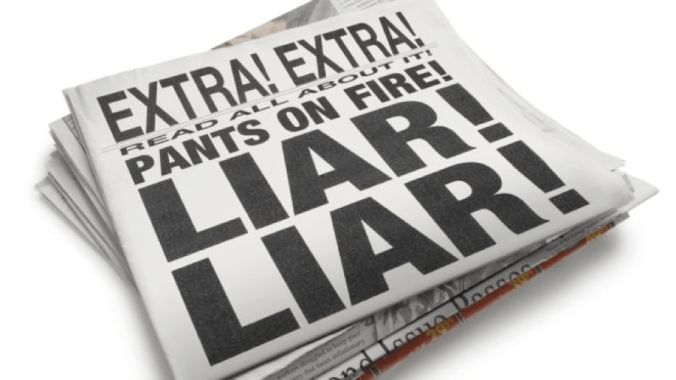
How to Fight Fake News in a World Spewing Alternative Facts

Picture1By Mackenzie Olson

Before you re-share an online article, before you give weight to its assertions—before you even begin to read the first line—ask yourself one question: “Does this look like a credible source?”

At a young age, I learned that I must first ask this question before citing to any given resource in a research paper or project. Accordingly, I learned where to look for reputable sources, how to determine which of these sources were credible, and the ways in which to best use these sources to locate further acceptable resources.

I was surprised when I learned just how frequently Internet users are duped into reading, believing, and ultimately re-sharing fake news stories. In the months immediately prior to the 2016 U.S. presidential election, the top performing fake news stories generated more engagement than the top performing real stories published by major news outlets. These leading fake stories generated over 8.7 million shares, reactions, and comments on social media, while the leading stories published by major news outlets generated about 7.3 million similar reactions. Continue reading