Uber for the Skies Gets Shot Down by Federal Regulators

FlyNowBy: Samuel Daheim

In December 2015, the United States Court of Appeals for the District of Columbia Circuit held the Federal Aviation Administration (FAA) rightfully concluded that private pilots, using a web-based service to offer flights to potential passengers, presented themselves as common carriers willing to transport persons for compensation.  Thus, the pilots had violated the terms of their noncommercial pilot licenses.  The pilots petitioned the Supreme Court of the United States for certiorari, and a response came on August 1, 2016.

Continue reading

Rated T for Tobacco: The Impact of Tobacco Imagery on Movie Ratings

MPAABy Alex Bullock

Whether you should smoke or not is a personal choice. However, whether smoking is good or bad for your health is not really a matter of opinion (spoiler, it’s bad for you). Smoking is certainly not a habit that we, as a society, want to encourage children to pick up (at least not anymore). Yet, one place that has an impact on children’s perception of smoking is at the movie theater.

Continue reading

Apple Faces Further Intellectual Property Hurdles in Beijing

Apple DownBy Kiran Jassal

This month, a Chinese company known as Shenzhen Baili Marketing Services Co. won a regulator’s patent ruling in Beijing against Apple for its rounded-edge smartphone design, stirring fears that Apple’s iPhone 6 would be shut out of the market in China. This ruling comes one short month after Apple lost its fight to keep the “iPhone” trademark exclusive to its products following a Beijing court ruling that a little-known accessories maker could use the trademark for a range of its wallets. And among the many interesting dimensions to this recent patent dispute, Apple’s woes are even more complicated by its struggle to keep confidential designs under wraps as they work their way through Apple’s supply chain.

Continue reading

Slippery Slope for Online Service Providers with New California Appellate Court Ruling

ispsBy Tyler Quillin

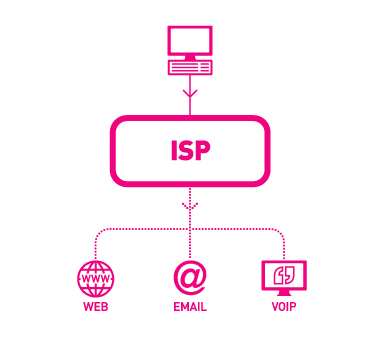
The most important law governing the internet just had its 20th birthday earlier this year, the Communications Decency Act (CDA). Signed by President Bill Clinton in 1996, the CDA grants online service providers immunity from liability for most illegal activities of their users. What’s more, the CDA not only allows large internet-based companies like Facebook, Amazon, and Yelp! to survive because they don’t have to individually each user’s activity, it also enables a large portion of the freedom of speech the general public enjoys online daily.

Yet, despite 20 years of precedent, the CDA has come under scrutiny. Most notably, a California appellate court issued a ruling that included an order for Yelp!, a nonparty to the case, to take down a defamatory post involving an attorney who sued a former client for posting defamatory comments and reviews on Yelp!. Along with the court order to take down the reviews, the attorney won on a default judgment to the tune of over $500,000.

Continue reading

Screenshot Through The Heart, And Richard Prince’s To Blame

Rasta.jpgBy Gwen Wei

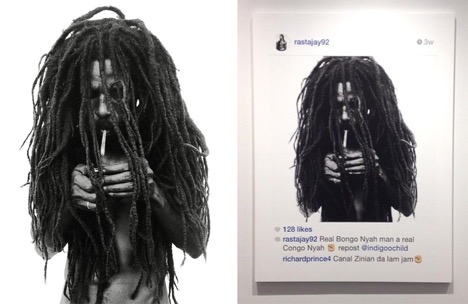
Earlier this year, three artists separately sued appropriation careerist Richard Prince for copyright infringement. The works in question? Photographs with valid and registered copyrights—each framed in an Instagram screenshot by Prince.

Sound familiar? The incidents seem to be an ugly throwback to 2015, when Prince took screenshots of multiple photographs from the Instagram account of pin-up brand Suicide Girls, printed them, and sold each print for $90,000. But none of this is new ground for Prince. Such incidents define his forty-year career: rephotographing the photos of others, reprinting J. D. Salinger’s The Catcher in the Rye with his own name substituted for the author’s, or writing out lines out of joke books for display at art galleries.

Continue reading